RBI Holds Repo Rate at 5.25%: A Major Boost for Homebuyers and Real Estate Growth in 2026
India’s real estate sector has received encouraging news as the Reserve Bank of India (RBI) decided to keep the repo rate unchanged at 5.25% for the second consecutive monetary policy review. The decision comes at a crucial time when global markets continue to face uncertainty due to geopolitical tensions, inflation concerns, and fluctuating energy prices.
For homebuyers, the announcement means greater certainty regarding home loan repayments. Meanwhile, developers can continue planning projects without worrying about sudden increases in borrowing costs. As a result, the policy decision is expected to support housing demand and maintain positive momentum across the real estate market.
Moreover, industry experts believe that stable interest rates will strengthen consumer confidence and help the sector navigate external challenges more effectively.
RBI Prioritizes Stability in a Challenging Global Environment
The global economy continues to witness multiple challenges. Rising crude oil prices, geopolitical tensions in West Asia, and concerns over inflation have created uncertainty across several sectors.
Despite these pressures, the RBI has chosen a cautious and balanced approach. Instead of changing policy rates, the central bank maintained the repo rate at 5.25%, signaling confidence in India’s economic fundamentals.
This decision provides clarity for businesses, investors, and consumers. More importantly, it creates a predictable financial environment that supports long-term planning.
Since real estate depends heavily on financing and consumer sentiment, stable monetary policy often acts as a positive catalyst for growth.
Homebuyers Receive Much-Needed EMI Relief
One of the biggest advantages of the RBI’s decision is the relief it offers to existing and prospective homebuyers.
When repo rates remain unchanged, lending institutions generally maintain current home loan rates. Consequently, borrowers avoid sudden increases in their Equated Monthly Installments (EMIs).
For families managing monthly budgets, this stability makes a significant difference. Rather than worrying about rising loan obligations, buyers can focus on long-term financial planning.
Furthermore, many potential homebuyers who were waiting for clarity on interest rates may now feel more confident about making purchase decisions.
Affordability remains one of the most important factors influencing housing demand. Therefore, stable home loan rates can encourage more buyers to enter the market, especially in the mid-income and affordable housing categories.
Housing Demand Could Continue Its Upward Journey
India’s residential real estate market has demonstrated remarkable resilience over the last few years. Demand has remained healthy despite economic fluctuations and global uncertainties.
Now, with borrowing costs remaining stable, the market could witness another wave of positive sentiment.
When consumers feel secure about financing costs, they often move forward with long-term investments such as home purchases. This trend could particularly benefit fast-growing urban centers including Gurugram, Noida, Bengaluru, Hyderabad, Pune, and Mumbai.
Additionally, the premium and luxury housing segments have continued attracting strong interest from buyers seeking upgraded lifestyles and better living spaces.
As confidence improves further, residential sales may continue to rise across various price categories.
Developers Gain Better Planning and Financial Visibility
The RBI’s decision also brings significant benefits for real estate developers.
Developers typically depend on large-scale funding to acquire land, launch projects, manage construction activities, and ensure timely delivery. Therefore, fluctuations in borrowing costs can directly impact project economics.
With the repo rate remaining unchanged, developers can forecast financial expenses more accurately. They can plan budgets, manage cash flows, and execute projects without the uncertainty of rising interest costs.
Moreover, stable financing conditions allow companies to focus on expansion strategies and new project launches.
Predictability plays a critical role in real estate development. Consequently, the RBI’s policy continuity provides a favorable environment for smoother operations across the sector.
Global Challenges Continue to Impact Construction Costs
Although the repo rate decision offers stability, developers still face certain challenges from global markets.
The ongoing crisis in West Asia has increased concerns regarding energy prices and supply chain disruptions. At the same time, currency fluctuations have placed pressure on imported construction materials.
Several components used in modern construction depend on international supply chains. Therefore, rising transportation costs and a weaker rupee can increase overall project expenses.
Additionally, labor costs continue to rise in several regions due to growing demand for skilled workers.
As a result, developers must carefully manage operational costs while maintaining project quality and delivery schedules.
Will Property Prices Rise in the Coming Months?
The possibility of higher construction costs naturally raises questions about future property prices.
In many cases, developers absorb a portion of increased expenses to remain competitive. However, if material and labor costs continue rising for an extended period, some of these costs may eventually reflect in property pricing.
Affordable and mid-income housing segments remain particularly sensitive to price increases. Developers operating in these categories often need to strike a careful balance between profitability and affordability.
On the other hand, premium and luxury housing segments may experience less impact because buyers in these categories typically possess greater purchasing power.
Ultimately, future price movements will depend on global economic conditions, input costs, and overall market demand.
Infrastructure Growth Continues to Support Real Estate
Apart from monetary policy, infrastructure development remains a major growth driver for Indian real estate.
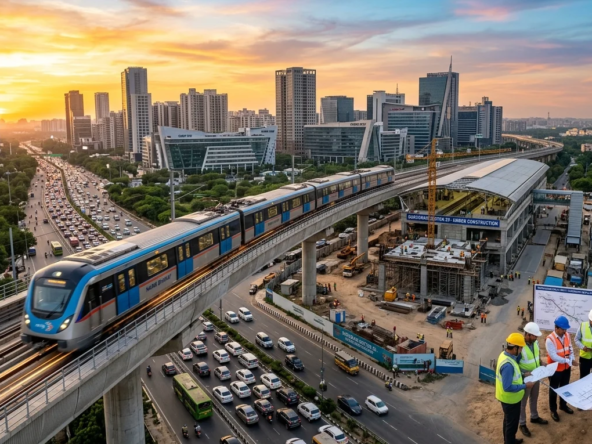
Across the country, governments continue investing in metro networks, expressways, airports, industrial corridors, and smart city projects. These developments create new investment destinations and improve connectivity.
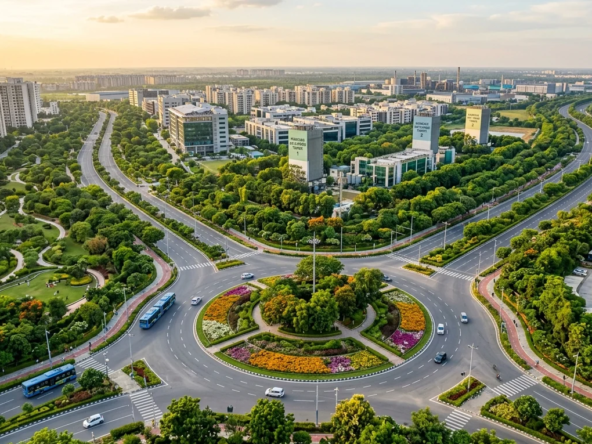
Cities such as Gurugram, Noida, Greater Noida, Dwarka Expressway, and New Gurgaon continue attracting strong buyer interest because of rapid infrastructure expansion.
Furthermore, improved connectivity often leads to higher property appreciation and stronger end-user demand.
Therefore, even during periods of global uncertainty, infrastructure growth continues supporting long-term real estate expansion.
Sanjeev Singh Shares His Perspective

Sanjeev Singh, Managing Director, SKJ Landbase, believes that the RBI’s decision to maintain the repo rate at 5.25% is a positive step for the entire real estate ecosystem.
According to him, stable interest rates help homebuyers plan their finances with confidence while enabling developers to maintain project timelines and investment strategies. He also emphasizes that predictable borrowing costs support market sentiment and encourage genuine end-user demand. While rising construction costs require careful monitoring, he believes that strong infrastructure development, urbanization, and sustained housing demand will continue driving growth across the Indian real estate sector.
Conclusion
The RBI’s decision to keep the repo rate unchanged at 5.25% delivers a strong message of stability at a time when global uncertainties continue affecting markets worldwide. Homebuyers benefit from predictable EMIs, developers gain better financial visibility, and investors receive reassurance about the broader economic outlook.
Although challenges such as rising construction costs and geopolitical risks remain, the overall environment continues to favor long-term real estate growth. As infrastructure projects expand and housing demand stays resilient, the sector appears well-positioned to maintain its growth momentum throughout 2026 and beyond.