Manesar’s Mega Green Makeover: Chandigarh-Style Roundabouts, 35-Km Green Belt & Anti-Smog Towers Set to Transform the City
Manesar is preparing for a significant urban transformation. As one of Haryana’s fastest-growing industrial and residential destinations, the city now faces increasing pressure on its infrastructure, environment, and public spaces. To address these challenges, the Municipal Corporation of Manesar (MCM) has unveiled an ambitious development plan that focuses on beautification, sustainability, and pollution control.
The proposed initiative includes Chandigarh-style landscaped roundabouts, nearly 35 kilometres of green belts, anti-smog towers, CCTV surveillance systems, and a dedicated command and control centre. Together, these projects aim to improve air quality, enhance urban aesthetics, and create a healthier environment for residents.
Moreover, the civic body intends to implement these developments within the next six months through Corporate Social Responsibility (CSR) funding and public-private partnerships.
A New Vision for Urban Development in Manesar
Over the last few years, Manesar has emerged as a major economic powerhouse in the National Capital Region. Industrial parks, logistics hubs, commercial developments, and residential communities have expanded rapidly across the region.
However, rapid growth often brings new challenges. Dust pollution, shrinking green cover, traffic congestion, and environmental concerns have become increasingly visible. Consequently, city planners now recognize the need to balance development with sustainability.
Municipal Commissioner Pradeep Singh recently inspected several roads and infrastructure projects across the city. During the inspection, he instructed officials to prepare a comprehensive roadmap that prioritizes cleaner roads, greener spaces, and improved public infrastructure.
As a result, Manesar could soon witness one of its most extensive urban improvement drives.
Chandigarh-Style Roundabouts to Redefine City Aesthetics
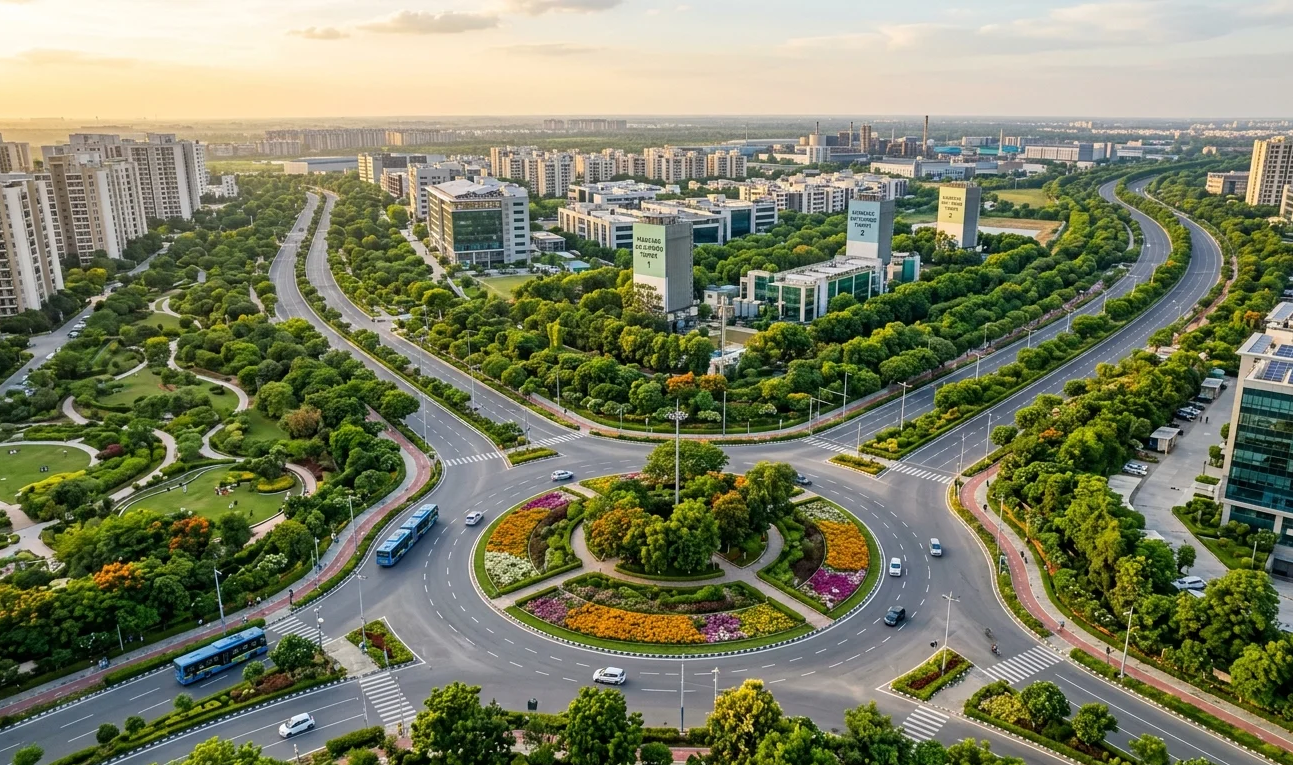
One of the most attractive elements of the project involves the redesign of key roundabouts across Manesar.
The Municipal Corporation plans to beautify important traffic circles such as:
- Dadi Sati Chowk
- Jai Singh Chowk
- Baba Kanala Chowk
- Rao Hukam Chand Chowk
These roundabouts will draw inspiration from Chandigarh, a city widely admired for its well-planned urban design and beautifully landscaped traffic circles.
Instead of serving merely as traffic junctions, these spaces will become visually appealing landmarks that reflect the city’s modern identity.
Furthermore, landscaped roundabouts improve the overall appearance of road networks. They create a more pleasant driving experience and contribute to a cleaner urban environment.
As Manesar continues to attract investors and homebuyers, such improvements can strengthen the city’s image as a well-managed urban destination.
Massive 35-Km Green Belt Network Planned
Alongside roundabout beautification, the corporation plans to develop nearly 35 kilometres of green belts and central verges along major roads.
The proposed stretches include:
- Rampura Village to Pataudi Road
- Vatika Chowk to Pataudi Road
- M3M Gallery Society to Naurangpur through Shikohpur Road
This initiative aims to significantly increase the city’s green cover.
Green belts offer numerous environmental benefits. They absorb dust particles, improve air quality, reduce noise pollution, and lower surface temperatures. Additionally, they create a more attractive urban landscape for residents and visitors.
Many global cities have successfully used green corridors to improve environmental health. Therefore, Manesar’s plan aligns with modern urban planning principles that emphasize sustainability alongside development.
Anti-Smog Towers to Combat Rising Pollution
Air pollution remains one of the biggest concerns across NCR cities. Construction activity, industrial operations, and increasing traffic often contribute to high dust levels.
To tackle this challenge, MCM plans to install anti-smog towers at strategic locations identified as pollution hotspots.
These towers can help reduce particulate matter in the surrounding area and improve local air quality.
In addition, the civic body will procure anti-smog guns that will regularly sprinkle water on roads. This measure can effectively suppress dust and prevent it from becoming airborne.
Moreover, these initiatives align with the recommendations of the Commission for Air Quality Management (CAQM), which continues to encourage proactive dust-control measures across urban regions.
The focus is simple yet impactful: cleaner air, healthier communities, and a better quality of life.
Sustainable Maintenance Through Treated Wastewater
Modern urban development requires efficient resource management. Recognizing this need, MCM plans to use treated wastewater from sewage treatment plants (STPs) for maintaining green belts and landscaped areas.
This decision reflects a sustainable approach to water conservation.
Instead of consuming valuable freshwater resources, treated water will support irrigation requirements across the city’s expanding green network.
As a result, Manesar can maintain its green infrastructure while reducing pressure on natural water supplies.
Furthermore, this strategy promotes responsible environmental management and supports long-term sustainability goals.
Smart Surveillance for Better Infrastructure Protection
Creating public infrastructure is only one part of the process. Maintaining and protecting it remains equally important.
To ensure the success of these projects, MCM plans to install CCTV cameras at key locations and establish a dedicated command and control centre.
These systems will monitor public assets, prevent vandalism, and improve security.
Additionally, officials can use real-time surveillance to identify maintenance issues and respond quickly when problems arise.
This technology-driven approach reflects the growing importance of smart governance in modern cities.
CSR Funding to Accelerate Development
A major strength of this initiative lies in its funding model.
The Municipal Corporation intends to implement the project through Corporate Social Responsibility contributions. Private companies, resident welfare associations, housing societies, NGOs, and developers will participate in developing and maintaining green spaces.
This collaborative strategy offers several advantages.
- First, it reduces the financial burden on public resources.
- Second, it encourages community participation.
- Third, it promotes long-term maintenance through shared responsibility.
Consequently, the city can execute projects faster while ensuring better upkeep in the future.
Sanjeev Singh’s Perspective on the Initiative
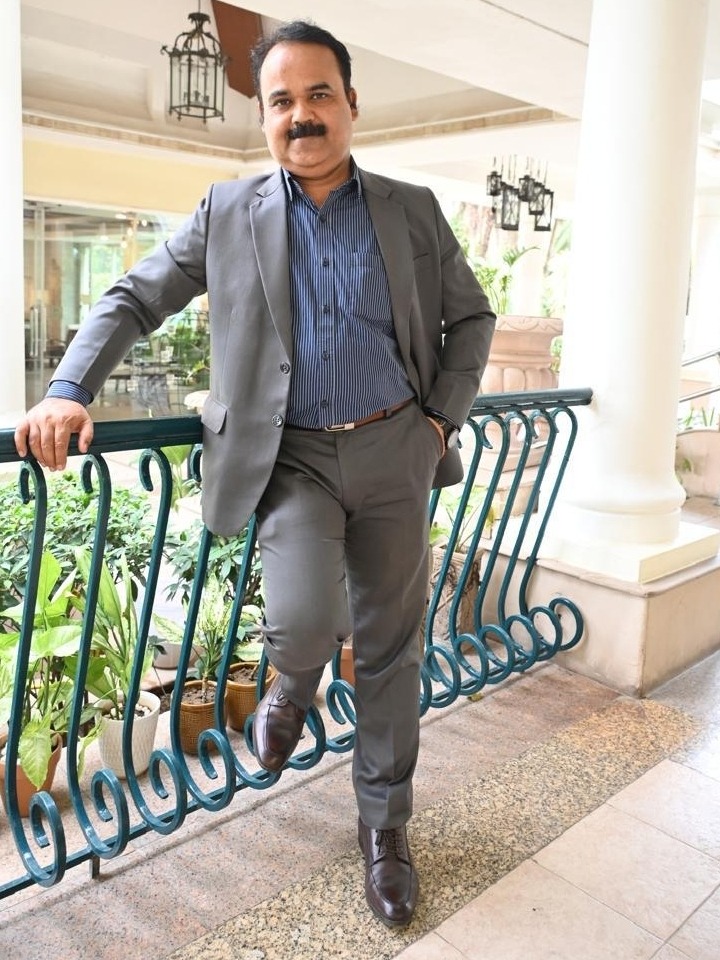
Sanjeev Singh, MD, SKJ Landbase, believes that Manesar’s latest initiative highlights the growing importance of sustainable urban planning in emerging cities.
He says, “As Manesar continues to evolve into a major industrial and residential destination, environmental infrastructure becomes just as important as physical infrastructure. The proposed green belt network, anti-smog measures, and beautification projects can enhance livability, strengthen investor confidence, and create a healthier environment for future generations. Consistent maintenance and execution will be the key to long-term success.
Conclusion
Manesar stands at an important turning point in its urban journey. The proposed Chandigarh-style roundabouts, extensive green belts, anti-smog towers, smart surveillance systems, and sustainable maintenance practices demonstrate a forward-thinking approach to city development.
More importantly, these initiatives address both environmental and infrastructure challenges simultaneously.
If executed effectively, the project can significantly improve air quality, urban aesthetics, and overall quality of life. As Manesar continues to expand, this green transformation could become a benchmark for sustainable urban development across Haryana and the NCR region.