A New Green Vision for Dwarka Expressway
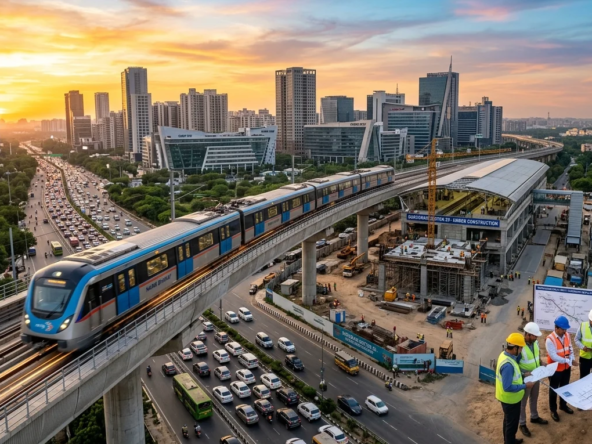
Dwarka Expressway has become one of the most transformative infrastructure projects in the National Capital Region (NCR). Over the past few years, the corridor has witnessed rapid growth in residential developments, commercial hubs, schools, hospitals, and social infrastructure. Consequently, thousands of families now view the region as one of Gurugram’s most promising destinations.
However, alongside this remarkable growth, concerns about environmental sustainability have started gaining attention. Residents believe that development should not come at the cost of shrinking green cover.
In a significant move, the Dwarka Expressway Gurugram Development Association (DXPGDA) has urged the Haryana government to launch a large-scale plantation drive and create a dedicated green corridor along the expressway. The proposal aims to improve environmental conditions while ensuring that urban expansion remains sustainable for future generations.
As cities continue to grow, the demand for cleaner and greener surroundings becomes increasingly important. Therefore, residents are pushing for action before urbanization further reduces available open spaces.
What Does the Green Corridor Proposal Include?
The proposal presents a comprehensive plan to enhance greenery across multiple sectors along Dwarka Expressway.
Most notably, it identifies a 100-acre green zone in Sector 102A under the Gurugram Master Plan 2031. Additionally, the proposal recommends large-scale plantation activities across green belts, open spaces, sector roads, and areas surrounding the upcoming Maa Sheetla Devi Hospital and Medical College.
The association has also identified roads connecting sectors 99, 102, 102A, 103, 106, 109, 112, and 114 as ideal locations for tree plantation drives.
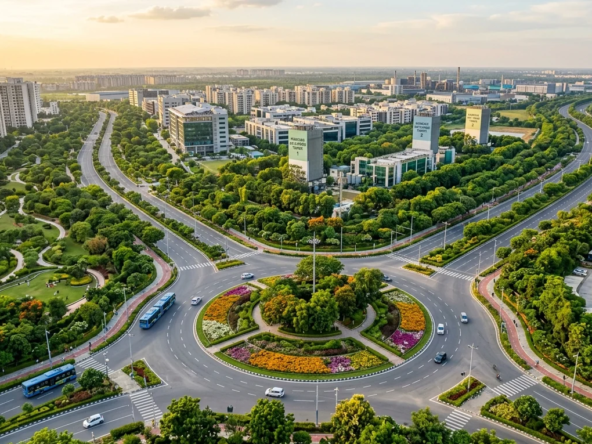
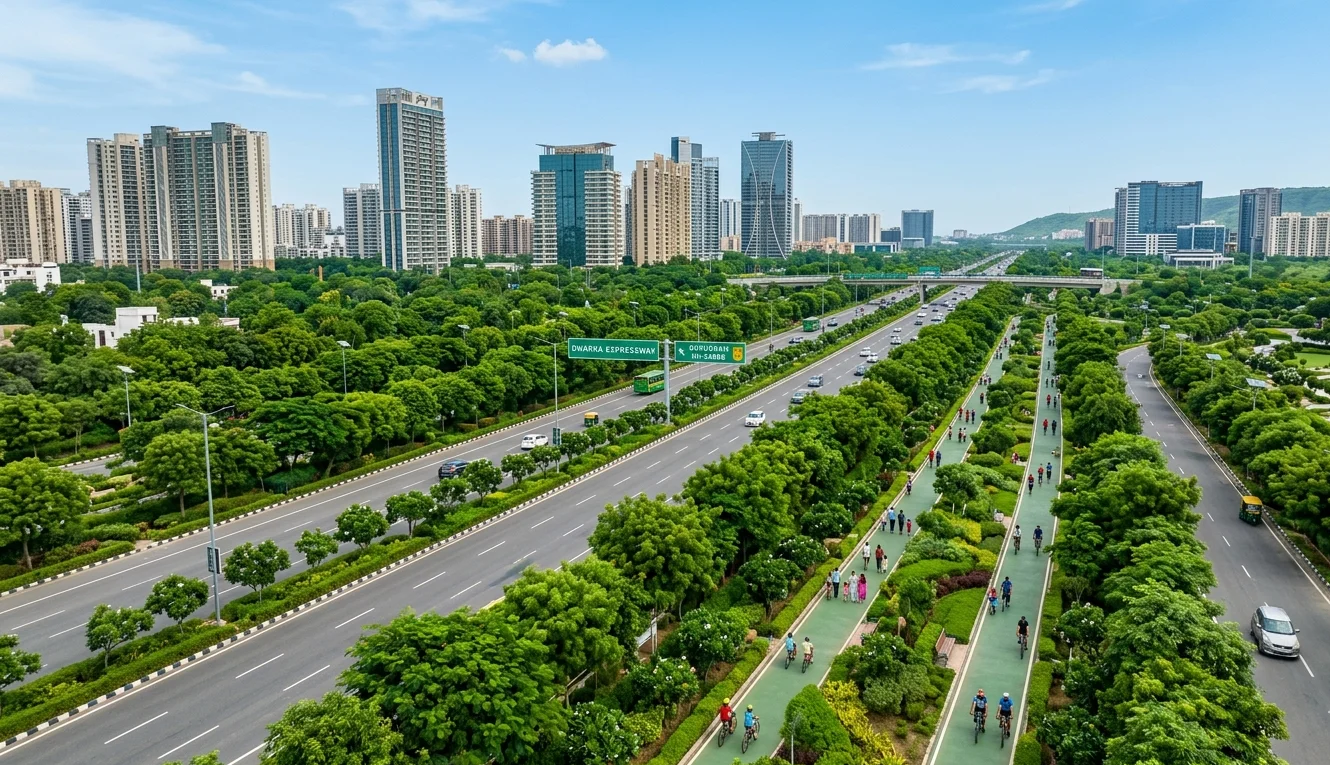
The objective remains simple yet powerful: create a continuous green network that improves environmental quality while enhancing the overall appearance of the region.
Moreover, such a corridor could become a defining feature of Dwarka Expressway and set a new benchmark for urban planning in Gurugram.
Why Green Spaces Matter in Rapidly Growing Cities
As urban populations increase, cities often struggle with rising temperatures, air pollution, and loss of biodiversity. Gurugram faces similar challenges.
This reality makes green infrastructure more important than ever.
Better Air Quality
Trees act as natural air purifiers. They absorb pollutants and release oxygen into the atmosphere. Therefore, increasing tree cover can contribute significantly to cleaner air.
Given the increasing traffic movement along Dwarka Expressway, enhanced greenery could help improve environmental conditions for nearby residents.
Reduced Urban Heat Island Effect
Large concrete structures and roads absorb heat throughout the day. As a result, urban areas often experience temperatures higher than surrounding rural regions.
This phenomenon, known as the urban heat island effect, continues to impact major cities worldwide.
Fortunately, trees provide natural cooling. Their shade lowers surface temperatures and creates a more comfortable environment for pedestrians and residents.
Stronger Biodiversity
Green corridors support local ecosystems by creating habitats for birds, butterflies, and other species.
Consequently, these spaces help maintain ecological balance even as urban development continues.
Improved Lifestyle and Well-Being
People increasingly seek access to green surroundings. Parks, landscaped roads, and tree-lined pathways encourage walking, jogging, cycling, and outdoor recreation.
Therefore, the proposed corridor could significantly improve the quality of life for residents across multiple sectors.
Balancing Development and Sustainability
Dwarka Expressway stands at the center of Gurugram’s growth story. New projects continue to attract investors, homebuyers, and businesses from across India.
Nevertheless, infrastructure alone does not create a great city.
Modern urban planning focuses on balancing economic growth with environmental responsibility. Cities around the world increasingly invest in green infrastructure because it improves long-term livability and sustainability.
Dwarka Expressway now has an opportunity to adopt this approach.
Instead of treating green spaces as secondary features, authorities can integrate them into the region’s long-term development strategy. Such planning can create a healthier environment while supporting future growth.
Furthermore, green neighborhoods often experience stronger community engagement and enhanced property appeal.
Citizens Lead the Sustainability Conversation
One of the most encouraging aspects of this initiative involves active participation from residents.
Rather than waiting for authorities to act, local stakeholders have stepped forward with practical recommendations and long-term solutions.
DXPGDA has formally requested Haryana Environment Minister Rao Narbir Singh to visit the area and interact with residents regarding the proposed green corridor.
This collaborative approach could help authorities better understand local concerns and identify suitable locations for plantation activities.
Additionally, the association has demonstrated its commitment to environmental protection through previous efforts involving waste management and tree conservation issues.
As awareness grows, citizen-led initiatives like these can play a crucial role in shaping sustainable cities.
Turning Vision Into Reality
While the proposal has received attention, successful implementation will require careful planning and execution.
Authorities must focus on selecting suitable native tree species that can thrive in local climatic conditions. At the same time, proper irrigation systems, maintenance schedules, and monitoring mechanisms will remain essential.
Simply planting thousands of saplings will not guarantee long-term success.
Instead, continuous care, community participation, and regular inspections will determine the effectiveness of the initiative.
Moreover, collaboration among government agencies, urban planners, developers, environmental experts, and residents will be necessary to achieve meaningful results.
Sanjeev Singh’s Perspective

Sanjeev Singh, MD, SKJ Landbase, believes that environmental sustainability should remain a core component of modern urban development.
He says, “Dwarka Expressway has emerged as one of NCR’s most important growth corridors. As development accelerates, maintaining ecological balance becomes equally important. A well-planned green corridor can enhance air quality, improve public spaces, strengthen biodiversity, and elevate the overall living experience. Such initiatives not only benefit residents but also contribute to the long-term value and attractiveness of the region.”
A Greener Future for Dwarka Expressway
The proposed green corridor represents much more than a plantation drive. It reflects a growing desire among residents for a healthier, cleaner, and more sustainable urban environment.
Today’s homebuyers look beyond roads and buildings. They seek communities that offer green surroundings, better air quality, and a superior quality of life.
As Dwarka Expressway continues to evolve, initiatives like this could define its future identity. If implemented effectively, the corridor could become a model for sustainable urban development across Gurugram and beyond.
Most importantly, it would demonstrate that rapid growth and environmental responsibility can thrive together, creating a future-ready city for generations to come.