A Rare Low-Rise Marvel in a Vertical City
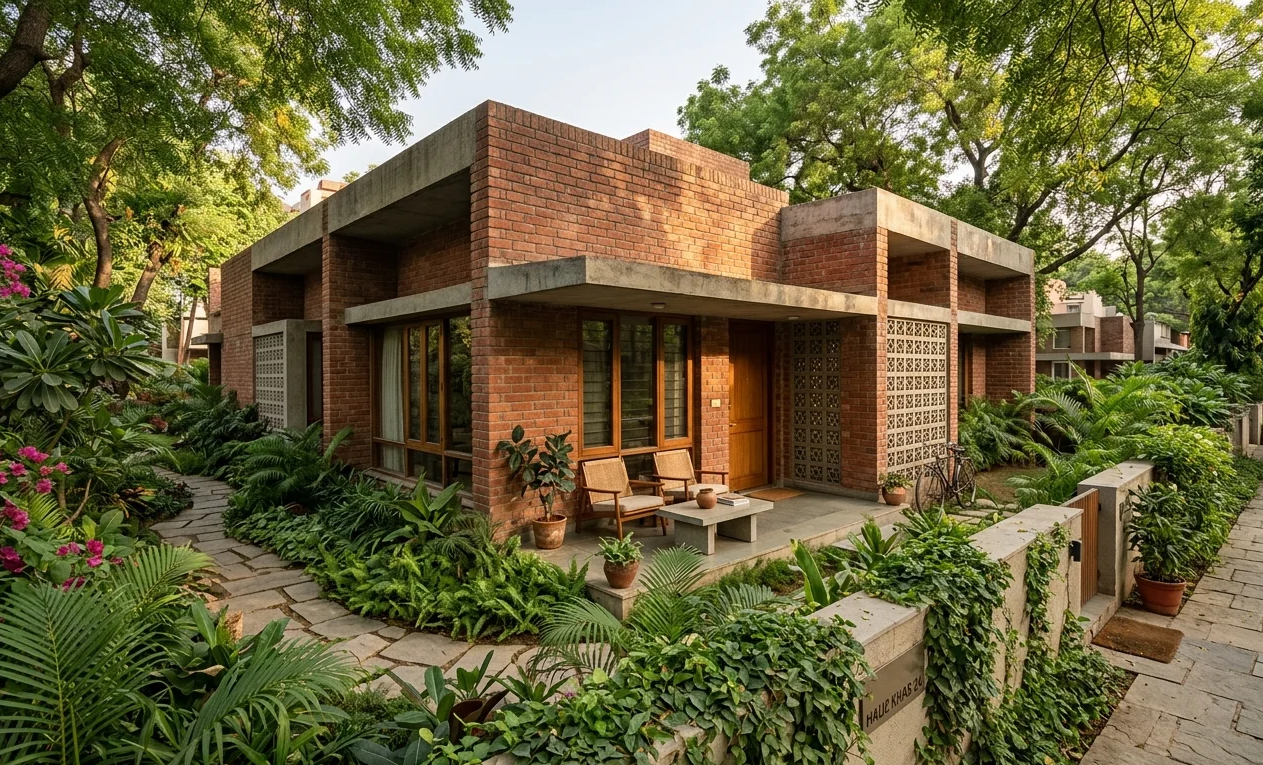
In a city racing toward high-rise living, a single-storey bungalow feels almost unreal. Yet, quietly nestled in Hauz Khas, Casa Pia stands as a powerful reminder of thoughtful architecture. While glass towers dominate skylines, this home stays grounded literally and philosophically.
Moreover, this two-bedroom bungalow occupies prime land in South Delhi. Still, it resists redevelopment. Instead, it preserves its original identity. That choice alone makes it one of the rarest residential properties in Delhi today.
Chandigarh’s Modernist DNA Lives Here
To truly understand Casa Pia, you must trace its roots back to Chandigarh. India’s first planned city introduced a bold architectural language. Visionaries like Le Corbusier and Pierre Jeanneret shaped that identity.
Indur Mirchandani, the mind behind Casa Pia, worked alongside these pioneers. Naturally, he absorbed their principles. Later, he translated them into his own home in Delhi.
As a result, Casa Pia reflects:
- Clean lines and geometric clarity
- Functional, purpose-driven layouts
- Climate-responsive design
Clearly, this home does not follow trends. Instead, it follows logic.
Garden City Thinking Creates Breathing Space
Interestingly, Mirchandani did not stop at modernism. He blended it with “Garden City” ideas. This approach focused on harmony between built spaces and nature.
Therefore, Casa Pia includes:
- A front garden that welcomes light and air
- A backyard that extends living space outdoors
- Seamless transitions between interior and exterior
Consequently, the house feels open and calming. Unlike cramped urban homes, it allows residents to breathe both physically and mentally.
Built Before ACs, Yet Cooler Than Most Homes Today
Now here’s the most impressive part. Casa Pia does not depend on modern cooling systems. Instead, it relies on intelligent design.
Built in 1972, long before air conditioners became common, the house uses:
- Cross ventilation through carefully placed windows
- Recessed facades that block direct sunlight
- Thick brick walls that regulate indoor temperature
Because of these features, the house stays naturally cool in summer. At the same time, it includes a fireplace for winter comfort.
In essence, this home works with nature not against it.
Honest Materials, Timeless Appeal
Another striking aspect lies in its material choices. Casa Pia embraces simplicity without compromising strength.
The structure features:
- Exposed red brick walls
- Functional breezeblocks
- Durable ironwork crafted from regional foundries
These materials do more than just look good. They ensure longevity and reduce maintenance.
Additionally, the interiors showcase furniture from the 1960s. Soft curves and plywood textures add warmth. Each piece complements the architecture instead of overpowering it.
A Home That Evolved Without Losing Its Soul
Over five decades, the family made only minimal changes. They updated furnishings and added storage. However, they never altered the core structure.
Why? Because the design already works efficiently.
Each bedroom opens into the backyard. Air flows freely. Storage feels practical. Every corner serves a purpose.
Unlike modern homes that demand frequent renovations, Casa Pia proves that good design remains relevant for generations.
Standing Strong Against Real Estate Pressure
South Delhi commands some of the highest property prices in India. In fact, certain pockets rival global cities like New York and London.
Logically, this bungalow could transform into a multi-storey luxury building. Many homeowners would choose that path for higher returns.
However, Casa Pia tells a different story. The family chose to preserve it. They prioritized livability over profit.
This decision challenges today’s real estate mindset. It proves that value does not always come from vertical expansion.
Lessons Modern Homebuyers Should Not Ignore
Casa Pia offers more than architectural beauty. It delivers practical lessons for today’s buyers and developers.
First, design must respond to climate. Second, natural light and ventilation should take priority. Third, homes should reduce dependence on machines.
Additionally, sustainability should begin at the design stage not as an afterthought.
Clearly, modern housing can benefit from these principles. After all, true comfort comes from smart planning, not excessive amenities.
Expert Perspective on Timeless Living

Sanjeev Singh, MD of SKJ Landbase, highlights this perfectly:
Casa Pia reflects an era when homes were built for functionality and longevity. Today’s developments often focus on luxury features, but real value lies in sustainable design and user comfort. The future of real estate must reconnect with these fundamentals.
His insight underlines a growing shift in buyer preferences. People now seek meaningful spaces, not just premium addresses.
Why Casa Pia Still Matters Today
Ultimately, Casa Pia stands as a symbol of modernist frugality and intelligence. It shows that architecture does not need excess to impress. Instead, it needs clarity, purpose, and respect for the environment.
In a rapidly transforming city, this bungalow quietly holds its ground. It does not compete with skyscrapers. Yet, it outperforms many in comfort and efficiency.
And perhaps that is its greatest achievement it proves that sometimes, the simplest homes leave the strongest impact.