A Smart Move Towards Future Mobility
Gurugram continues to push boundaries when it comes to urban development. Now, the Gurugram Metropolitan Development Authority ( GMDA ) has taken a bold step by exploring the introduction of a pod taxi transit system. This move reflects a strong vision to tackle traffic congestion while improving last-mile connectivity.
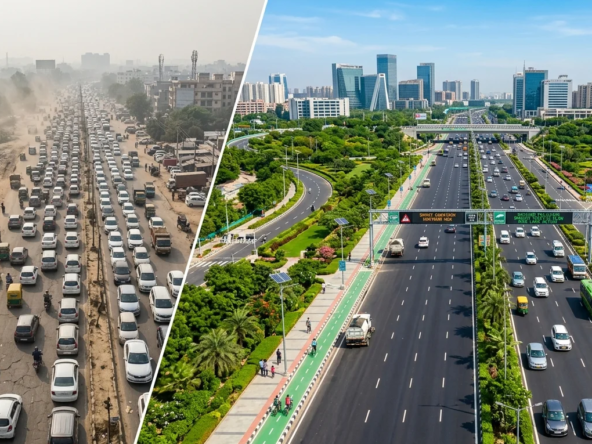
At present, commuters in Gurugram deal with long traffic jams, unpredictable travel time, and limited transport options for short distances. However, this upcoming system promises to change that experience completely. More importantly, it brings the city closer to becoming a truly smart and future-ready urban hub.
Understanding the Pod Taxi Concept
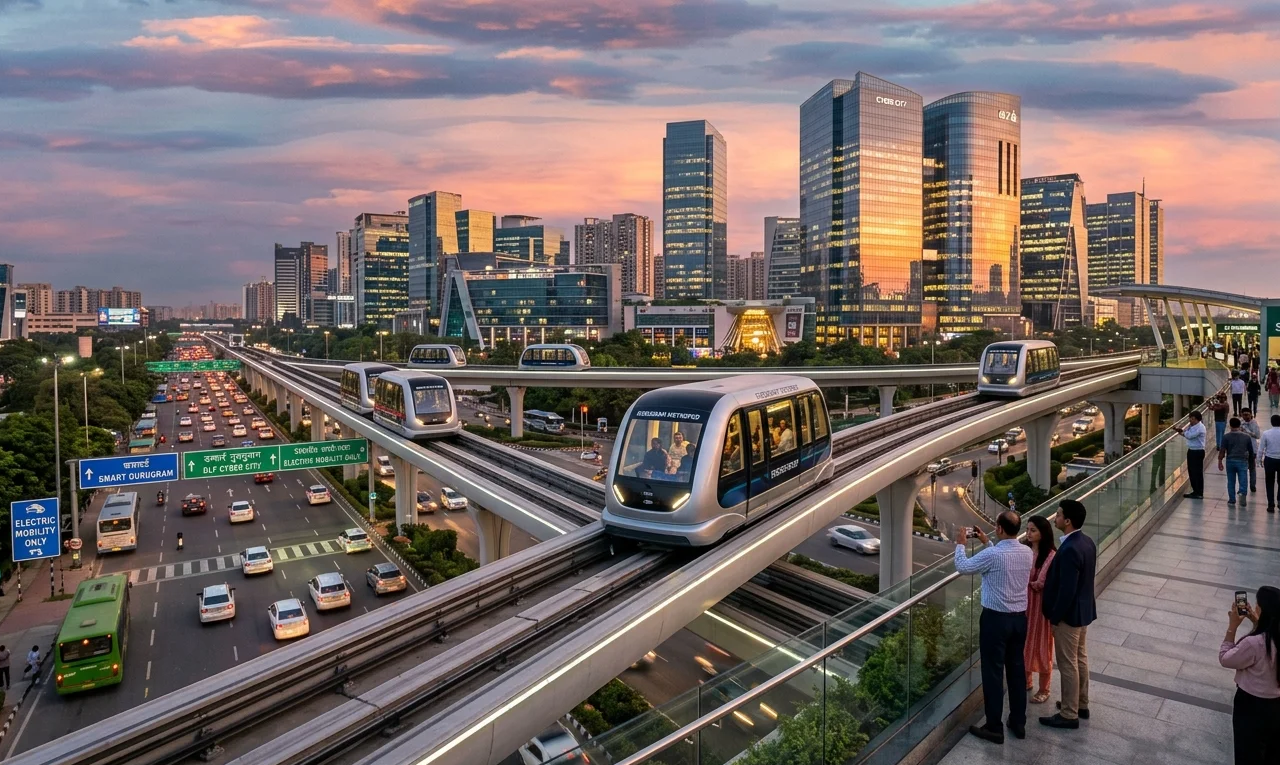
A pod taxi system works on a simple yet powerful idea. It uses small, electric, autonomous vehicles that operate on dedicated tracks or lanes. Unlike traditional buses or shared autos, these pods run on demand.
So, instead of waiting at a stop, you can book a pod instantly and travel directly to your destination. This not only saves time but also improves convenience.
Companies like Suzuki Motor Corporation and Glydways have already developed advanced versions of this system. Their model focuses on efficiency, affordability, and sustainability.
As a result, passengers can enjoy:
- Direct point-to-point travel
- Minimal waiting time
- Lower fares comparable to public transport
- Comfortable and private rides
Clearly, this system blends the best of both private and public transportation.
GMDA’s Strategy: Planning with Precision
Instead of rushing into execution, GMDA has chosen a calculated approach. The authority plans to conduct a feasibility survey and detailed traffic study. This step will help identify high-density corridors where pod taxis can deliver maximum impact.
During discussions with industry experts, GMDA CEO PC Meena highlighted the need to evaluate practicality before implementation. This ensures the system fits smoothly within Gurugram’s existing infrastructure.
At the same time, officials are actively exploring:
- Route alignment and corridor identification
- Investment strategies and cost models
- Public-Private Partnership (PPP) opportunities
- Integration with metro and road networks
Notably, representatives from Suzuki Motor Corporation and Glydways have already presented the concept to the Haryana government. This indicates strong momentum behind the project.
Why Gurugram Needs Pod Taxis Right Now
Let’s face reality traffic congestion in Gurugram has reached a critical point. Key areas experience heavy bottlenecks, especially during peak hours. Even short commutes can turn into frustrating journeys.
This is exactly where pod taxis can make a difference.
- First, they improve last-mile connectivity. Many residential sectors and office hubs still lack smooth connections to metro stations. Pod taxis can easily bridge this gap.
- Second, they reduce reliance on private vehicles. As more people shift to shared autonomous transport, road congestion will gradually decrease.
- Third, they promote sustainability. Since these pods run on electricity, they significantly reduce carbon emissions.
Therefore, the system doesn’t just solve traffic issues. It also contributes to a cleaner and more efficient urban ecosystem.
How Glydways Technology Changes the Game
The system proposed by Glydways introduces a demand-based transit model. This means pods operate based on real-time demand instead of fixed schedules.
Because of this, the system offers multiple advantages:
- Higher efficiency in vehicle usage
- Reduced waiting and travel time
- Lower operational costs
- Seamless passenger flow
Additionally, these pods run in groups on dedicated lanes. As a result, they avoid regular traffic entirely. This ensures faster and more predictable journeys.
Meanwhile, Suzuki Motor Corporation contributes its automotive expertise to enhance safety, durability, and performance.
Together, these companies bring a balanced combination of innovation and reliability.
Impact on Real Estate and Urban Growth
Infrastructure development always drives real estate growth. In this case, the impact could be even more significant.
Improved connectivity increases property demand in nearby areas. Locations linked through pod taxi corridors will attract both homebuyers and investors.
Moreover, better mobility enhances overall lifestyle quality. Professionals prefer areas with smooth commuting options, while families look for convenience and accessibility.
Sanjeev Singh, MD of SKJ Landbase, shares his insight:

Modern mobility solutions like pod taxis will reshape how people interact with cities. In Gurugram, where connectivity directly influences real estate demand, this initiative will boost both property value and buyer confidence.
Clearly, this project goes beyond transportation. It acts as a growth engine for the entire city ecosystem.
Challenges That Need Smart Solutions
While the concept looks promising, execution remains the key factor. GMDA must address certain challenges to ensure success.
- First, acquiring land for dedicated corridors could become complex.
- Second, the initial investment may require strong financial planning.
- Third, public acceptance of autonomous systems might take time.
However, these challenges are not impossible to overcome. With proper planning, policy support, and PPP models, the project can move forward smoothly.
The Future Outlook for Gurugram
Gurugram has always embraced innovation, whether through corporate hubs or modern infrastructure. Now, pod taxis could mark the next phase of transformation.
If the feasibility study delivers positive results, the project may soon enter implementation stages. Once operational, it could serve as a model for other Indian cities.
Furthermore, this initiative aligns with India’s broader vision of smart and sustainable urban development.
In conclusion, the pod taxi system represents more than just a transport upgrade. It signals a shift towards efficient, eco-friendly, and technology-driven urban living.
Gurugram might soon lead the way, showing how cities can solve congestion while enhancing everyday life.