Indian Real Estate Begins a New Digital Revolution
India’s real estate industry is changing faster than ever before. For decades, the sector relied heavily on paperwork, manual operations, offline sales, and fragmented communication systems. However, the landscape now looks completely different. Developers, investors, and homebuyers increasingly prefer digital platforms, smart technologies, and transparent systems.
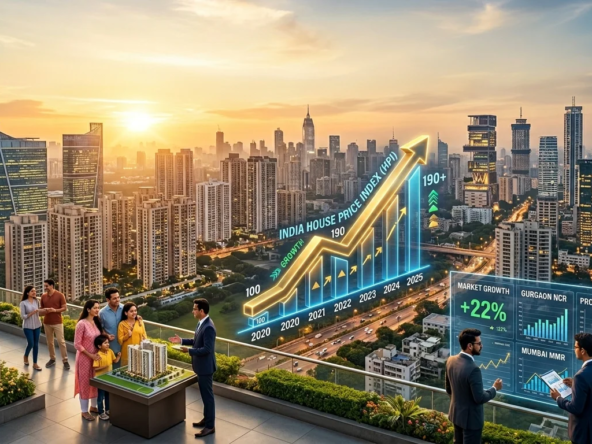
According to a recent report by Federation of Indian Chambers of Commerce & Industry and KPMG, India’s real estate market may grow from nearly $650 billion in 2025 to an astonishing $5.8 trillion by 2047. This projection highlights the massive long-term potential of the sector.
At the same time, developers continue adopting advanced technologies to improve efficiency, reduce operational costs, and strengthen customer trust. Consequently, technology has become one of the strongest pillars supporting the future growth of Indian real estate.
AI and Smart Technologies Are Reshaping the Industry
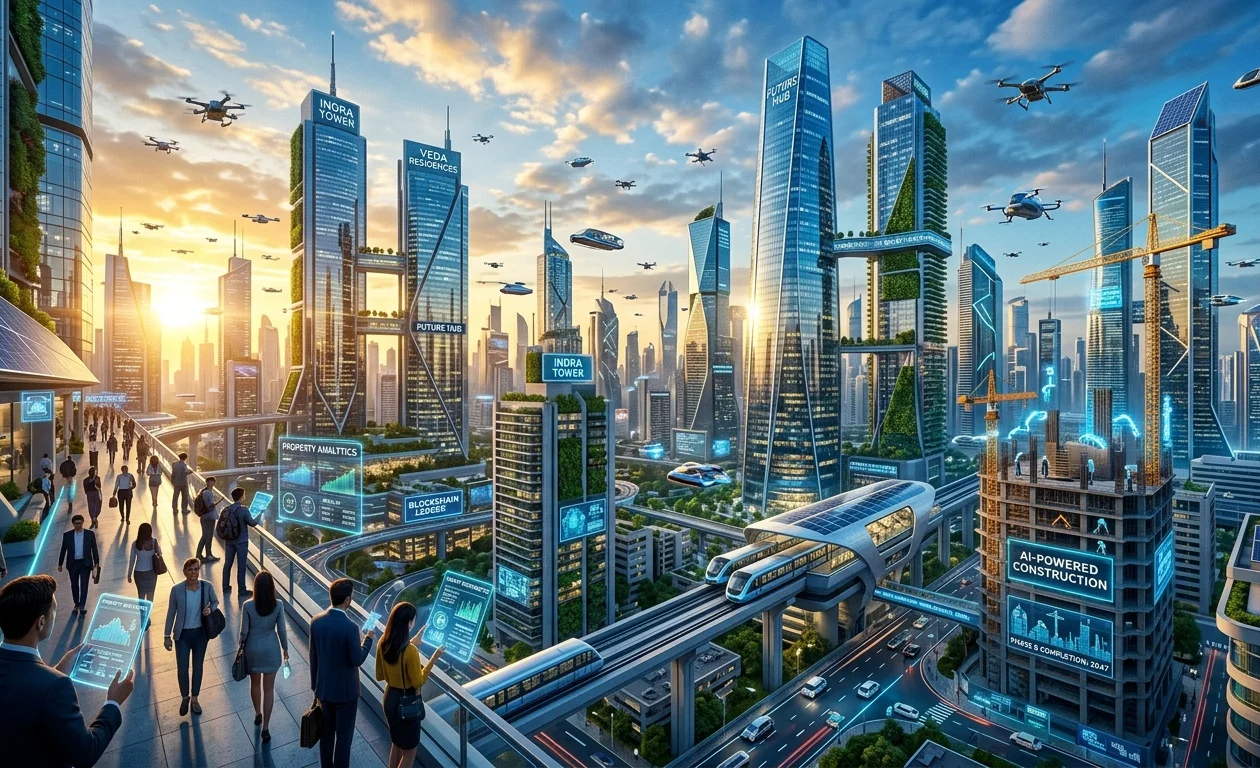
Technology now influences almost every stage of real estate development. Earlier, developers mainly focused on traditional marketing and manual project management. Today, they use Artificial Intelligence, blockchain, drones, IoT-enabled systems, and digital twins to improve operations and customer experiences.
Artificial Intelligence helps companies understand buyer behavior, predict demand trends, and automate customer interactions. As a result, developers can now make faster and smarter business decisions.
Meanwhile, blockchain technology improves transparency in property documentation and ownership verification. Since buyers often worry about fraud and unclear records, blockchain-based systems create greater confidence in transactions.
Digital twins have also started transforming project planning. These virtual models allow developers to analyze projects before construction begins. Consequently, teams can identify design issues early and reduce costly mistakes later.
Furthermore, IoT-enabled smart systems continue attracting modern homebuyers. Features such as smart lighting, automated security, intelligent climate control, and energy management improve daily living experiences significantly.
Drones also play an important role today. Developers use them for site surveys, project monitoring, and construction inspections. Therefore, companies save both time and operational costs.
The report revealed that AI adoption in India’s corporate real estate sector jumped dramatically from less than 5 percent in 2023 to nearly 91 percent in 2025. This growth clearly reflects the industry’s strong shift toward digital transformation.
Rising Costs and Strict Regulations Push Digital Adoption
Several important factors now drive technology adoption across the real estate sector. Rising construction costs remain one of the biggest challenges for developers. Therefore, companies increasingly use digital systems to improve productivity and reduce unnecessary expenses.
At the same time, regulatory compliance requirements continue becoming stricter. Developers must now maintain accurate documentation, provide regular project updates, and ensure higher financial transparency. Technology helps companies manage these processes efficiently and avoid delays.
Additionally, today’s homebuyers behave very differently compared to previous generations. Modern consumers conduct detailed online research before purchasing a property. They compare projects, verify approvals, check reviews, explore virtual tours, and analyze location advantages digitally.
As a result, developers now focus heavily on delivering seamless digital experiences across sales, financing, documentation, and customer support.
The report stated that these market pressures are encouraging developers to move away from reactive manual systems toward scalable and proactive digital solutions.
Institutional Investments Continue Strengthening the Market
India’s real estate market is also witnessing stronger participation from institutional investors. This shift continues increasing transparency and professionalism across the industry.
According to the report, more than $16 billion has already been unlocked through REITs and InvITs. This achievement highlights growing investor confidence in Indian real estate assets.
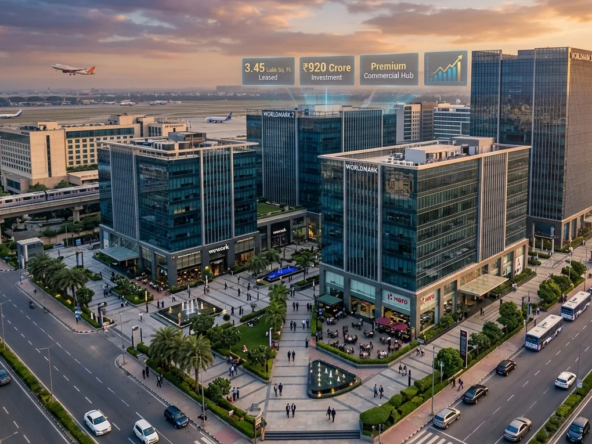
Simultaneously, India’s commercial real estate sector continues performing strongly. Foreign companies leased a record 9.1 million square feet of office space across India’s top nine cities during the first quarter of 2026.
The residential segment also shows remarkable long-term potential. The report projects that the value of new homes in India could reach nearly $906 billion by 2034.
Moreover, retail real estate continues expanding rapidly. Around 41 million square feet of new retail developments are expected to become operational by 2028. This growth reflects rising consumer spending and expanding urban infrastructure across the country.
Government Reforms Increase Transparency and Efficiency
Government-led digital reforms have also played a major role in modernizing India’s property market. Authorities now focus strongly on improving land records, registration systems, and ownership verification processes.
According to the report, over 360 million land parcels across 29 states and union territories have already received geo-referenced unique identifiers. This initiative helps improve land management and ownership clarity.
Furthermore, nearly 89 percent of sub-registrar offices now integrate directly with revenue systems for real-time updates. Consequently, property registrations have become faster and more transparent.
Blockchain-enabled property management systems have already verified over 340 million property documents. Therefore, disputes related to ownership and fraudulent transactions may reduce significantly in the coming years.
These reforms continue creating a more secure and trustworthy ecosystem for buyers, developers, and investors alike.
Tier-2 and Tier-3 Cities Emerge as Future Growth Hubs
While metro cities continue dominating the property market, Tier-2 and Tier-3 cities now emerge as strong future growth centers.
Improved infrastructure, expanding job opportunities, better connectivity, and affordable housing options continue attracting buyers toward smaller cities.
During the FICCI Real Estate Summit, Anand Kumar emphasized the need to develop Tier-2 and Tier-3 cities to reduce migration pressure on metropolitan regions.
Additionally, India’s young and aspirational population continues driving strong housing demand nationwide. Because remote work and digital connectivity have improved significantly, many professionals now prefer spacious homes in emerging cities instead of crowded metros.
This trend will likely accelerate further over the next decade.
Sanjeev Singh, MD, SKJ Landbase on the Future of Real Estate

Sanjeev Singh, Managing Director of SKJ Landbase, believes technology and transparency will define the future success of Indian real estate.
He said, “The Indian real estate industry is evolving rapidly, and technology now plays a central role in shaping customer experiences and investment confidence. Buyers today expect transparency, convenience, speed, and reliable digital support throughout the property journey.
Developers who integrate smart technologies across every stage of development will lead the next phase of growth in the sector.”
India’s Real Estate Future Looks Smarter and Stronger
India’s property market now stands at the beginning of a powerful transformation. Digital innovation, government reforms, institutional investments, and rising consumer expectations continue reshaping the industry rapidly.
Most importantly, developers increasingly understand that technology is no longer optional. Instead, it has become essential for survival and long-term growth.
As India moves toward becoming a global economic powerhouse, the real estate sector appears ready to play a massive role in the country’s development journey. With stronger transparency, smarter operations, and rapidly growing demand, the road toward a $5.8 trillion market now looks more achievable than ever.