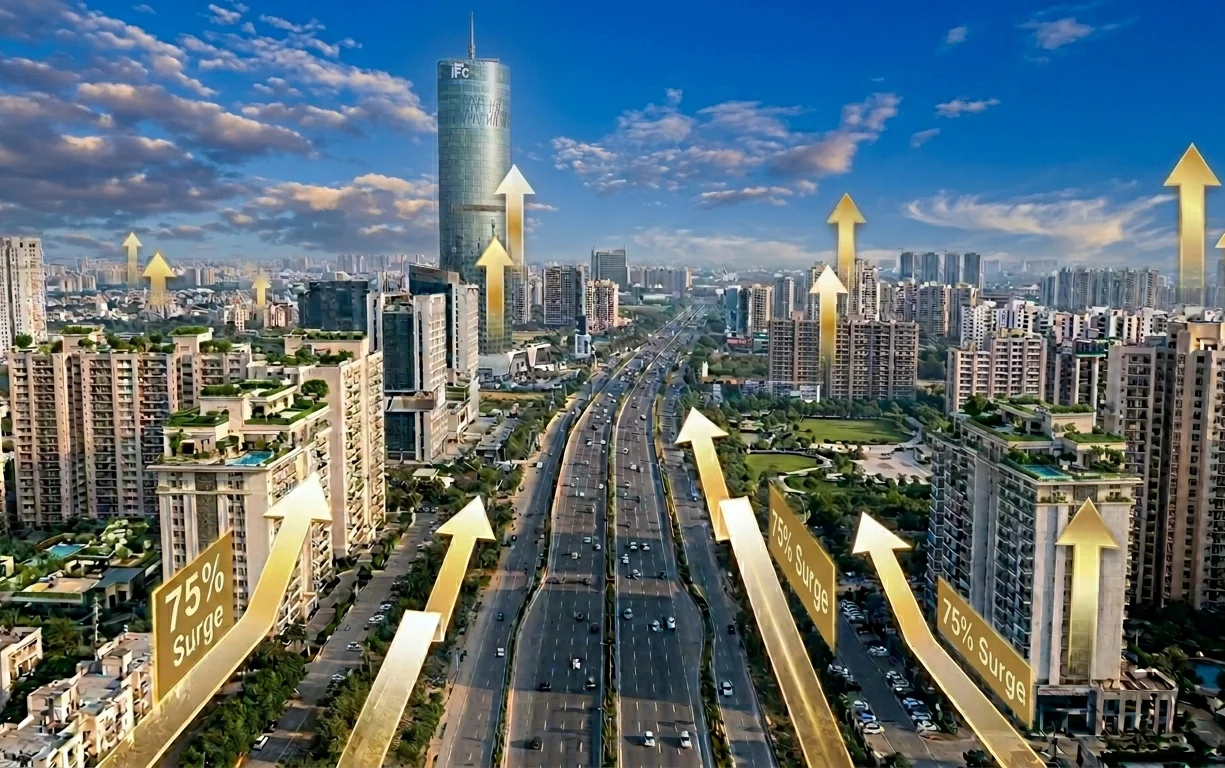
Haryana Property Prices Surge: Collector Rates Hiked Up to 75%
The real estate market in Haryana is entering a new phase of transformation. The government has proposed a significant increase in collector rates across multiple districts. In several high-growth areas, the hike goes as high as 75%.
This decision will come into effect from April 1, 2026, and it will directly influence property prices, buyer sentiment, and investment strategies.
Understanding Collector Rates in Simple Terms
Collector rates, also known as circle rates, define the minimum value at which a property must be registered.
You cannot legally register a property below this rate. Even if a buyer negotiates a lower deal, the registration still happens at the government-defined price.
Therefore, when collector rates increase, the overall cost of buying property automatically rises.
This includes:
- Higher stamp duty
- Increased registration charges
- Bigger upfront investment
In short, even if market prices remain stable, buyers still pay more due to higher government valuation.
Why Haryana Government Increased Collector Rates
Now, let’s understand the reasoning behind this decision.
For years, there has been a gap between actual market prices and government-notified rates. Many transactions happened at higher real prices but lower registered values.
Because of this mismatch, the system faced several issues:
- Loss of government revenue
- Reduced transparency
- Increased cash components in deals
To fix this, the government decided to align collector rates with real market conditions.
As a result, this revision will:
- Improve transparency in transactions
- Boost state revenue collection
- Reduce under-reporting of property values
Clearly, the move aims to create a more structured and reliable real estate ecosystem.
Key Locations Seeing Major Hikes
The increase does not apply evenly across all regions. Instead, it focuses on high-growth and infrastructure-driven areas.
Major highlights include:
- Karnal district:
Agricultural land in Baldi village jumped from ₹3 crore to ₹5.25 crore per acre - Faridabad region:
Tajupur village witnessed a sharp 75% rise - Gurugram belt:
Areas like Bajghera and Sarhaul saw significant hikes in both agricultural and residential rates - Dwarka Expressway corridor:
Sectors 104 and 115 recorded increases between 62% and 67% - Panchkula and Hisar:
Commercial zones and agricultural land also experienced steep revisions
These changes clearly indicate that strategic locations with future potential are driving the surge.
Infrastructure Growth Is the Real Trigger
Now, here’s where things get interesting.
Most of the areas witnessing steep hikes are closely connected to major infrastructure developments.
For instance:
- Proximity to NH-44 boosts land value in Karnal
- Expansion around Gurugram drives demand in nearby villages
- Growth in Faridabad pushes surrounding agricultural land prices
- Rapid development along Dwarka Expressway increases investor interest
Because of these developments, property demand has already increased in these regions.
Therefore, the government is simply updating rates to reflect ground reality.
Direct Impact on Property Buyers
Let’s address the most important question.
Will buying property become expensive?
The answer is yes.
Here’s how buyers will feel the impact:
- Higher stamp duty payments
- Increased registration cost
- Larger initial investment required
For example, if collector rates increase by 50–75%, the total transaction cost can rise significantly even if the deal value stays unchanged.
As a result, first-time buyers and budget buyers may face the biggest challenge.
Impact on Developers and Real Estate Market
Developers will also need to adapt quickly.
On one side, land acquisition becomes more expensive. On the other side, higher collector rates validate premium pricing.
This creates a mixed situation:
- Project costs increase
- Property prices may rise gradually
- Market becomes more transparent
Moreover, developers might shift focus toward emerging micro-markets where rates are still relatively lower.
What This Means for Investors
For investors, this development brings both caution and opportunity.
Short-term impact:
- Higher entry cost
- Reduced immediate margins
Long-term impact:
- Stronger capital appreciation
- Better market stability
- Increased trust in transactions
Therefore, investors who focus on long-term growth corridors will benefit the most.
Will Property Prices Increase Further?
This is where strategy matters.
Collector rate hikes do not always lead to an immediate rise in market prices. However, they create a new benchmark for valuation.
Over time:
- Sellers increase expectations
- Developers adjust pricing
- Buyers accept higher levels
Gradually, the entire market shifts upward.
So yes, in most growth zones, property prices are likely to rise steadily.
Expert View on the Situation

According to Sanjeev Singh, MD, SKJ Landbase:
“The increase in collector rates reflects the government’s intent to formalize and strengthen the real estate sector. While it may increase costs for buyers in the short term, it will bring transparency, reduce cash transactions, and build long-term investor confidence in Haryana.”
What Should Buyers Do Now?
Timing and planning have now become crucial.
Smart moves include:
- Finalize deals before April 1, 2026 if possible
- Explore developing areas instead of saturated markets
- Focus on long-term appreciation instead of quick gains
Additionally, always evaluate infrastructure growth before investing. That is where real value lies.
Final Thoughts
The collector rate hike marks a major shift in Haryana’s real estate landscape.
Yes, buying property will become more expensive. However, the move also signals a maturing and transparent market.
For serious buyers and investors, this is not just a challenge it is an opportunity.
Those who act early, choose the right locations, and think long-term will ultimately gain the most from this transformation.