US-Iran Conflict Impact: Why Property Prices in India Could Rise Soon
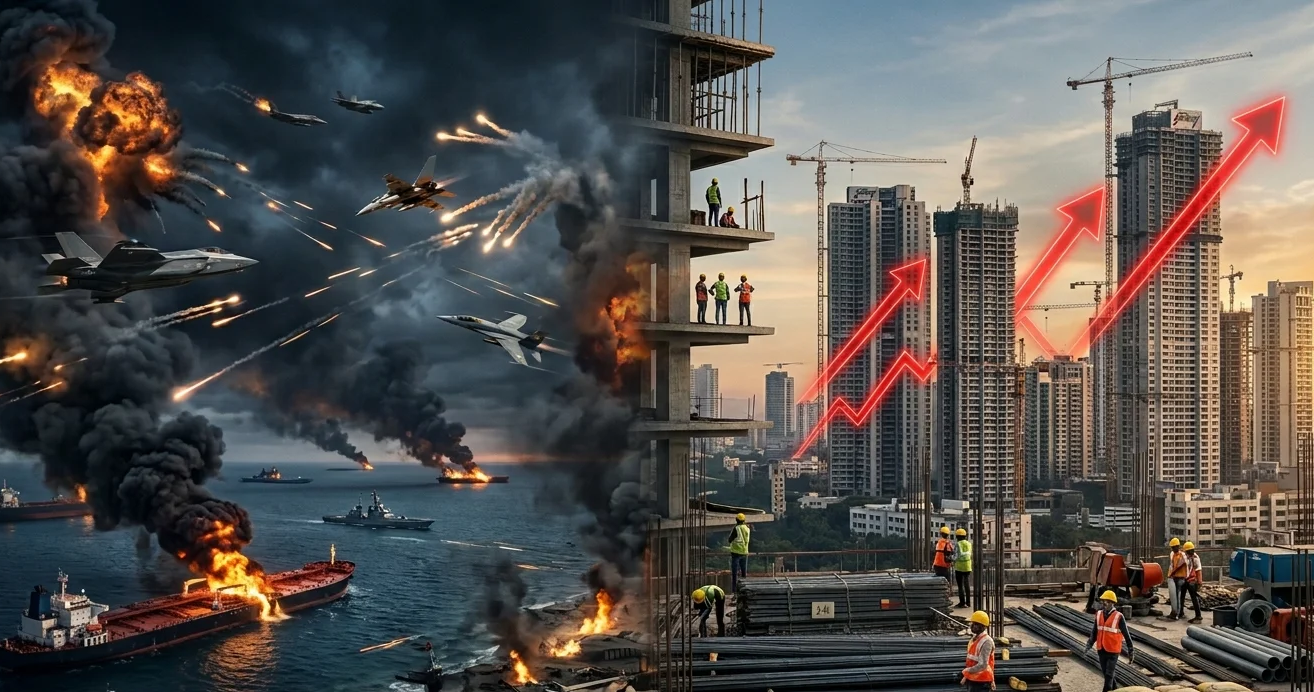
The rising geopolitical tension between the United States and Iran has started to create ripple effects across global markets. Now, this situation is slowly impacting India’s real estate sector. Leading industry bodies like CREDAI and NAREDCO have raised serious concerns.
They warn that if the conflict continues, construction costs will increase. As a result, property prices may rise. At the same time, project timelines could face delays. Clearly, the situation demands attention from both developers and homebuyers.
Construction Costs Are Rising Rapidly
To begin with, real estate depends heavily on raw materials. These include steel, cement, tiles, wires, pipes, and glass. Recently, prices of many of these materials have started increasing.
This trend is not random. Instead, it connects directly to global uncertainty. Rising fuel costs and disrupted logistics are driving these price hikes. Consequently, developers now face higher construction expenses.
For example, steel prices have already moved upward. Similarly, PVC products and ceramic materials have become more expensive. In addition, manufacturers are struggling to maintain steady supply.
Therefore, the base cost of building any project is rising steadily.
Fuel Prices Trigger a Chain Reaction
Now, let’s understand the root cause.
Fuel plays a crucial role in construction and transportation. When geopolitical tensions increase, crude oil prices often rise. This directly impacts logistics costs.
Here’s how the chain reaction works:
- Conflict increases uncertainty
- Crude oil prices go up
- Transportation becomes expensive
- Raw materials cost more
- Construction expenses rise
Moreover, key global routes like the Strait of Hormuz remain sensitive. This narrow passage handles a significant share of global oil supply. Even minor disruptions here can impact global markets.
As a result, developers in India feel the pressure despite domestic production.
Manufacturing Hubs Facing Challenges
At the same time, manufacturing hubs are also under stress. For instance, Morbi in Gujarat, known for tiles and ceramics, is facing fuel-related disruptions.
Because of rising fuel costs:
- Production becomes expensive
- Supply reduces temporarily
- Delivery timelines get affected
Consequently, developers may struggle to source materials on time. This adds another layer of complexity to project execution.
Project Delays Becoming Likely
As costs increase and supply chains weaken, delays become unavoidable.
Developers depend on consistent availability of materials. However, current disruptions are slowing down procurement. This directly affects construction speed.
Therefore:
- Projects may take longer to complete
- Delivery timelines may shift
- Planning becomes uncertain
Although the situation remains manageable today, prolonged conflict could worsen delays significantly.
Current Stability but Future Risk
Interestingly, the Indian real estate sector remains stable for now. This stability exists because India produces many construction materials domestically.
So, in the short term:
- Construction activity continues
- Supply disruptions remain limited
- Buyer demand stays intact
However, this stability may not last forever.
If the conflict between the United States and Iran continues for a longer period, the pressure will increase.
Gradually:
- Input costs will rise further
- Developer margins will shrink
- Property prices will move upward
Thus, the long-term outlook depends heavily on global developments.
Homebuyers May Face Price Hikes
Now, let’s focus on homebuyers.
When developers face rising costs, they eventually pass on the burden. This means property prices may increase in the near future.
Reports suggest that prices could rise by around 5% or more, especially in premium segments. High-rise developments, which rely heavily on steel, may see sharper increases.
Cities like:
- Mumbai
- Gurugram
- Hyderabad
are likely to experience faster price growth.
Additionally, luxury housing could become even more expensive due to reliance on high-end materials.
Expert View: Sanjeev Singh’s Perspective

According to Sanjeev Singh MD SKJ Landbase, the current situation requires careful monitoring:
Global geopolitical tensions always impact real estate indirectly. Right now, we are witnessing early signs of cost pressure due to rising fuel prices and supply chain disruptions. While India remains resilient, prolonged conflict could force developers to revise pricing. Homebuyers should act wisely and stay informed.
His statement clearly highlights the importance of timing in property decisions.
What Lies Ahead?
Looking forward, everything depends on how the situation unfolds.
If tensions reduce quickly:
- Fuel prices may stabilize
- Supply chains will recover
- Costs will normalize
However, if the conflict continues:
- Construction costs will increase further
- Project delays will become common
- Property prices will rise significantly
Therefore, the coming weeks will play a crucial role.
Final Thoughts
In conclusion, the ongoing tension between the United States and Iran has started influencing India’s real estate sector. While the current impact remains limited, the risk of escalation cannot be ignored.
Construction costs are rising. Supply chains are under pressure. Developers are cautious. Meanwhile, homebuyers may soon face higher prices.
So, if you plan to invest in property, now is the time to stay alert. Watch market trends closely. Make informed decisions. Because in real estate, timing can make all the difference.