PM Modi Launches New Delhi Metro Corridors: Pink & Magenta Line Expansion Set to Transform Connectivity Across Delhi
Delhi’s public transport network has reached another important milestone. Prime Minister Narendra Modi recently inaugurated two new corridors of the Delhi Metro, further strengthening the capital’s metro connectivity. With this launch, Delhi moves one step closer to becoming a city with faster, smarter, and more sustainable transportation.
The newly inaugurated sections include the Majlis Park–Maujpur-Babarpur stretch of the Pink Line and the Deepali Chowk–Majlis Park extension of the Magenta Line. Together, these corridors promise improved connectivity between several key parts of Delhi.
At the same time, the government also laid the foundation stone for additional metro corridors under Phase-5. Consequently, Delhi’s metro network continues to expand rapidly, supporting the growing travel demands of the city’s population.
Pink Line Expansion Completes Delhi’s Ring Metro
To begin with, the Majlis Park–Maujpur-Babarpur section significantly extends the Pink Line. After this expansion, the Pink Line now stretches to 71.56 kilometres. More importantly, this extension completes the country’s first fully operational Ring Metro, allowing trains to run around large parts of the city in a circular route.
This development improves connectivity between North-East Delhi and North-West Delhi. Previously, commuters often needed to switch multiple metro lines or rely on road transport. Now, the new corridor simplifies travel and reduces overall commuting time.
Several important stations lie along this stretch. These include Burari, Jharoda Majra, Jagatpur-Wazirabad, Soorghat, Nanaksar-Sonia Vihar, Khajuri Khas, Bhajanpura, and Yamuna Vihar, before reaching Maujpur-Babarpur.
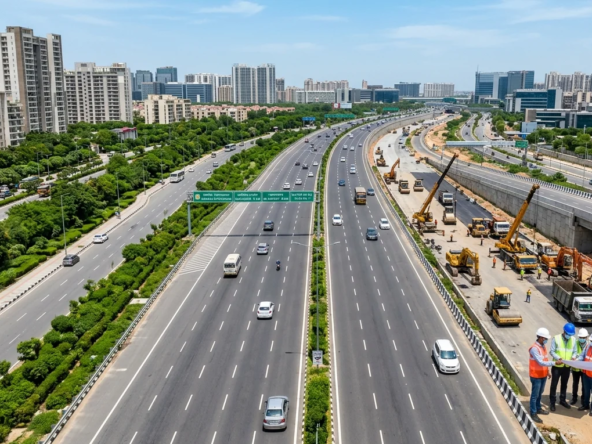
In addition, the project features an engineering marvel. Engineers built a new bridge over the Yamuna River along with a double-decker viaduct. The lower deck carries a road flyover, while the upper deck carries the metro track. Because of this smart design, the corridor maximizes space in Delhi’s densely populated areas.
As a result, thousands of commuters will now experience shorter travel times, smoother connectivity, and less traffic congestion.
Magenta Line Extension Improves North Delhi Connectivity
Meanwhile, the Deepali Chowk–Majlis Park corridor adds another major improvement to the city’s metro network. This extension pushes the Magenta Line close to 49 kilometres in total length.
The corridor serves several densely populated residential areas in North Delhi. Consequently, residents now gain easier access to the broader metro network.
The extension includes seven elevated stations, such as:
- Madhuban Chowk
- Uttar Pitampura–Prashant Vihar
- Haiderpur Village
- Haiderpur Badli Mor
- Bhalswa
Importantly, this stretch connects with the existing Botanical Garden–Krishna Park Extension Magenta Line. Because of this connection, commuters can now travel more easily between North Delhi, South Delhi, and Noida.
Furthermore, the new corridor reduces dependency on private vehicles. Many daily commuters who previously relied on cars or buses will now prefer the metro because of its speed and reliability.
New Metro Corridors Announced Under Phase-5
Along with the inauguration, Narendra Modi also laid the foundation stones for three new metro corridors under Phase-5(A).
These upcoming projects include:
- Central Vista Underground Corridor (9.913 km) connecting Ramakrishna Ashram Marg to Indraprastha.
- Golden Line Underground Extension (2.263 km) linking Aerocity to Indira Gandhi Airport Terminal-1.
- Golden Line Elevated Extension (3.9 km) connecting Tughlakabad to Kalindi Kunj.
Once completed, these corridors will significantly improve connectivity between Delhi and nearby NCR cities such as Noida, Faridabad, and Ballabhgarh.
Therefore, commuters travelling between Delhi and these neighbouring cities will benefit from faster and more convenient transport options.
Metro Expansion Drives Urban Growth
Metro connectivity does more than improve commuting. In fact, it also plays a vital role in shaping urban development and real estate growth.
Whenever a new metro corridor opens, surrounding areas often witness increased property demand and infrastructure development. Developers start new projects, businesses expand, and residential communities grow.
Because of this trend, locations near metro stations usually experience higher property values and stronger investment potential.
Moreover, improved public transport supports sustainable city living. When more people use metro services, traffic congestion decreases and pollution levels also drop.
Industry Perspective

According to Sanjeev Singh, MD of SKJ Landbase, metro expansion significantly influences urban growth and real estate investment.
“Metro connectivity continues to transform the way cities develop. Every new corridor improves accessibility and encourages planned urban expansion. Areas located near metro stations naturally attract homebuyers, investors, and businesses. As a result, such infrastructure projects not only improve daily commuting but also strengthen long-term real estate value across Delhi-NCR.”
Delhi Moves Towards a More Connected Future
Delhi already operates one of the largest metro networks in the world. However, the latest expansions demonstrate that the city continues to prioritize modern infrastructure and efficient public transport.
With new lines under construction and Phase-5 projects underway, the Delhi Metro will soon connect even more neighbourhoods and NCR cities.
Ultimately, these developments promise faster travel, reduced congestion, and stronger economic growth for the entire region. For millions of daily commuters, the expansion will make everyday travel easier. At the same time, it will help Delhi move toward a smarter, more sustainable urban future.