A Fresh Push to Resolve the Supertech Crisis
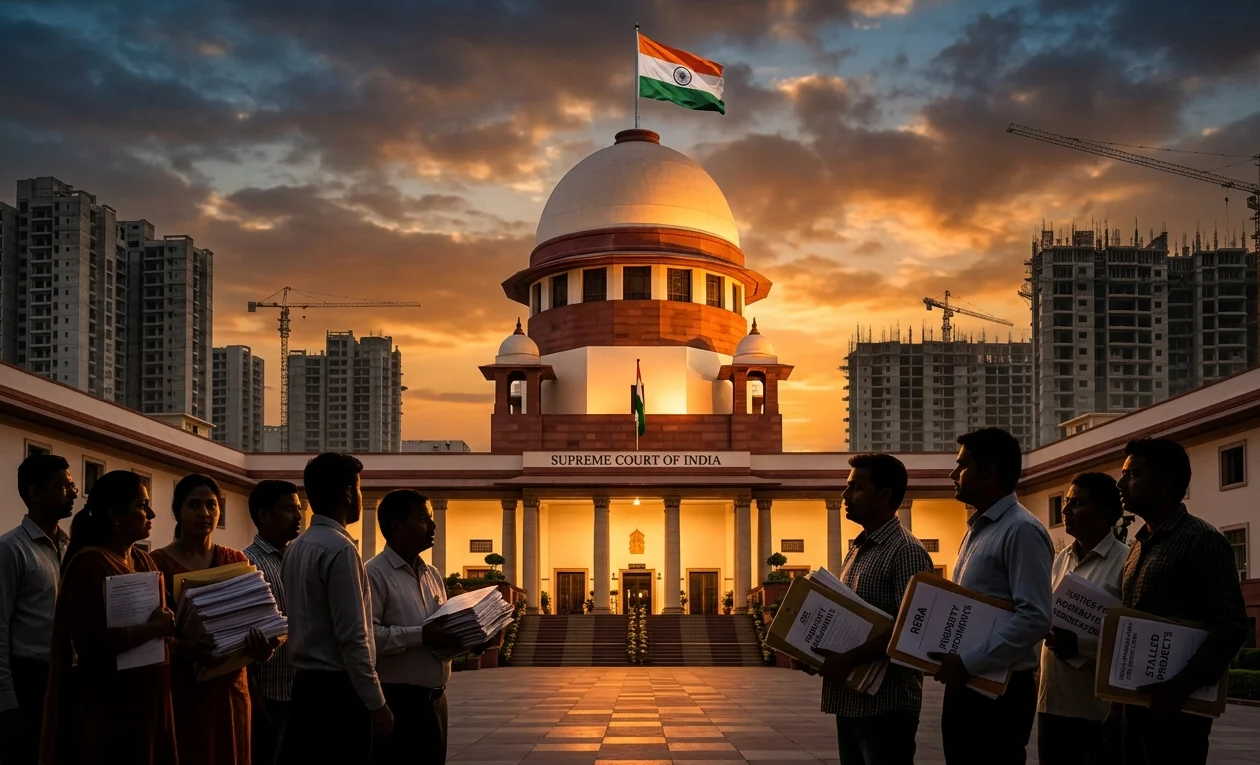
The long-running troubles surrounding Supertech Limited have entered a decisive phase. This time, the Supreme Court of India has stepped in with a strategic direction instead of a direct verdict. The court has asked the National Company Law Appellate Tribunal to determine how the remaining projects should be monitored.
This development comes at a crucial time. Thousands of homebuyers still wait for possession. Meanwhile, several projects remain incomplete due to financial and administrative hurdles. Therefore, this move signals urgency as well as caution.
Understanding the Core Dispute
At the center of the issue lies a simple yet powerful question. Should a court-appointed committee oversee all 30 Supertech projects, or should it limit its role to the 16 projects already assigned to NBCC (India) Ltd.?
Earlier, the Supreme Court transferred 16 stalled projects to NBCC. This decision aimed to accelerate construction and bring relief to buyers. However, the remaining 14 projects still lack a clear roadmap.
Now, different stakeholders hold different views. Financial creditors, land authorities, and the developer have raised concerns about expanding control. On the other hand, some experts believe a unified system could ensure better coordination.
Because of this disagreement, the court has shifted the responsibility to NCLAT. This ensures a detailed evaluation before any final decision.
The IRP Controversy and Its Impact
The situation became more complicated after the suspension of Interim Resolution Professional Hitesh Goel. The Insolvency and Bankruptcy Board of India took this action due to alleged misconduct.
This decision created a leadership vacuum. Notably, the IRP headed both the apex committee and project-specific panels. As a result, project monitoring slowed down. In some cases, work even came to a halt.
Consequently, the Supreme Court began exploring alternative management structures. It emphasized the need for continuity, accountability, and faster execution.
Why a Unified Monitoring System Matters
A single monitoring body could bring several advantages. First, it would improve coordination between projects. Many of these developments share financial and operational linkages. Therefore, handling them separately often creates inefficiencies.
Second, a unified structure could streamline fund allocation. Given that dues reportedly touch ₹9,000 crore, proper financial planning becomes essential.
Third, it could ensure transparency. Buyers would benefit from clear communication and faster decision-making.
However, critics argue that combining all projects may complicate existing agreements. They also fear delays due to increased administrative complexity. This is exactly why NCLAT’s role becomes so critical now.
Homebuyers at the Center of the Storm
While legal debates continue, homebuyers remain the most affected group. Many have invested their life savings in these projects. Delays have caused financial strain as well as emotional stress.
A positive outcome from NCLAT could change this scenario. If it approves a broader monitoring system, project execution may gain momentum. On the contrary, if it restricts oversight, the remaining projects might face prolonged uncertainty.
Therefore, the upcoming decision will directly influence buyer confidence across the market.
NBCC’s Growing Importance
The involvement of NBCC (India) Ltd. has already brought some stability. As a government-backed entity, it offers credibility and execution strength.
NBCC focuses on completing stalled housing units while maintaining transparency. Its presence reassures homebuyers who had lost faith in delayed projects.
However, its current role remains limited to 16 projects. Expanding its scope could accelerate recovery. Yet, such a move requires careful evaluation of financial and legal implications.
Impact on Noida and Greater Noida Realty
The outcome of this case will significantly affect property markets in Noida and Greater Noida. These regions host a large share of Supertech developments.
Over the past few years, delays have weakened buyer sentiment. Investors have become cautious. Consequently, demand has shifted toward reputed developers.
However, a strong resolution could reverse this trend. It could rebuild trust and attract fresh investment. In turn, this would boost the overall real estate ecosystem.
Expert Insight by Sanjeev Singh

Sanjeev Singh, MD of SKJ Landbase, shared his perspective:
The Supreme Court’s direction reflects a structured and forward-looking approach. A unified monitoring mechanism can speed up delivery. However, execution discipline and stakeholder alignment will determine real success.
His statement highlights a key point. Policy decisions alone cannot solve the issue. Effective implementation will decide the outcome.
What Lies Ahead
Now, all eyes remain on the National Company Law Appellate Tribunal. It will analyze stakeholder concerns, financial dependencies, and legal complexities before making a decision.
Meanwhile, the Supreme Court has clarified that its earlier observations should not influence the tribunal’s judgment. This ensures fairness and neutrality.
Importantly, the court has prioritized two aspects quick replacement of the IRP and efficient project management. These steps aim to restore momentum in stalled developments.
Final Thoughts
The Supertech case reflects broader challenges within India’s real estate sector. Delayed projects, financial stress, and governance gaps have affected thousands of buyers.
However, strong judicial oversight offers hope. If handled correctly, this case could set a benchmark for resolving similar crises in the future.
For now, buyers, investors, and developers await clarity. The NCLAT decision will not just impact Supertech. It will shape the future of trust in India’s housing market.