 by SKJ Landbase
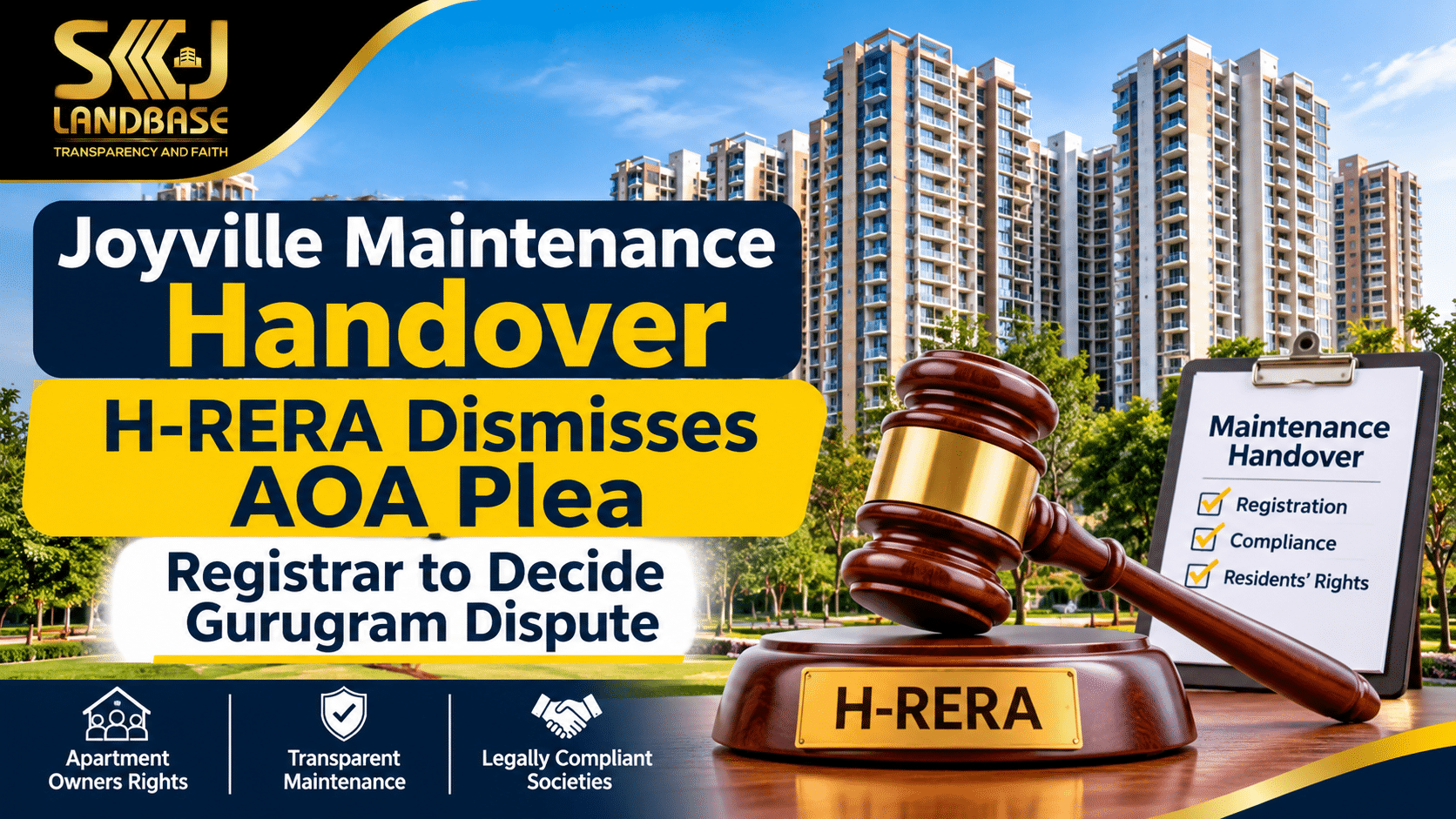
Who should control maintenance after a developer hands over a residential project? A dispute at Joyville, Sector 102, Gurugram, has brought this important question into focus.
The Haryana Real Estate Regulatory Authority (H-RERA) has dismissed a complaint filed by Joy Lavie Apartment Owners Association against Joyville Shapoorji Housing Pvt Ltd. The complaint concerned the transfer of maintenance and management responsibilities.
In its order dated September 8, 2026, H-RERA chairman Arun Kumar clarified the next step. The Registrar of Societies must determine which of the two rival residents’ associations has the legal authority to represent Joyville homeowners.
However, the authority did not decide which association should manage the project. As a result, uncertainty continues over maintenance operations, common areas, financial records and other project responsibilities.
This development highlights an important issue for Gurugram’s residential market. Developers and homeowners must follow transparent procedures during maintenance handovers.
What Is the Joyville Sector 102 Maintenance Handover Dispute?
The Joyville maintenance handover dispute centers on two residents’ associations. Both organizations claim the right to represent homeowners at the Sector 102 housing project.
Joy Lavie Apartment Owners Association filed a complaint against Joyville Shapoorji Housing Pvt Ltd under Section 31 of the Real Estate (Regulation and Development) Act, 2016.
The association stated that it registered on September 14, 2025. It alleged that the developer and its facility management partner, CBRE South Asia Pvt Ltd, continued to control maintenance operations, project accounts and common areas.
The association argued that the developer should transfer these responsibilities to the residents’ body. It also demanded financial records, the Interest-Free Maintenance Security (IFMS) corpus and other project documents.
Additionally, the association alleged that the developer tried to establish a parallel, builder-sponsored organization. It argued that the developer should recognize its registered association instead.
However, Joyville Shapoorji Housing Pvt Ltd challenged the complainant association’s legal standing. The developer questioned its membership, formation process and president’s authority to initiate legal proceedings.
The developer also referred to another organization, Joyville Gurugram AOA. This association registered on March 3, 2026, under registration certificate number HR-2435 of 2026.
The developer maintained that Joyville Gurugram AOA represented the legitimate residents’ association under the project’s deed of declaration.
Consequently, both organizations claimed the right to represent Joyville homeowners. This disagreement brought the association’s legal status before H-RERA.
Why Did H-RERA Dismiss the Joyville AOA Complaint?
H-RERA examined the competing claims and identified a jurisdictional issue. The authority concluded that the Registrar of Societies must determine the legal status of both organizations.
The dispute raises several important questions:
- Did both associations follow the correct registration process?
- Do they maintain valid membership records?
- Do their bye-laws comply with applicable laws?
- Did they conduct elections according to statutory requirements?
- Can either organization legally represent Joyville homeowners?
H-RERA held that the Registrar must examine these questions under the Haryana Registration and Regulation of Societies Act, 2012.
Therefore, the authority dismissed the complaint as not maintainable before H-RERA. It also directed both associations to approach the competent Registrar for a decision.
However, this ruling does not establish that either association has won the dispute. H-RERA did not declare either organization legally valid or invalid.
Similarly, the authority did not transfer maintenance control to either association. Instead, it clarified which authority must examine their competing claims.
What Does Section 17 of RERA Say About Maintenance Handover?
Section 17 of the Real Estate (Regulation and Development) Act, 2016, deals with the transfer of title and project documents. It also covers the transfer of common areas to the association of allot-tees or the competent authority, as applicable.
Joy Lavie Apartment Owners Association relied on this provision to support its maintenance handover demand.
The association also referred to an H-RERA circular dated December 6, 2018. It argued that the developer should transfer maintenance responsibilities, accounts, IFMS funds and project documents within 90 days of receiving the occupation certificate.
However, the dispute highlights three separate aspects of residential project management:
- Transfer of ownership rights in common areas.
- Transfer of maintenance and facility management responsibilities.
- Recognition of a legally competent residents’ association.
Each process requires proper documentation and compliance with applicable laws.
Moreover, homeowners need a transparent handover to understand how developers manage maintenance funds and common facilities. Clear financial records can also help residents monitor expenses and hold the management accountable.
Why Does the Registrar of Societies Matter in the Joyville AOA Dispute?
The Registrar of Societies plays an important role in examining organizations that register under the Haryana Registration and Regulation of Societies Act, 2012.
In the Joyville case, the Registrar must examine both associations’ registration documents, membership structures and governing bye-laws.
The authority must also review their election procedures and statutory compliance.
Ultimately, the Registrar’s decision will help establish which association has the legal authority to represent Joyville residents.
Until then, both organizations face uncertainty over their legal positions. The proposed maintenance handover also remains a major concern for homeowners.
Therefore, the case highlights the importance of transparent association formation. Apartment owners should maintain accurate membership records and follow proper election procedures.
How Can the Joyville RERA Decision Affect Home-buyers in Gurugram?
The Joyville dispute carries important lessons for developers, residents and property buyers across Gurugram.
The city continues to attract home-buyers through premium residential projects, modern infrastructure and expanding employment opportunities. At the same time, its growing high-rise communities need efficient management systems.
Here are five important lessons from the Joyville case.
1. Residents Must Understand Their Association’s Legal Status
Home-buyers should verify their apartment owners’ association’s registration details. They should also check its membership records and governing documents.
Additionally, every association must follow its registered bye-laws and applicable statutory requirements.
2. Developers and Residents Must Maintain Transparency During Handover
A maintenance handover involves more than transferring everyday operational responsibilities.
Both sides must maintain clear records of maintenance accounts, IFMS funds, common-area documents and facility management arrangements.
Consequently, transparent documentation can reduce misunderstandings and prevent unnecessary disputes.
3. Financial Accountability Protects Homeowners’ Interests
Maintenance funds support the daily operations of residential communities. Therefore, residents should understand how their associations collect and utilize these funds.
Associations should maintain clear accounts of maintenance charges, security deposits and other community expenses.
Moreover, regular financial reporting can strengthen residents’ confidence and improve accountability.
4. Developers Must Follow the Applicable Handover Framework
Developers must understand their responsibilities under RERA and other applicable Haryana housing laws.
They should follow the prescribed procedures when transferring common areas, project documents and maintenance responsibilities.
Furthermore, developers should communicate clearly with residents throughout the handover process.
5. Buyers Should Evaluate Post-Possession Management
Property buyers often focus on location, apartment layouts, amenities, connectivity and pricing.
However, long-term property management deserves equal attention.
Buyers should examine the developer’s track record, maintenance arrangements and resident-management framework. They should also understand the developer’s approach towards post-possession responsibilities.
After all, a well-managed residential community contributes to a better ownership experience.
What Does the Joyville Dispute Mean for Gurugram’s Residential Real Estate Market?
Gurugram has emerged as one of India’s leading residential and commercial property destinations. Its premium housing developments and expanding infrastructure continue to attract buyers and investors.
However, the Joyville dispute highlights an important aspect of residential real estate: the transition from developer-led management to resident-led administration.
A residential project’s success does not end when the developer completes construction or hands over apartments.
Homeowners also depend on efficient maintenance, transparent financial management and properly functioning common facilities.
They also need a residents’ association that follows applicable legal requirements.
Unfortunately, disagreements over these responsibilities can create uncertainty. They can also complicate the management of an entire housing community.
Therefore, developers must maintain accurate documentation and establish transparent communication channels. They must also follow the applicable maintenance handover framework.
Similarly, residents should participate in association activities. They must understand their rights and responsibilities and follow the prescribed legal procedures.
Ultimately, both sides contribute to the long-term success of a residential community.
Expert Perspective: Sanjeev Singh, Managing Director of SKJ Landbase
Sanjeev Singh, believes that transparent maintenance handovers and strong resident-management systems play an important role in residential real estate.
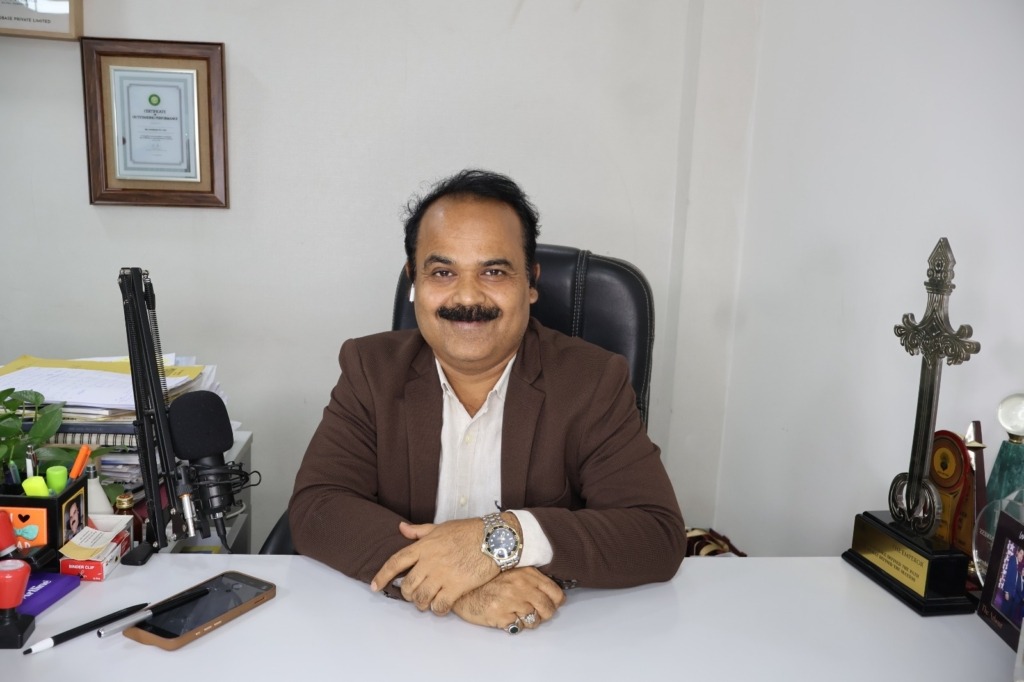
He says:
“A home-buyer’s experience does not end with possession of an apartment. The quality of maintenance, management of common areas and financial transparency directly influence the overall living experience.
The Joyville dispute highlights why developers and residents must follow a clear and legally compliant handover process. Both sides should maintain transparency, communicate effectively and resolve differences through the appropriate legal channels.
I believe the real estate industry must give greater importance to post-possession responsibilities. A well-managed residential community protects homeowners’ interests, maintains property standards and strengthens confidence in the developer.
At SKJ Landbase, we encourage home-buyers to evaluate more than a project’s location, amenities and specifications. They should also examine the developer’s credibility, management practices and long-term commitment to residents.”
Conclusion: Transparent Maintenance Handover Remains Essential for Gurugram Home-buyers
The Joyville Sector 102 dispute highlights the importance of legal clarity in residents’ association formation and maintenance handovers.
H-RERA has directed the rival associations to approach the Registrar of Societies. However, the authority has not decided which organization should manage the project’s maintenance operations.
The case sends an important message to developers and apartment owners across Gurugram. Proper documentation, financial transparency and legally compliant residents’ associations form the foundation of well-managed residential communities.
As Gurugram’s housing market continues to expand, home-buyers must look beyond apartment specifications and amenities. They should also consider the quality of post-possession management.
At SKJ Landbase, we believe informed property decisions begin with transparency, developer accountability and a clear understanding of the responsibilities that come with home-ownership.
Source: The Times of India, November 14, 2026. H-RERA order dated September 8, 2026.