Haryana’s New Parking Rule: Will Affordable Homes in Gurugram Become Costlier?
Haryana has rolled out a major update to its affordable housing policy. The government now mandates one car parking space for every flat. At the same time, it has increased the price cap in Gurugram to ₹5,575 per sq ft.
This move has created a strong buzz in the real estate market. Naturally, buyers and developers both want clarity. Will this improve living standards? Or will it make homes less affordable? Let’s understand everything step by step.
Key Changes in the Affordable Housing Policy
To begin with, Haryana has amended its 2013 Affordable Housing Policy. The biggest change focuses on mandatory parking allocation.
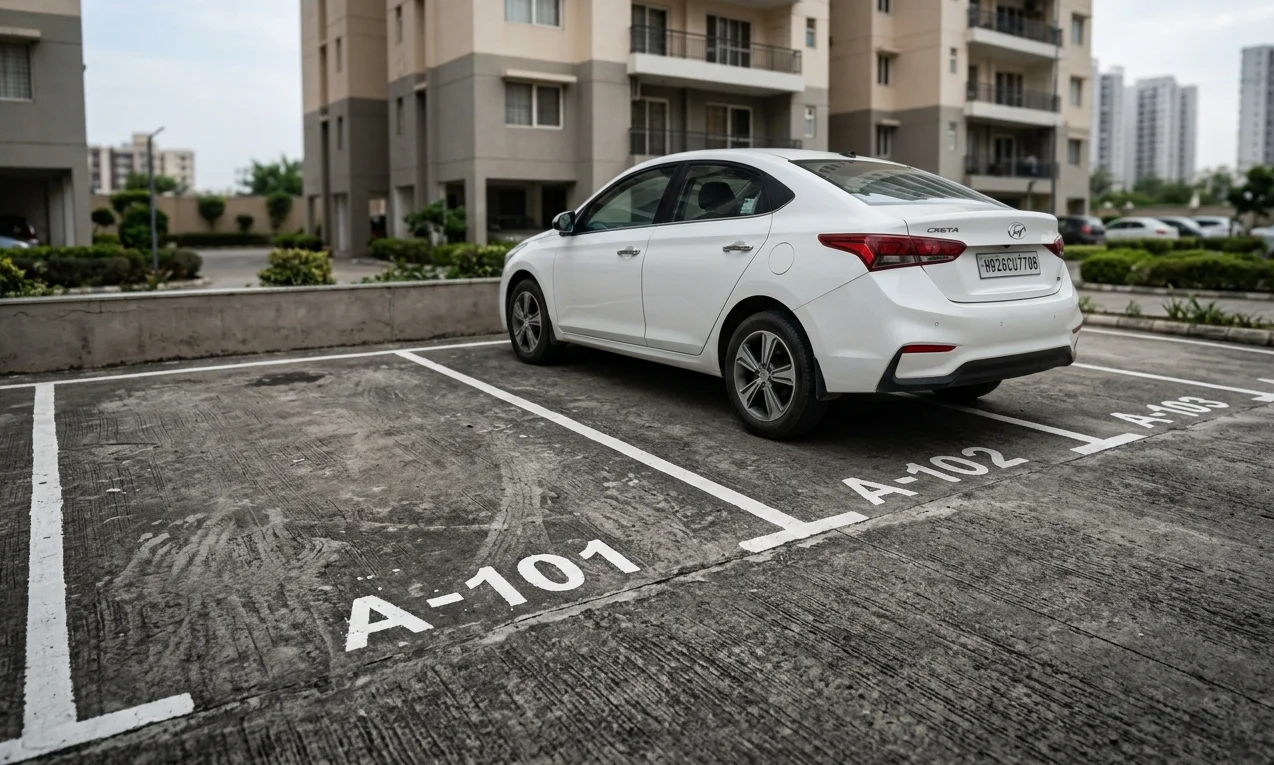
Now, every flat must come with one Equivalent Car Space (ECS). Earlier, developers had the flexibility to decide parking provisions. However, this often led to overcrowded societies and daily disputes.
Moreover, authorities now require developers to clearly mark parking spaces during project approvals. This improves transparency. Buyers will know exactly what they are paying for.
Alongside this, the government has revised the pricing structure. In Gurugram, the new cap stands at ₹5,575 per sq ft. Balcony charges have also increased slightly.
Clearly, the policy now focuses on both better planning and structured growth.
Why This Parking Rule Is a Big Deal
Now, let’s talk about why this rule matters so much.
Parking has remained one of the biggest pain points in affordable housing projects. Residents often face daily struggles. Cars occupy internal roads. Emergency vehicles find it difficult to move.
With the new rule in place, every resident gets a dedicated parking slot. As a result:
- Societies will become more organized
- Traffic inside complexes will reduce
- Safety and accessibility will improve
- Overall living experience will feel more premium
Furthermore, planned parking increases property value. Buyers today look beyond just price. They want comfort, convenience, and order.
So, while the rule adds cost, it also adds real lifestyle benefits.
Will Apartment Prices Increase?
This is the most important concern for buyers.
Yes, prices are likely to increase slightly. Let’s break it down.
The cost of providing parking stands at around 10% of the flat price. For example:
- A 600 sq ft apartment in Gurugram may cost around ₹35–36 lakh
- Parking could add approximately ₹3.5–3.6 lakh
As a result, the final price may reach close to ₹39–40 lakh.
Additionally, the revised price cap already allows developers to charge more. When combined, these factors raise the overall cost of ownership.
However, the increase remains moderate. It does not drastically push homes out of reach. Instead, it slightly raises the entry barrier while improving quality.
Affordability vs Livability: Finding the Balance
At this point, the situation becomes a trade-off.
On one side, affordability takes a hit. Some first-time buyers may feel the pressure. Especially in a fast-growing market like Gurugram, even small increases matter.
On the other side, livability improves significantly.
Think about daily life. A home without proper parking creates constant stress. It affects convenience, safety, and even resale value.
Therefore, this policy tries to balance both sides. It slightly increases costs but ensures better living standards.
In simple terms, buyers pay a little more but gain long-term comfort.
Impact on Developers and Project Supply
Interestingly, developers also face mixed outcomes.
The revised price cap improves margins slightly. This gives developers some relief. It may even encourage new project launches.
However, the parking mandate increases construction complexity. Developers must allocate more space. Planning becomes tighter. Costs rise.
Because of this, some developers may still prefer premium or luxury projects.
In fact, affordable housing supply has already slowed down in recent years. New launches remain limited despite strong demand.
This makes supportive policies even more important.
Declining Demand in Affordable Housing
Another important angle is demand.
Recent reports show that housing priced below ₹50 lakh has witnessed a noticeable decline. This segment has seen a sharp year-on-year drop in sales.
Several factors contribute to this trend:
- Rising construction costs
- Limited government incentives
- Shift toward premium housing
Now, if prices rise further due to parking costs, some buyers may hesitate.
Therefore, while the new rule improves quality, it also raises concerns about market accessibility.
Expert View: Sanjeev Singh Speaks

Sanjeev Singh, MD of SKJ Landbase, explains:
The one-car parking mandate will certainly enhance the livability of affordable housing projects. However, the added cost may slightly increase prices for buyers. To truly boost this segment, the government should introduce stronger incentives for both developers and homebuyers.
He also highlights the importance of reviving schemes like CLSS under PMAY, which offered interest subsidies. Such initiatives can significantly improve affordability.
Additionally, tax benefits like Section 80-IBA can motivate developers to focus more on affordable housing.
Clearly, policy reforms must go beyond pricing changes.
What Should Buyers Expect Going Forward?
If you plan to buy a home, this is the right time to stay informed.
You should:
- Evaluate the total cost, including parking
- Prioritize projects with better planning
- Focus on long-term value instead of just price
- Track upcoming government incentives
Most importantly, think about daily comfort. A well-planned home always delivers better returns.
Final Thoughts: A Step Forward with a Slight Cost Impact
To sum up, Haryana’s new parking rule marks a progressive move.
Yes, it may increase prices slightly. However, it also ensures better organization, transparency, and living standards.
In a rapidly growing city like Gurugram, such reforms are necessary.
Going forward, the government must balance cost and accessibility. With the right support, affordable housing can remain both practical and aspirational.