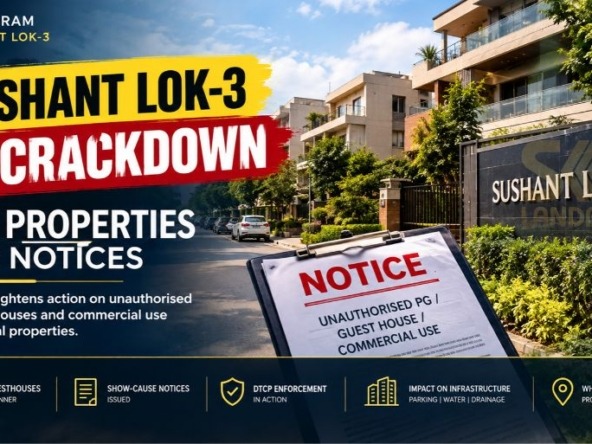
 by SKJ Landbase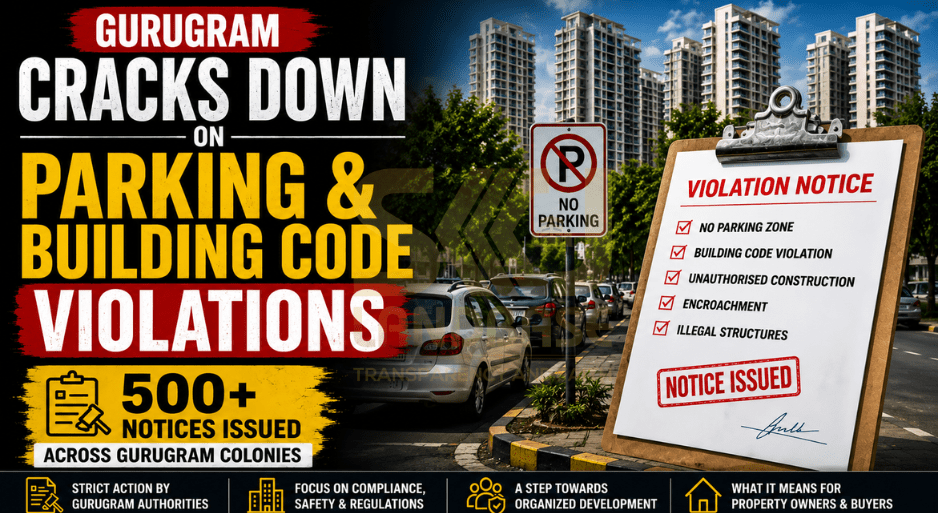
Gurugram is stepping up enforcement against building code and parking violations, with around 500 residents across various colonies receiving official notices. The action focuses on issues including unauthorised construction, encroachments and improper parking, highlighting the increasing importance of regulatory compliance in one of India’s fastest-growing real estate markets.
What Is Behind the Gurugram Action?
The latest enforcement drive is aimed at improving compliance with municipal and urban-planning regulations.
According to reports, authorities have identified violations involving:
- Unauthorised construction
- Encroachment on public land
- Improper vehicle parking
- Building-code violations
- Other forms of non-compliant property use
Officials have indicated that inspections and action against repeat violations will continue.
The issue is particularly important for Gurugram because rapid urbanisation has increased pressure on roads, parking infrastructure and residential colonies.
Why Parking Compliance Matters
Parking is not simply a convenience issue. It is also part of Haryana’s building regulations.
The Haryana Building Code, 2017 specifies parking requirements based on the type and size of property. For example, the applicable provisions prescribe Equivalent Car Space (ECS) requirements for residential plots, group housing and commercial developments.
The regulations also provide that vehicles associated with a plot or premises should not be parked outside the designated plot area in applicable developments.
For homebuyers, this makes it important to understand not just the size and specifications of a property, but also its approved plans, parking provisions and regulatory status.
What This Means for Gurugram Homebuyers
The latest enforcement drive sends an important message to buyers: due diligence matters.
Before purchasing a property in Gurugram, buyers should verify:
1. Approved Building Plans
Check whether the actual construction corresponds with the sanctioned plan.
2. Parking Allocation
Understand where the property’s designated parking is located and whether it complies with applicable regulations.
3. Occupation/Completion Documentation
Verify the relevant approvals and certificates applicable to the property.
4. Land and Property Documentation
A professional review of title and regulatory documentation can help identify potential issues before purchase.
5. Property Usage
Buyers should be particularly careful where residential premises have been converted or are being marketed for commercial use without appropriate approvals.
What This Means for Gurugram’s Real Estate Market
The enforcement action could encourage a stronger focus on compliance, planned development and transparent property transactions.
For organised developers and professionally managed projects, regulatory compliance and documentation become increasingly important factors when buyers compare properties.
It could also reinforce the difference between purchasing an approved, professionally developed property and buying into properties where construction, parking or usage may not fully align with applicable regulations.
SKJ Landbase’s Perspective
At SKJ Landbase, we believe that property decisions should be based on more than location, pricing and amenities.
A good real estate advisor should also help buyers understand project documentation, approvals, developer credentials, configuration, pricing and the overall investment proposition before they make a decision.
As Gurugram continues to evolve, our focus remains on helping buyers make informed and transparent property decisions rather than simply pushing a particular project.
Expert Opinion by Sanjeev Singh MD, SKJ Landbase

Expert view by Sanjeev Singh MD , SKJ Landbase Pvt Ltd: The latest enforcement drive highlights an important shift in Gurugram’s real estate environment—compliance is becoming an increasingly important part of property value.
For buyers, the lesson is straightforward: don’t evaluate a property only by its price, location or amenities. Approved plans, parking provisions, documentation and regulatory compliance should also form part of the buying decision.
Conclusion
The issuance of around 500 notices for parking and building-code violations in Gurugram is another indication that authorities are increasing scrutiny of property compliance.
For existing property owners, it reinforces the importance of ensuring that their properties comply with applicable regulations. For prospective buyers, it makes proper property due diligence more important than ever.
As Gurugram’s real estate market continues to mature, transparency, documentation and regulatory compliance are likely to become increasingly important considerations alongside location and price.