Haryana’s 1,900 KM Road Redesign Revolution
The National Capital Region (NCR) has witnessed rapid urban growth over the last decade. New residential sectors, commercial hubs, industrial zones, and business districts continue to emerge across Haryana. However, alongside this growth, cities have also faced rising traffic congestion, deteriorating air quality, and increasing pressure on road infrastructure.
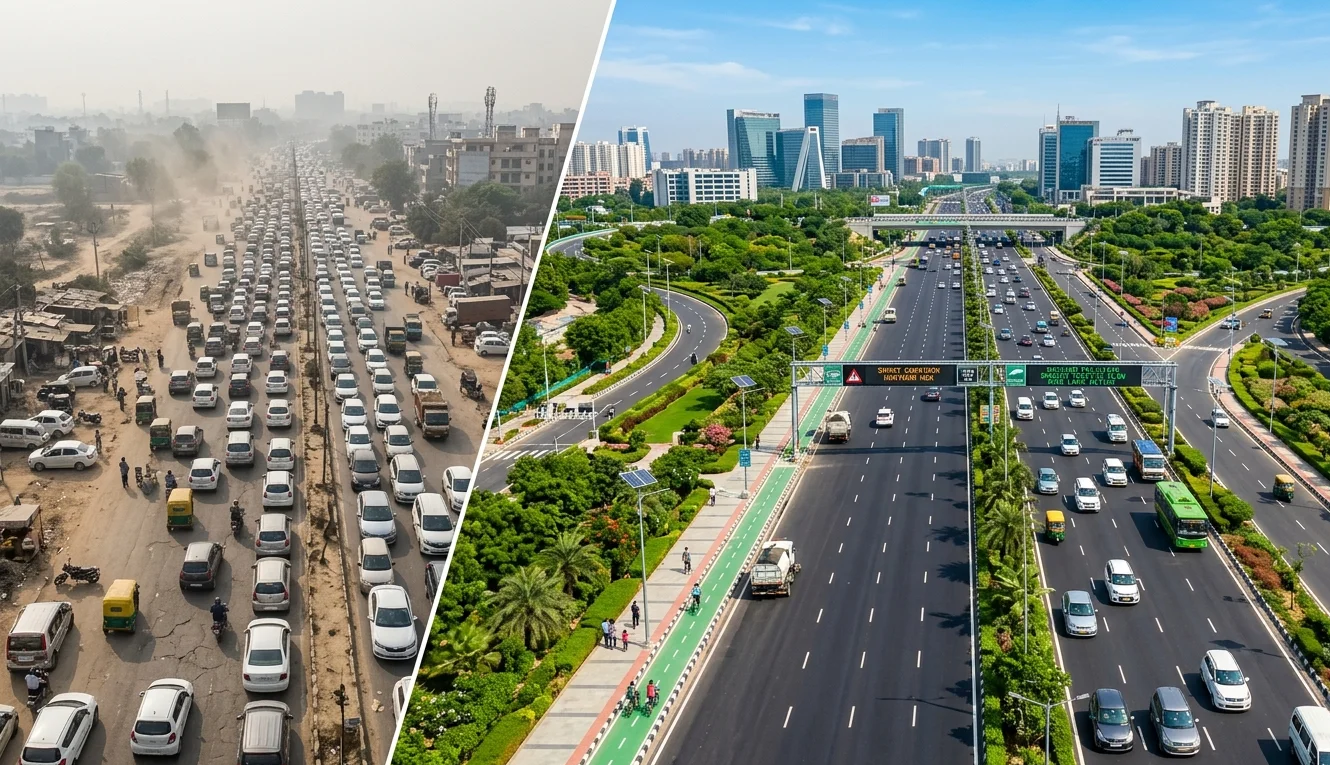
Now, Haryana has announced a major infrastructure initiative that could reshape urban mobility across the region. The state government plans to redesign nearly 1,900 kilometers of roads across seven NCR cities. More importantly, the project aims to reduce dust pollution, improve traffic movement, enhance road safety, and create greener urban environments.
As authorities move forward with this ambitious plan, residents, businesses, and real estate stakeholders are watching closely. After all, better roads often create a ripple effect that benefits every aspect of urban life.
Why Haryana Is Redesigning These Roads
Air pollution remains one of the biggest challenges across NCR. While vehicle emissions often receive attention, road dust contributes significantly to poor air quality.
Recent inspections conducted by the Commission for Air Quality Management (CAQM) highlighted the severity of the issue. Out of 125 roads inspected in Gurugram, only four roads remained completely free from airborne dust. Meanwhile, several roads generated excessive dust pollution.
Consequently, the National Green Tribunal (NGT) directed authorities to implement measures that would make major roads dust-free across Haryana’s NCR cities.
Instead of applying temporary solutions, Haryana decided to adopt a long-term approach. Therefore, the government initiated a comprehensive redesign program focused on sustainable urban infrastructure.
Seven NCR Cities Included in the Project
The road redesign initiative covers seven major cities:
- Gurugram
- Manesar
- Faridabad
- Karnal
- Rohtak
- Sonipat
- Panipat
Together, these cities have a road network exceeding 10,000 kilometers. However, authorities have identified approximately 1,900 kilometers of roads wider than 12 meters for redesign and modernization.
Furthermore, experts from the School of Planning and Architecture (SPA) and the Central Road Research Institute (CRRI) will prepare detailed recommendations. Their reports are expected within the next three months.
Afterward, government departments will begin phased implementation with a target completion date of December 2027.
What Will Change on These Roads?
This initiative involves much more than resurfacing roads. Instead, planners want to create modern, efficient, and environmentally friendly corridors.
Several important improvements will form the backbone of the redesign strategy.
Greener Road Networks
One of the key objectives involves reducing exposed soil and barren stretches along roads.
Authorities plan to plant native trees, shrubs, and greenery wherever possible. As a result, these green buffers will help control dust, improve aesthetics, and enhance environmental sustainability.
Additionally, greener roads often contribute to cooler urban temperatures and better overall city landscapes.
Standardized Road Geometry
Many urban roads currently suffer from inconsistent layouts. In some areas, road widths suddenly change. In others, footpaths disappear without warning.
Consequently, these inconsistencies create confusion and increase congestion.
The redesign program aims to introduce standardized road geometry. This approach will ensure smoother traffic movement while improving safety for motorists, cyclists, and pedestrians.
Better Pedestrian Infrastructure
Modern cities prioritize people, not just vehicles.
Therefore, redesigned roads will likely include improved footpaths, safer crossings, and better accessibility features. These upgrades can encourage walking while making daily travel safer and more comfortable.
Efficient Dust Control Systems
Dust remains a major source of air pollution in NCR.
For this reason, planners will focus on end-to-end paving and eliminating unpaved shoulders. Moreover, standardized road designs will allow municipal agencies to use mechanized sweeping machines more effectively.
As a result, cities can maintain cleaner roads throughout the year.
Smart Maintenance Through Technology
Another important component involves introducing a Road Asset Management System (RAMS).
Instead of repairing roads only after visible damage occurs, authorities can monitor infrastructure proactively. Consequently, they can identify issues early and schedule preventive maintenance before problems worsen.
This strategy can extend road life while reducing long-term repair costs.
A Major Boost for Air Quality
The environmental benefits of this initiative could prove substantial.
Dust pollution remains one of the largest contributors to poor air quality in NCR. Every day, vehicles traveling over exposed soil and damaged shoulders release fine dust particles into the atmosphere.
By paving road edges, improving landscaping, and implementing regular maintenance systems, Haryana can significantly reduce airborne dust levels.
Furthermore, cleaner roads create healthier urban environments. Residents may experience fewer respiratory issues, while cities can move closer to achieving air quality improvement targets.
How Gurugram Stands to Benefit
Gurugram will receive special attention under the project.
More than 350 kilometers of roads in the city have been identified for redesign. Key corridors include:
- Old Delhi Road
- New Railway Road
- Jharsa Road
- Civil Lines Road
- Southern Peripheral Road (SPR)
- Major sector roads
These roads serve thousands of commuters daily. Therefore, improvements could dramatically reduce travel delays and improve commuting experiences.
Moreover, better connectivity often supports economic growth by improving access to commercial districts and residential communities.
Positive Impact on Real Estate
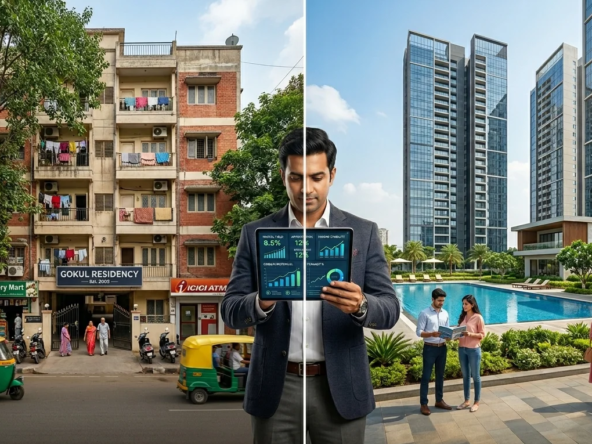
Infrastructure development and real estate growth often go hand in hand.
Whenever governments invest in better roads, property markets generally respond positively. Improved accessibility increases the attractiveness of residential and commercial locations.
As a result, sectors connected through upgraded road networks frequently witness stronger buyer interest and higher investment activity.
Cities like Gurugram, Faridabad, Sonipat, and Panipat may particularly benefit because road improvements can unlock new development opportunities and strengthen existing growth corridors.
Expert Perspective

Sanjeev Singh, MD of SKJ Landbase, believes that infrastructure modernization plays a crucial role in shaping future urban growth.
According to him, Haryana’s road redesign initiative represents a progressive step toward creating cleaner, smarter, and more sustainable cities. He notes that improved road infrastructure not only enhances mobility but also boosts investor confidence, supports economic activity, and increases the long-term value of surrounding real estate markets. He further emphasizes that projects focusing on both environmental sustainability and transportation efficiency will define the next phase of NCR’s urban development.
The Road Ahead
Haryana’s decision to redesign 1,900 kilometers of NCR roads reflects a forward-looking vision for urban development. Rather than relying on temporary fixes, the state has chosen a comprehensive strategy that addresses pollution, congestion, safety, and sustainability simultaneously.
As planning agencies finalize their recommendations and implementation begins, residents can look forward to cleaner roads, greener surroundings, and smoother commutes.
If executed successfully, this initiative could become a model for other rapidly growing urban regions across India. More importantly, it demonstrates how thoughtful infrastructure planning can improve everyday life while supporting long-term economic and environmental goals.
The journey toward cleaner and smarter cities starts with better roads, and Haryana has taken a significant step in that direction.