Haryana’s EV Charging Policy Shift: A Big Leap for Gurugram Real Estate
The real estate market in Gurugram keeps evolving. This time, the change comes from a powerful push toward sustainability. The Department of Town and Country Planning Haryana has proposed a major amendment to the Haryana Building Code 2017. The focus stays simple yet impactful make buildings ready for the electric future.
As electric vehicles gain popularity, infrastructure must catch up. Therefore, this policy does not just update rules. Instead, it sets the foundation for the next phase of urban development.
What the New EV Charging Rules Say
Let’s break it down clearly.
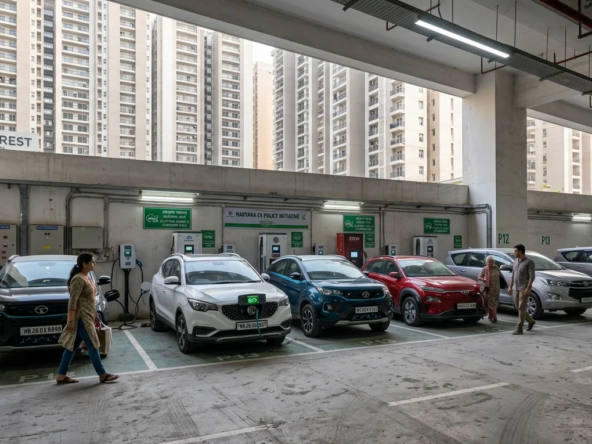
The draft introduces mandatory EV charging provisions in both residential and commercial projects. Moreover, it defines specific ratios:
- Commercial buildings must install 1 charger for every 3 parking slots
- Residential projects must install 1 charger for every 5 parking slots
In addition, all parking areas must become EV-ready. This means developers must provide conduits, wiring, and space for future expansion.
Earlier, authorities restricted EV charging in basements due to safety concerns. However, the new proposal allows charging points in basement and stilt parking areas, provided projects follow strict fire safety norms.
As a result, developers now get clarity. Buyers gain convenience. And the city moves closer to a cleaner future.
Why This Policy Comes at the Right Time
The timing of this move feels perfect. EV adoption continues to rise rapidly across Gurugram. People now prefer electric cars due to lower running costs and environmental benefits.
However, infrastructure has remained a major challenge.
Until recently:
- Societies struggled to approve EV chargers
- Fire departments raised safety objections
- Developers lacked clear regulatory guidance
For instance, a residential society in Sector 81 failed to secure a fire NOC because of basement EV chargers. That incident highlighted a major gap in the system.
Now, this amendment directly addresses such issues. It replaces confusion with clear guidelines. Therefore, it removes uncertainty for everyone involved.
Impact on Developers and Builders
Developers will need to adjust their planning strategies. This policy introduces new responsibilities, but it also creates strong opportunities.
Firstly, construction costs may increase slightly due to EV infrastructure and fire safety systems. However, the long-term advantages remain significant.
Developers can now:
- Position projects as future-ready and premium
- Attract environmentally conscious buyers
- Increase property value perception
Today’s buyers expect more than just basic amenities. They look for smart and sustainable features. Consequently, EV readiness will soon become a standard offering.
Therefore, developers who adapt early will lead the market.
What It Means for Homebuyers and Investors
This policy brings clear benefits for buyers.
Imagine purchasing a home today and planning to buy an EV later. Without charging infrastructure, daily life becomes inconvenient. However, this policy ensures that such problems do not arise.
Key advantages include:
- Convenient home charging access
- Reduced dependency on public stations
- Better long-term property value
Additionally, investors also gain.
Properties with EV infrastructure will attract modern tenants and premium buyers. As demand rises, resale value will improve. Hence, EV-ready homes will deliver stronger returns.
Fire Safety Takes Center Stage
Safety remains a major concern. Therefore, the policy does not ignore risks.
Instead, it introduces strict fire safety requirements for basement charging. Developers must now install advanced systems, including:
- Fire detection and suppression mechanisms
- Proper ventilation systems
- High-quality electrical installations
Earlier, authorities avoided basement charging due to fire hazards. Now, they allow it with proper safeguards.
This balanced approach ensures safety while enabling progress.
Expert Insight on the Policy

According to Sanjeev Singh MD SKJ Landbase
EV charging infrastructure will soon become a necessity rather than a luxury. Buyers already show strong interest in sustainable living. This policy provides clear direction to developers and boosts buyer confidence. In fact, EV-ready projects will define the next growth phase of Gurugram real estate.
His statement reflects a growing industry sentiment sustainability now drives decision-making.
Long-Term Impact on Gurugram’s Growth
This policy will influence the city’s development in multiple ways.
Firstly, it will accelerate EV adoption. Secondly, it will encourage smarter construction practices. Thirdly, it will strengthen Gurugram’s position as a modern urban hub.
Over time, we can expect:
- Increased demand for green buildings
- Integration of smart energy solutions
- Higher focus on sustainable infrastructure
Moreover, upcoming developments like metro expansion and improved road networks will further support this transformation.
Together, these changes will redefine urban living standards.
Final Thoughts
The proposed EV charging amendment marks a significant step forward. It resolves past confusion and supports future demand.
Yes, developers will need to invest more initially. However, the long-term benefits outweigh the costs.
For channel partners, this becomes a strong selling point. For buyers, it ensures comfort and convenience. And for Gurugram, it drives sustainable growth.
Clearly, EV-ready real estate is no longer a distant idea. It has become the new reality shaping the city’s future.