Budget 2026: Tier-II & III Cities to Drive Real Estate Growth
Budget 2026 has turned the spotlight on tier-II and III cities, signaling exciting opportunities for real estate. While the budget does not introduce direct incentives for property developers, its focus on planned growth clusters, infrastructure, and urban development is likely to boost demand across residential, commercial, industrial, and mixed-use projects.
Experts believe that this strategy will reshape urbanisation patterns, expand employment hubs, and create long-term demand for quality real estate.
City Economic Regions: The Next Urban Hubs
The government plans to set up seven City Economic Regions (CERs), including Bengaluru, Surat, and Varanasi. Each CER will receive an allocation of ₹5,000 crore over five years.
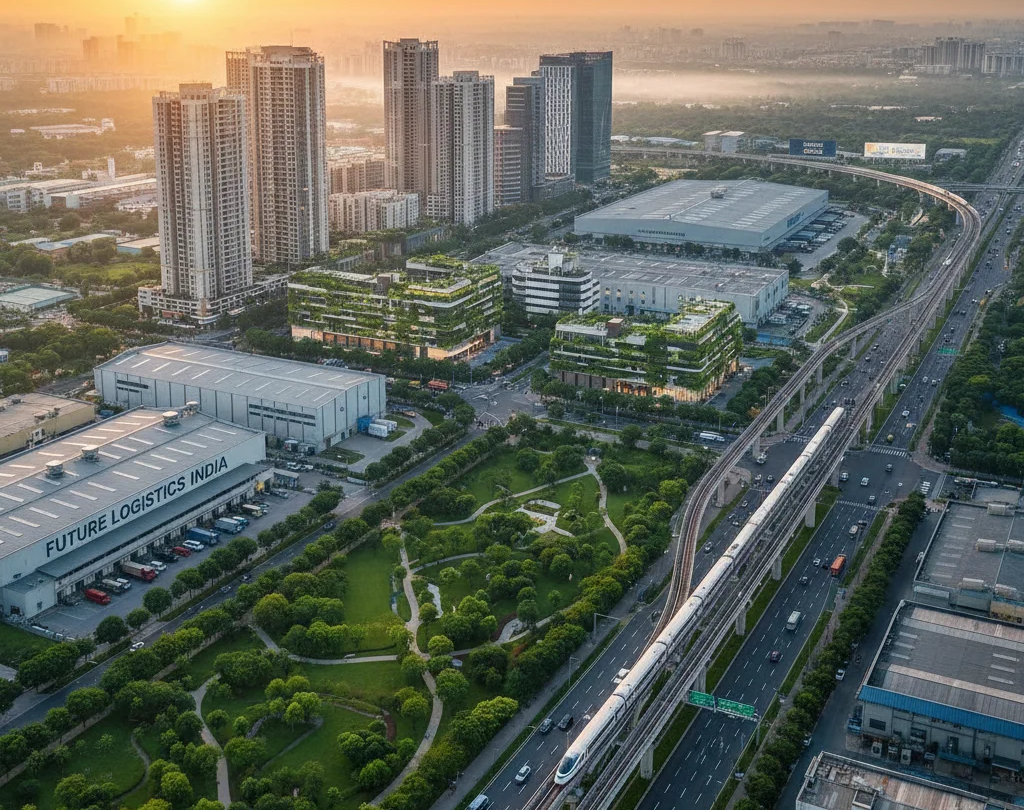
These clusters aim to integrate housing, industrial parks, warehousing, retail, hospitality, and office spaces, creating self-sustaining urban ecosystems. As a result, developers can anticipate strong demand across residential, commercial, and industrial real estate in these emerging cities.
Manufacturing Boost: Industrial Real Estate on the Rise
Budget 2026 emphasizes manufacturing across biopharma, electronics, semiconductors, chemicals, textiles, and rare earths. Key initiatives include:
- Mega textile parks and chemical parks
- ₹40,000 crore allocation for electronics component manufacturing
- Revival of 200 legacy industrial clusters
- Semiconductor Mission 2.0 and Rare Earth Corridor
These initiatives are likely to drive long-term demand for Grade A industrial and logistics spaces, particularly near emerging clusters that support EV manufacturing and supply chain networks.
Pharma & Biopharma Hubs: Expanding R&D Spaces
The Biopharma SHAKTI scheme, with a ₹10,000 crore outlay, combined with the establishment of three new NIPERs, will strengthen India’s pharma sector.
This development will increase demand for:
- Specialized office spaces
- R&D hubs in life sciences clusters
- Professional and student housing near pharma corridors
Education-driven urbanisation and innovation hubs will emerge as key drivers of commercial and residential real estate in tier-II and III cities.
Data Centres: High-Growth Industrial Segment
Budget 2026 offers tax holidays until 2047 for foreign cloud service providers operating data centers in India.
This measure will accelerate demand for:
- Power-ready industrial land
- Specialized data centre facilities
- High-security office spaces
Knight Frank India notes that data centers represent one of the fastest-growing real estate segments, particularly in smaller cities with available land and infrastructure.
Education-Led Clusters: Student Housing & Townships
The budget proposes:
- One National Institute of Design
- Five university townships near industrial/logistics corridors
- Three All India Institutes of Ayurveda
- STEM hostels for women in every district
These projects are expected to create vibrant education-led urban clusters, supporting:
- Student housing
- Commercial services
- Mixed-use developments
Education-driven urbanisation provides long-term demand for planned residential and commercial spaces in tier-II and III cities.
Tourism & Hospitality: Unlocking Second-Home Markets
Budget 2026 focuses on tourism development in the Purvodaya states and 15 archaeological sites, including Lothal, Sarnath, and Leh Palace. It also promotes medical tourism hubs integrating AYUSH and post-care infrastructure.
These initiatives are likely to:
- Boost hospitality and resort real estate
- Drive second-home demand in heritage and coastal towns
- Encourage urban regeneration in tourism-led clusters
Tourism-focused development offers mixed-use opportunities combining leisure, retail, and residential segments.
Connectivity: High-Speed Rails & Freight Corridors
High-speed rail corridors connecting Mumbai-Pune, Delhi-Varanasi, Hyderabad-Bengaluru, and others will enhance regional integration.
Simultaneously, Dedicated Freight Corridors and 20 new National Waterways will improve logistics, especially in Eastern and Central India.
These transport upgrades will:
- Expand effective commuting zones
- Raise property values near stations and corridors
- Strengthen industrial and warehousing demand
Unlocking Institutional Capital: REITs & Infrastructure Funds
Budget 2026 proposes:
- Monetization of underutilized CPSE land and buildings via REITs
- An Infrastructure Risk Guarantee Fund to support lenders financing private projects
These measures will unlock dormant assets, increase supply of institutional-grade real estate, and facilitate financing for large-scale projects.
Expert Advice

Sanjeev Singh, MD SKJ Landbase:
“The next decade will belong to smaller cities. Budget 2026’s focus on planned growth clusters will attract investments, create housing demand, and encourage vibrant mixed-use developments. Developers who plan strategically today will capture long-term value in these emerging markets.”
Conclusion: Tier-II & III Cities as Real Estate Frontiers
Budget 2026 signals a paradigm shift in urbanisation. Tier-II and III cities are no longer secondary markets. They are becoming the new engines of real estate growth, blending residential, industrial, commercial, and lifestyle spaces.
Developers and investors can now focus on:
- Mapping emerging residential and commercial opportunities
- Expanding industrial, logistics, and data center infrastructure
- Leveraging education, tourism, and heritage-driven urban clusters
Planned growth clusters, combined with enhanced connectivity and industrial expansion, make these cities prime real estate destinations for the coming decade.