World-Class Expressway, Broken Last-Mile Access: Why RWAs Demand Govt Action in Dwarka Expressway Sectors
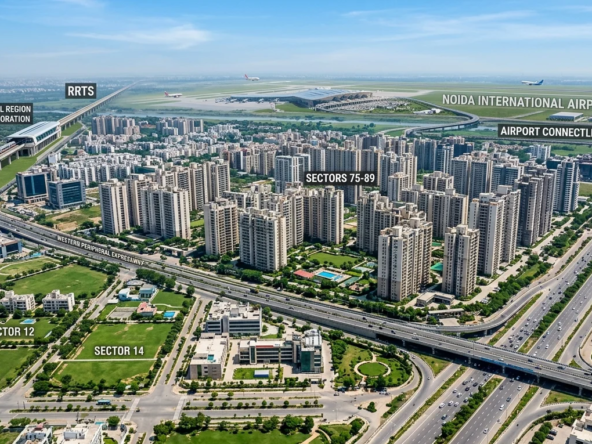
Dwarka Expressway has emerged as one of Gurugram’s most transformational infrastructure projects. Over the past few years, the corridor has attracted large residential developments, premium housing, and significant investor interest. Faster connectivity to Delhi and the airport has already reshaped the perception of New Gurugram as a future-ready urban zone.
However, beneath this progress lies a persistent and increasingly frustrating problem. Several 24-metre internal sector roads in sectors along Dwarka Expressway remain incomplete, leaving residents grappling with daily access challenges despite living next to a state-of-the-art expressway.
This contradiction has now pushed resident welfare associations (RWAs) to demand direct government intervention.
Internal Sector Roads: The Backbone of Planned Urban Living
Internal sector roads play a critical role in any planned city. They connect residential societies to master roads, ensure smooth traffic circulation within sectors, and support emergency services such as ambulances and fire tenders. Without these roads, even the best expressway fails to deliver true urban convenience.
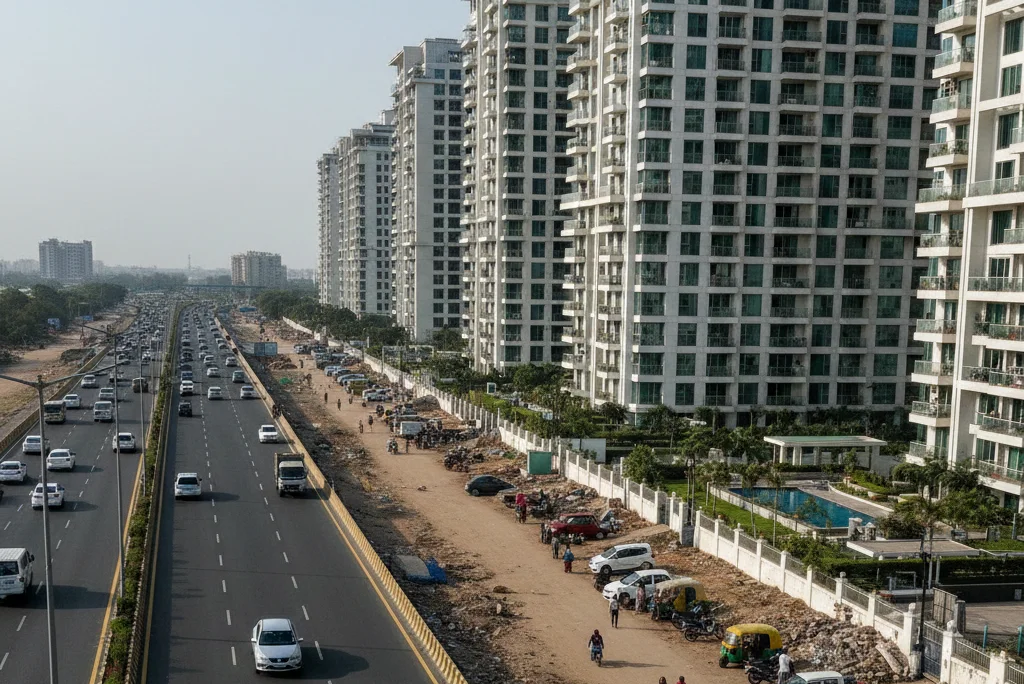
In the case of Dwarka Expressway, while the main corridor stands nearly complete, many internal roads that feed into it remain fragmented or stalled. As a result, residents experience daily inconvenience that directly contradicts the promise of planned development.
The Core Issue: Land Acquisition Gaps
RWAs have pointed to a clear and consistent reason behind the stalled roads. During the planning phase, authorities failed to acquire small land parcels at crucial points. These unacquired patches, often just 50 to 100 metres long, now block the completion of entire road stretches.
Even minor gaps have created major bottlenecks. Large residential societies now depend on narrow village revenue roads for access, routes that were never designed to handle high traffic volumes or modern urban needs.
This issue has surfaced repeatedly across multiple sectors and continues to remain unresolved.
Sectors Bearing the Brunt of Incomplete Connectivity
RWAs have highlighted several affected locations, particularly sectors 112, 99A, and 109.
In Sector 112, residents routinely face congestion as vehicles funnel through village roads that lack proper width and planning. Sector 99A presents a similar story, where a stalled 100-metre road stretch continues to block direct access to societies like India Habitat, affecting thousands of residents daily. Sector 109, despite its proximity to Dwarka Expressway, also suffers from incomplete internal links, undermining the value of its location advantage.
Across these sectors, the pattern remains the same. Small land issues have created disproportionately large problems for residents.
Everyday Life Inside Large Housing Societies
Many of the affected societies house over 1,000 families and have high occupancy levels. Despite this, residents continue to rely on 10- to 11-foot-wide village roads for entry and exit. These conditions slow down emergency response times, delay school buses, and increase the risk of traffic accidents.
For homebuyers who invested in premium developments with expectations of modern infrastructure, this situation feels deeply unfair. Over time, frustration has grown, and residents have begun questioning accountability at a policy level.
RWAs Unite Under DX GDA
In response, multiple RWAs came together under the banner of the Dwarka Expressway Gurgaon Development Association (DX GDA). During a press conference, members collectively demanded that the government take responsibility for completing the unfinished 24-metre internal sector roads.
Sunny Daultabad, convenor of DX GDA, highlighted that while Dwarka Expressway has transformed New Gurugram, the lack of internal connectivity now acts as a serious handicap. According to RWAs, the expressway’s success remains incomplete without proper last-mile access.
Builder Responsibility vs Government Accountability
Government officials maintain that internal sector roads fall under the domain of developers, while government agencies focus on master roads. However, residents argue that developers cannot construct roads on land that remains unacquired.
Land acquisition, they point out, falls squarely within the government’s authority. Without policy-level intervention, these stalled road stretches will continue to remain unresolved. As a result, RWAs have now shifted their demand from individual developers to the government itself.
Industry View: Sanjeev Singh, MD, SKJ Landbase

Sanjeev Singh, Managing Director of SKJ Landbase, believes the issue highlights a larger planning gap.
Dwarka Expressway has delivered excellent macro connectivity, but urban success ultimately depends on last-mile infrastructure. Internal sector roads define livability and long-term value. When small land bottlenecks stall critical links, government intervention becomes essential to protect buyer confidence and planned development.
His view reflects the broader sentiment within the real estate industry.
Impact on Property Values and Buyer Confidence
Infrastructure gaps directly influence buyer sentiment. While Dwarka Expressway continues to attract attention, unresolved internal roads create hesitation among end users and investors alike. Accessibility issues affect rental demand, resale potential, and overall livability perception.
However, timely government action could reverse this trend quickly. Once these internal roads reach completion, sectors along Dwarka Expressway could witness stronger price appreciation, improved quality of life, and renewed confidence among homebuyers.
The Road Ahead
Dwarka Expressway stands at a defining moment. The expressway itself has set a new benchmark for connectivity, but its success now depends on resolving smaller yet critical infrastructure gaps. RWAs have raised a legitimate concern, and industry voices support the demand for government-led solutions.
Completing these internal roads will not just ease traffic. It will restore trust in urban planning and finally allow Dwarka Expressway’s promise to fully materialize.