Construction Costs to Rise in 2026: A Turning Point for India’s Real Estate Market
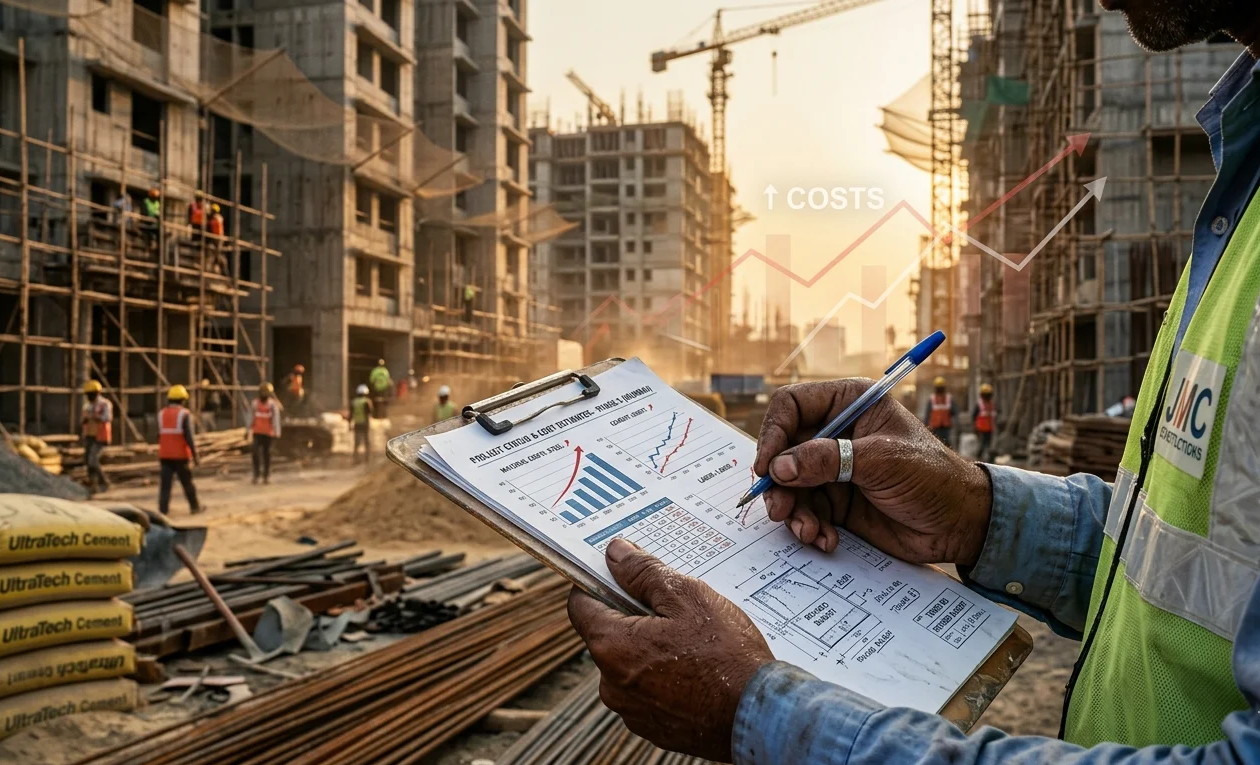
India’s real estate sector is heading into 2026 with a clear shift in momentum. According to JLL, construction costs across residential, commercial, and mixed-use projects may increase by 3–5%. This rise may seem moderate at first glance. However, when you look deeper, it signals a much bigger transformation.
Developers, investors, and homebuyers must now prepare for a new cost environment. At the same time, opportunities continue to emerge for those who act smartly.
The Core Reasons Behind Rising Costs
To begin with, labour costs are driving the biggest change. The new labour codes implemented in November 2025 have significantly increased wage structures and worker benefits. As a result, labour costs may rise between 5–12%.
Moreover, developers are struggling to find skilled workers. Infrastructure projects across India are expanding rapidly. Consequently, the demand for labour has intensified.
In addition, stricter environmental norms are increasing compliance costs. Builders must now adopt greener construction practices. Although this move supports sustainability, it also adds to project expenses.
Therefore, multiple factors are working together to push costs upward.
Material Costs: A Mixed but Unpredictable Trend
Interestingly, material prices have shown mixed trends. In 2025, key materials like cement, steel, and diesel saw slight price reductions. This offered temporary relief to developers.
However, metals like aluminium and copper recorded sharp increases. Global demand and supply chain disruptions drove these prices higher.
As a result, developers cannot rely on stable pricing anymore. Instead, they must constantly adjust procurement strategies.
Furthermore, even small price changes can significantly impact large-scale projects. Hence, cost planning has become more complex than ever.
Labour Challenges Are Reshaping the Industry
Clearly, labour is no longer just a cost component. It has become a strategic concern.
The new labour laws mandate better healthcare, social security, and standardized wages. While this improves worker welfare, it also increases the financial burden on developers.
At the same time, the shortage of skilled labour continues to grow. Workers now prefer infrastructure projects due to better pay and stability.
Consequently, real estate developers must offer higher wages to attract talent. This trend keeps pushing costs upward.
City-Wise Cost Differences Are Changing Investment Trends
Meanwhile, construction costs vary significantly across cities. This variation is reshaping investment decisions across India.
For example, premium projects in Mumbai command costs between ₹4,600–₹5,200 per sq. ft. On the other hand, cities like Bengaluru, Hyderabad, and Chennai offer relatively lower construction costs.
As a result, developers are increasingly shifting focus to Tier-II cities. These markets offer better margins and growing demand.
Therefore, India’s real estate landscape is evolving beyond traditional metro dominance.
Impact on Property Prices and Buyers
Naturally, rising construction costs will influence property prices. Developers cannot absorb all the additional expenses. Eventually, they pass some of the burden to buyers.
However, there is a slight relief. The government’s GST 2.0 initiative has reduced cement taxes by around 10%. This step may lower overall construction costs by 2–3%.
Even then, the net impact remains positive for price growth. Homebuyers may face slightly higher prices in 2026.
At the same time, demand remains strong. Urban expansion, rising incomes, and lifestyle upgrades continue to drive housing demand.
Therefore, buyers should plan investments wisely and act at the right time.
Technology Is Helping Developers Stay Competitive
Despite rising costs, developers are finding ways to adapt. Technology is playing a crucial role in this transformation.
For instance, builders are using AI-driven planning tools and automation. These technologies improve efficiency and reduce material wastage.
Moreover, prefabrication and modular construction are gaining popularity. These methods speed up project timelines and control costs.
As a result, developers can partially offset rising expenses. This approach also improves project quality and delivery speed.
Global Factors and Supply Risks
In addition, global uncertainties are adding pressure. Industry bodies like CREDAI and NAREDCO have highlighted potential material shortages.
If geopolitical tensions continue, supply chains may face disruptions. This situation could push material costs even higher.
Therefore, developers must stay proactive. Strategic sourcing and inventory planning will become essential.
Expert Insight

Sanjeev Singh, MD, SKJ Landbase, explains:
“Construction cost inflation is reshaping the entire real estate ecosystem. Developers who adopt technology, optimize resources, and explore emerging markets will lead the next growth phase. At the same time, homebuyers should focus on long-term value rather than short-term price changes.”
What to Expect in 2026
Looking ahead, the real estate sector will continue to evolve. Cost pressures will remain a reality. However, innovation and adaptability will define success.
Developers who plan efficiently will maintain profitability. Investors who identify emerging markets will gain better returns.
Most importantly, buyers who act early may benefit from current pricing before further increases.
Final Thoughts
In conclusion, the projected 3–5% rise in construction costs is more than just a statistic. It reflects deeper structural changes in India’s real estate sector.
Labour reforms, material volatility, and global uncertainties are driving this shift. At the same time, technology and new market opportunities are balancing the equation.
Therefore, stakeholders must stay informed and act strategically. Those who adapt quickly will unlock the biggest opportunities in 2026.