Economic Survey 2025–26 Highlights PMAY-U Success as Over 96 Lakh Urban Homes Reach Beneficiaries
India’s urban housing journey has crossed a defining milestone.
The Economic Survey 2025–26 confirms that over 96 lakh homes have already been delivered under the Pradhan Mantri Awas Yojana–Urban (PMAY-U). This progress marks a major shift in how India addresses urban housing shortages.
More importantly, it shows that policy execution now matches policy intent. As cities continue to expand, affordable housing remains central to economic stability and social inclusion.
PMAY-U Turns Ambition Into On-Ground Impact
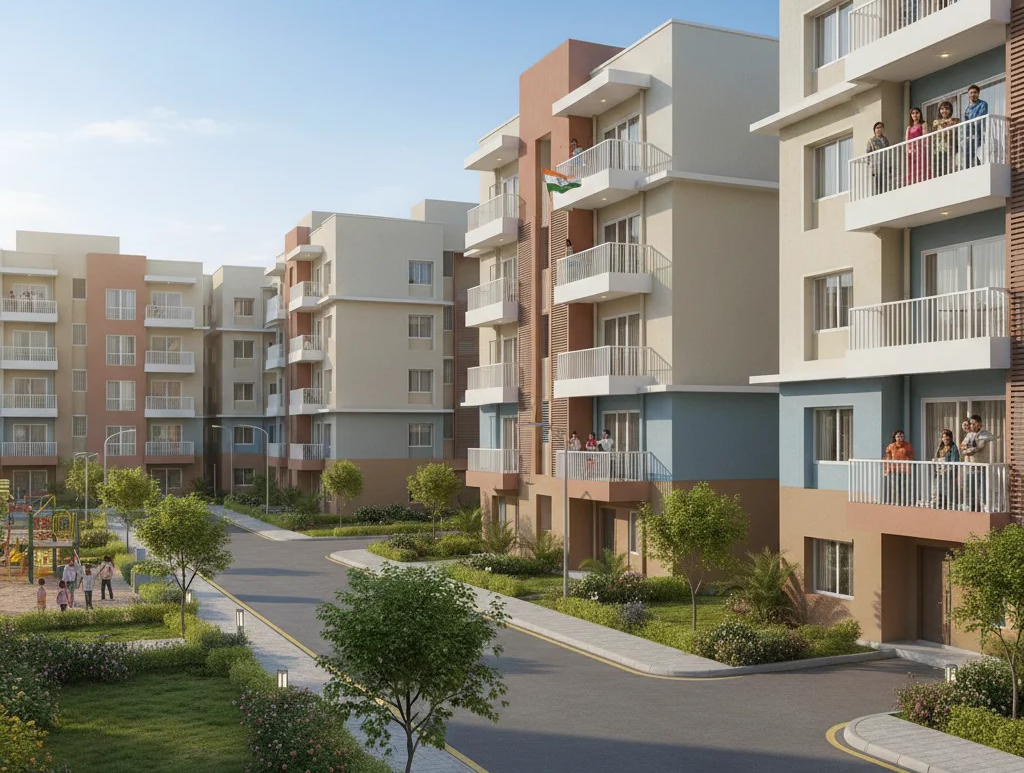
PMAY-U began with a clear objective. It aimed to provide dignified housing to economically weaker sections, low-income groups, and middle-income families in urban areas. Over the years, the scheme gained scale and consistency.
According to the Economic Survey, authorities sanctioned 122.06 lakh homes across two phases of PMAY-U. Out of these, 96.02 lakh homes reached beneficiaries by November 24, 2025.
This achievement reflects strong coordination between the Centre, states, and urban local bodies. It also proves that focused governance can deliver at scale. As a result, millions of families now live in secure homes with legal ownership and basic services.
Policy Support Strengthens Affordable Housing Momentum
Affordable housing thrives when financial systems support it. The government introduced several measures to strengthen demand and supply simultaneously.
These steps include tax incentives, GST benefits, priority sector lending, and infrastructure status for affordable housing. Because of these reforms, banks offered higher loan-to-value ratios. Buyers needed smaller down payments. Developers gained confidence to launch projects at scale.
Consequently, housing demand stayed resilient even during periods of economic uncertainty. PMAY-U benefitted directly from this supportive policy environment.
Housing Loans Cross ₹37 Lakh Crore, Signal Market Maturity
Alongside housing supply, housing finance has expanded rapidly.
The Economic Survey notes that outstanding individual housing loans crossed ₹37 lakh crore in March 2025. In 2015, this figure stood near ₹10 lakh crore.
This growth reflects a deeper financialisation of housing demand. Housing loans now account for over 11 percent of India’s GDP, compared to 8 percent a decade earlier.
Clearly, more households now rely on formal credit channels. This trend improves transparency, reduces risk, and strengthens long-term market stability.
Smart Cities Mission Builds the Backbone of Urban Living
Homes alone do not create liveable cities. Infrastructure completes the picture. The Economic Survey highlights strong progress under the Smart Cities Mission.
As of May 2025, cities completed over 90 percent of nearly 8,067 approved projects. Investments touched ₹1.64 lakh crore. These projects include smart roads, cycle tracks, command and control centres, upgraded water systems, and public spaces.
Such improvements enhance daily urban life. Better roads reduce travel time. Reliable utilities improve health outcomes. Public spaces strengthen community engagement. Together, they increase the long-term value of urban housing.
Affordable Housing Shifts to City Outskirts
Despite success, the Survey flags a growing concern.
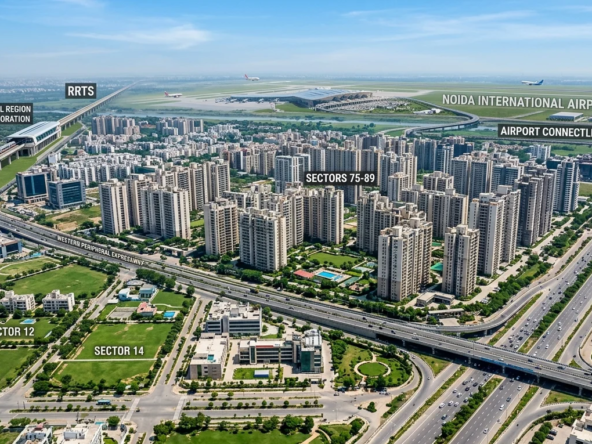
Affordable housing projects increasingly appear on city peripheries. Developers prefer these locations due to lower land costs and easier land aggregation.
However, these areas often lack strong connectivity to employment hubs. Mass transit options remain limited. Civic amenities lag behind population growth.
As a result, affordability attracts buyers, but liveability suffers. Over time, this imbalance can reduce the long-term appeal of such housing clusters.
Urban Livelihoods Gain Support Through PM SVANidhi
Housing stability must align with income security. The PM SVANidhi scheme addresses this need by supporting urban street vendors through affordable credit.
The Economic Survey highlights how this initiative helped vendors restore livelihoods and integrate into formal financial systems. When housing policies align with livelihood programs, cities grow more resilient and inclusive.
This integrated approach strengthens the social fabric of urban India.
Expert Perspective on the Way Forward

Industry leaders view PMAY-U as a foundation for the next phase of urban growth.
Sanjeev Singh, Managing Director, SKJ Landbase, says,
PMAY-U has delivered scale and impact. The next challenge lies in integration. Housing projects must align with transport, jobs, and infrastructure. Only then will affordable housing translate into sustainable urban living.”
His insight reflects a broader industry consensus. Execution quality now matters as much as volume.
Building Cities, Not Just Homes
The Economic Survey makes one message clear. Future urban policy must prioritise system performance over standalone projects. Housing, mobility, sanitation, climate resilience, and finance must work together.
India’s cities must remain economically dynamic, socially inclusive, and environmentally sustainable. PMAY-U has created a strong base. Now, integrated planning will determine long-term success.
Final Word
Delivering 96 lakh homes under PMAY-U marks a historic achievement. Rising housing credit shows market confidence. Smart infrastructure strengthens urban ecosystems.
Yet, the next phase demands balance. When housing connects seamlessly with infrastructure and livelihoods, cities truly thrive.
The Economic Survey 2025–26 confirms that India has moved from intent to impact. The focus now shifts from building homes to building complete, liveable cities.