A New Chapter in Urban Connectivity
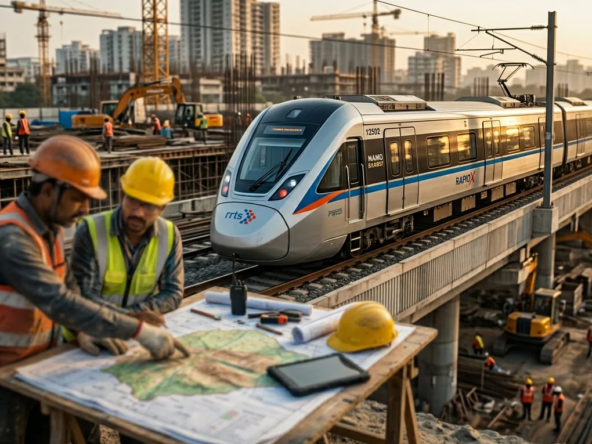
The Haryana Mass Rapid Transport Corporation has unveiled a powerful vision for the future. It has proposed 18 metro stations along the Namo Bharat corridor. This ambitious route will connect Gurugram, Faridabad, and Greater Noida.
Importantly, the Haryana government has already approved the alignment. As a result, this project now moves from planning to execution. The corridor will not only improve mobility but also reshape how people travel across NCR.
Project Highlights: Speed, Scale, and Efficiency
The corridor will stretch across 64 kilometers, making it one of the most impactful infrastructure projects in the region. Around 52 kilometers will fall within Haryana, while the remaining section will extend into Uttar Pradesh.
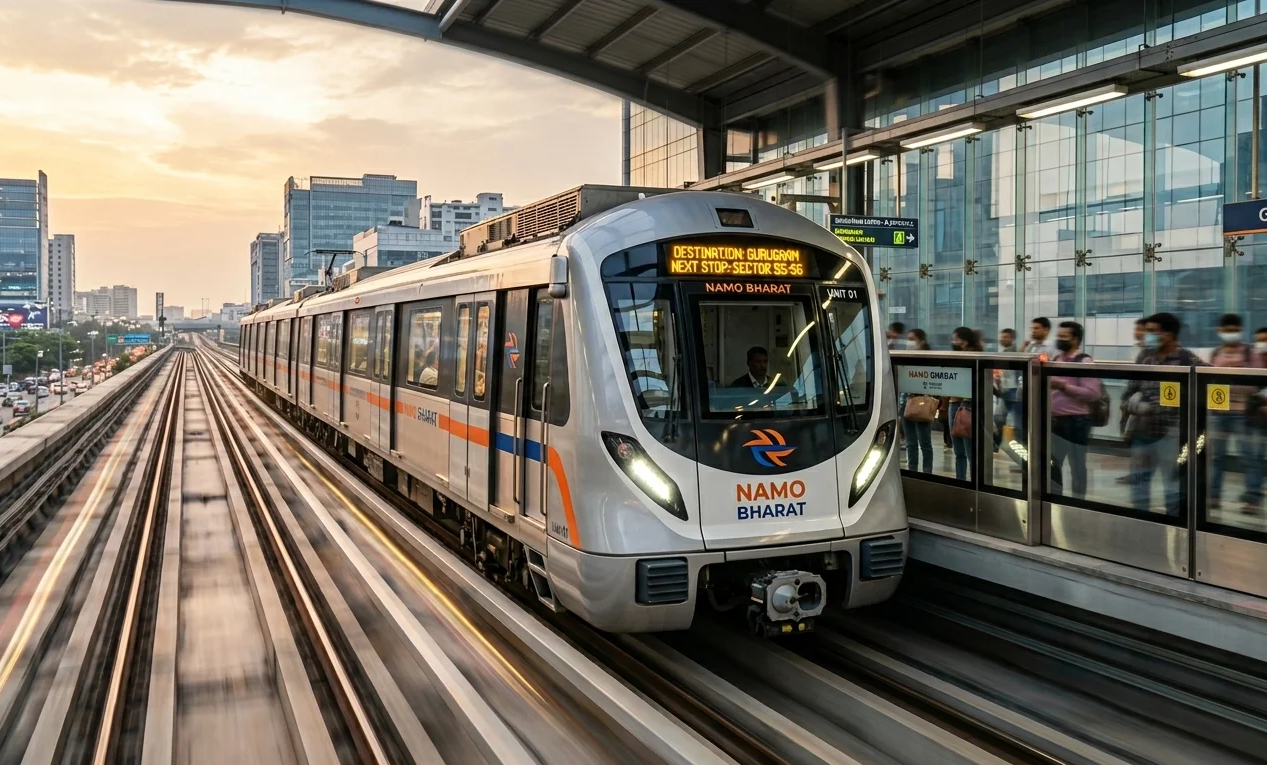
What makes this project unique is its dual functionality. Both Metro trains and Namo Bharat (RRTS) trains will operate on the same corridor. Therefore, the system will offer flexibility and high capacity.
Moreover, Namo Bharat trains will run at speeds between 160 to 180 km/h. This means commuters can cover long distances in significantly less time. Clearly, this project focuses on both speed and efficiency.
Gurugram Segment: 8 Stations to Boost Accessibility
The Gurugram stretch will cover around 14.5 kilometers, starting from Iffco Chowk and ending at Gwal Pahari. This section will include eight key stations, strategically placed to serve dense residential and commercial zones.
Key highlights include:
- Iffco Chowk as a major interchange hub
- Sector 29 for commercial access
- Millennium City Centre Metro station for Yellow Line connectivity
- Sector 52, Wazirabad, and Sector 57 for residential coverage
- Sector 61 as another interchange point
- Integration with Rapid Metro near Sectors 58–61
- Gwal Pahari as the final Gurugram station
Additionally, Iffco Chowk will connect this corridor with another proposed RRTS line. As a result, it will become a critical transit hub in NCR.
Faridabad Expansion: 10 Stations Driving Growth
As the corridor enters Faridabad, it will expand further with 10 metro stations. This section will serve both established and emerging areas.
Major proposed stations include:
- Sainik Colony
- NIT-3 and NIT-1
- Bata Chowk, connecting with the Violet Line
- Sectors 12 to 15 junction
- Sector 80
- Sectors 81–82 and 85–86 roads
- Sectors 88–89 corridor
- Badshahpur as the final metro station
After this point, the Namo Bharat train will continue toward Noida and Greater Noida. Therefore, the corridor will create seamless regional connectivity.
Interchange Network: Seamless Travel Experience
One of the strongest advantages of this project lies in its smart interchange design. Multiple stations will connect with existing and proposed metro lines.
For instance, Millennium City Centre links to the Yellow Line. Similarly, Bata Chowk connects with the Violet Line. Iffco Chowk will act as a major RRTS interchange.
Because of this integration, commuters will switch routes easily. In addition, travel time will reduce significantly. This makes daily commuting more convenient and predictable.
Smart Planning with Noise Control
High-speed trains bring speed, but they also require careful planning. Authorities have addressed this by proposing noise barrier systems along populated areas.
These barriers will reduce sound pollution effectively. Therefore, residents living near the corridor will enjoy a better environment. This shows that the project balances speed with sustainability.
Real Estate Boom: Investment Opportunities Rise
Infrastructure projects often drive real estate growth. This corridor will do the same. In fact, areas near metro and RRTS stations usually see rapid appreciation.
Sectors in Gurugram like 57, 61, and nearby zones will likely attract more buyers. Similarly, developing sectors in Faridabad will gain attention from investors.
Moreover, improved connectivity to Greater Noida will create new investment corridors. As a result, both end-users and investors will benefit from this transformation.
Expert View

Sanjeev Singh, MD of SKJ Landbase, shared his insight:
“The Namo Bharat corridor will redefine how NCR travels. It will create faster connectivity while unlocking strong real estate potential. Smart investors should track emerging sectors along this route.”
Government Push and Future Roadmap
The project has gained strong momentum under the leadership of Nayab Singh Saini. A key meeting has already taken place to discuss the route in detail.
Now, authorities will include these metro stations in the Detailed Project Report (DPR). Once finalized, construction could begin in phases.
Conclusion: More Than Just a Transit Project
The Gurugram–Faridabad Namo Bharat corridor stands as a symbol of modern infrastructure. It brings together speed, connectivity, and smart planning.
On one hand, it will reduce travel time. On the other hand, it will boost real estate demand. Ultimately, it will reshape urban living across NCR.
Without a doubt, this project connects more than cities it connects opportunities, growth, and the future.