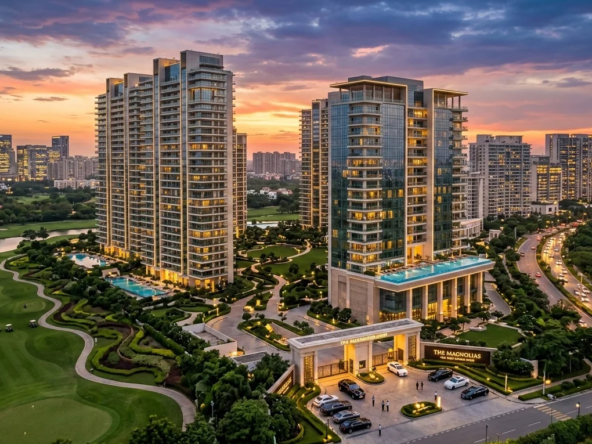
Delhi-NCR real estate is witnessing one of its strongest growth phases in more than a decade.
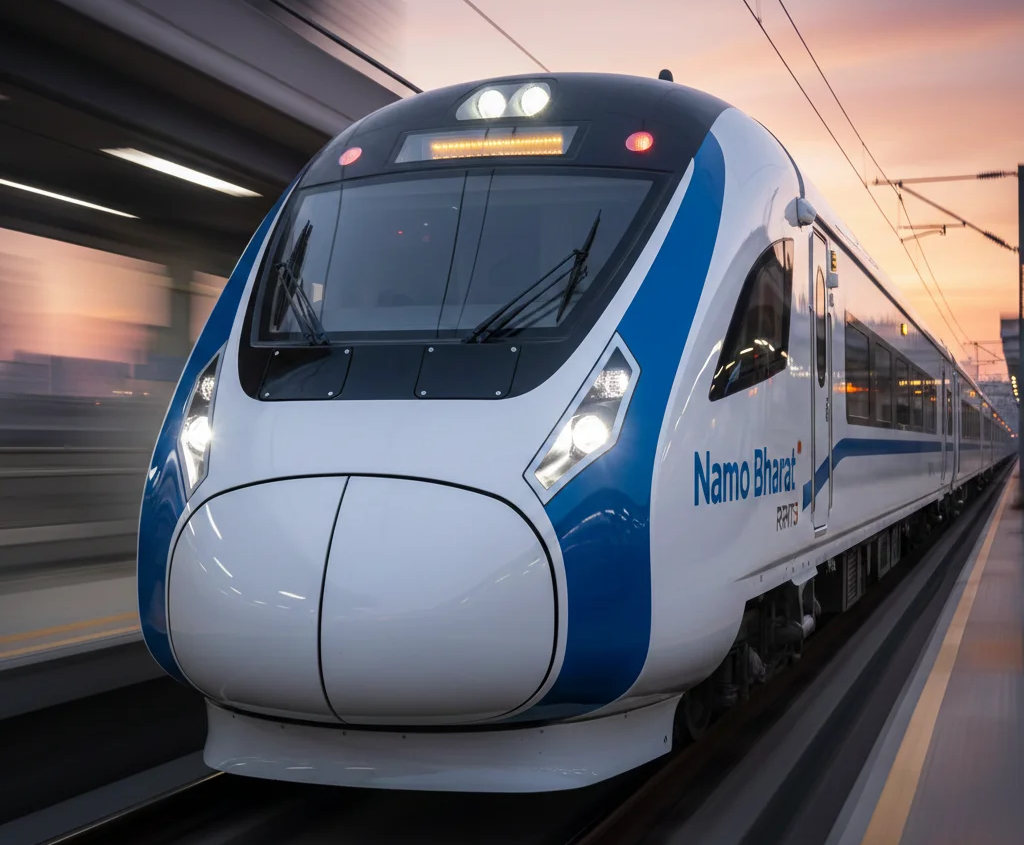
Residential sales continue to rise in 2025.End-user confidence remains firm. At the same time, infrastructure upgrades are reshaping how people live, work, and invest. Among all upcoming developments, the Namo Bharat Regional Rapid Transit System (RRTS) corridor stands out as a true game-changer. The proposed ₹15,000-crore high-speed rail link connecting Gurugram, Faridabad, and Noida promises to transform both daily commuting and long-term real estate dynamics across NCR.
Faster Travel Is Redrawing NCR’s Map
The Namo Bharat RRTS will reduce end-to-end travel time between major NCR cities to under one hour. This single improvement changes everything.
- Professionals gain flexibility.
- Families unlock more housing choices.
- Investors discover new growth corridors.
The corridor will offer high-frequency, rapid, largely elevated connectivity, designed specifically for daily inter-city commuters. As a result, travel becomes predictable, efficient, and stress-free. More importantly, it enables people to choose homes based on lifestyle and value instead of distance alone.
According to NCRTC officials, such connectivity supports planned, transit-oriented development, encouraging organised urban growth around stations and corridors.
Infrastructure Meets a Strong Real Estate Cycle
Delhi-NCR already shows solid real estate fundamentals. Residential demand remains healthy across segments. Commercial leasing continues to gain momentum from IT firms, global capability centres, and flexible office operators. Meanwhile, institutional investors are actively backing data centres and warehousing assets.
In this environment, a rapid rail spine connecting the region’s largest employment hubs acts as a powerful accelerator. Connectivity upgrades rarely work in isolation. Instead, they amplify existing momentum.
Areas like Sohna Road in Gurugram and emerging pockets in Faridabad have already seen rising project launches, improving rentals, and steady land appreciation.
Gurugram Expands Its Residential Catchment
Gurugram already benefits from NH-8, Dwarka Expressway, the Metro network, and SPR. However, Namo Bharat adds an entirely new dimension.
Faster cross-city connectivity allows professionals to work in Gurugram’s corporate districts while living in Faridabad or Noida. This flexibility widens the residential demand base and supports sustained absorption across income segments.
Past experience with operational Namo Bharat corridors shows a clear pattern. Stations often trigger neighbourhood-level development. Housing demand rises. Retail activity grows. Flexible workspaces follow close behind.
Noida and Greater Noida Gain Lifestyle-Driven Buyers
Noida and Greater Noida already enjoy strong expressway and Metro connectivity. However, the upcoming rapid rail link to Gurugram and Faridabad changes buyer behaviour significantly.
Young professionals can now prioritise lifestyle, open spaces, and pricing advantages. Commute anxiety no longer dominates decision-making. As mobility becomes reliable, mid-income, upper-mid-income, and rental housing segments stand to benefit the most.
Planned sectors with township development and social infrastructure are likely to witness faster absorption and rising rentals.
Faridabad Emerges as the Biggest Beneficiary
Faridabad has long offered affordability. Yet connectivity perceptions limited its growth. The Namo Bharat RRTS corridor changes this narrative decisively.
Faster access to Gurugram and Noida positions Faridabad as a core residential choice, not a peripheral alternative. Families seeking larger homes, greener surroundings, and better value now see a compelling reason to move here.
Pricing further strengthens the case. In 2025, average residential rates stand around ₹11,000–12,000 per sq ft in Gurugram, ₹9,000–9,500 per sq ft in Noida, and just ₹4,000–5,000 per sq ft in Faridabad. This gap leaves significant headroom for future appreciation.
Expert View: Why the Corridor Matters

Industry leaders strongly endorse the corridor’s long-term impact. Developers expect improved absorption. Investors anticipate structural price growth. End-users welcome shorter commutes and better livability.
Sanjeev Singh, Managing Director, SKJ Landbase, explains the opportunity clearly:
The Namo Bharat RRTS corridor represents a defining shift for NCR real estate. Faster and seamless connectivity will drive balanced growth across Gurugram, Noida, and Faridabad. Faridabad, in particular, offers a rare mix of affordability, improving infrastructure, and long-term appreciation potential, making it one of the most promising markets for both investors and end-users.
Other industry voices echo similar confidence, highlighting how large-scale mobility projects create sustainable value rather than short-term spikes.
A New Chapter for NCR Real Estate
Regional transit systems do more than move people. They reshape cities. guide investment flows. They create future-ready urban ecosystems.
As the Namo Bharat RRTS corridor moves closer to execution, the NCR market is likely to enter a more balanced and connectivity-driven cycle. Planning quality, governance, and infrastructure will anchor long-term value.
Among all cities, Faridabad appears best positioned to emerge as the standout winner, while Gurugram and Noida consolidate their leadership as employment and lifestyle hubs.