NCRTC Push for Faster Land Policy: A Turning Point for Namo Bharat Corridors
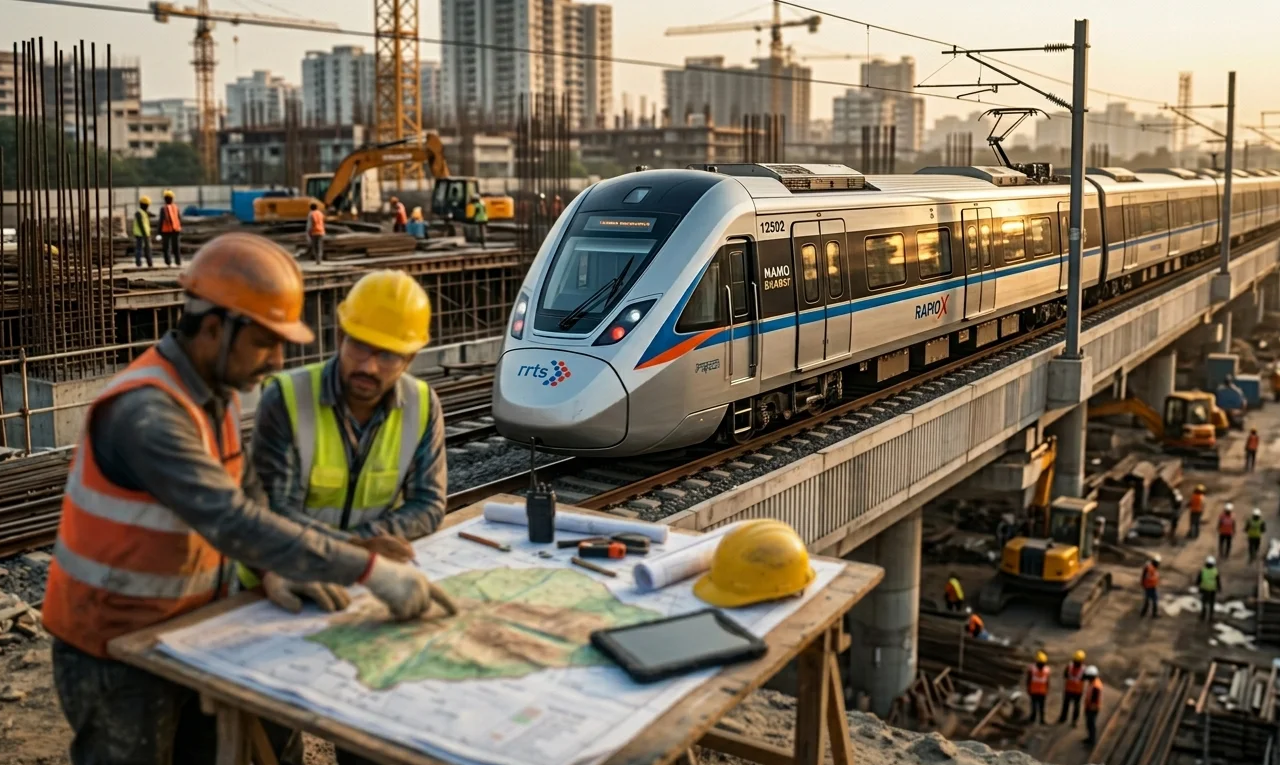
The National Capital Region continues to evolve as one of India’s most important infrastructure hubs. At the center of this transformation lies the ambitious Namo Bharat Regional Rapid Transit System (RRTS). However, one major challenge still slows down progress land acquisition. Now, the National Capital Region Transport Corporation (NCRTC) has taken a bold step by requesting the Haryana government to allow a direct land purchase policy. This proposal can significantly change how large-scale projects move forward in India.
Why Land Acquisition Needs Reform
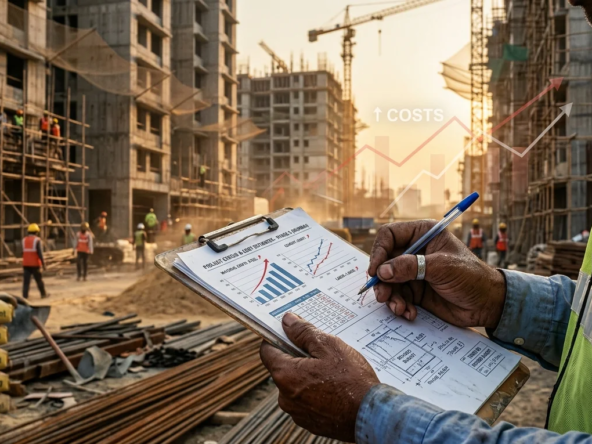
Large infrastructure projects often struggle with delays due to the current legal framework. The process under the Right to Fair Compensation and Transparency in Land Acquisition, Rehabilitation and Resettlement Act, 2013 ensures fairness, but it also involves multiple layers of approvals. As a result, project timelines stretch longer than expected.
However, NCRTC emphasizes that time-sensitive projects like RRTS cannot afford such delays. Therefore, it suggests a more direct and efficient approach. This step, if approved, can bring a major shift in infrastructure execution.
The Proposed Direct Purchase Model
Instead of following the lengthy acquisition process, NCRTC proposes a direct negotiation model. In this system, authorities will directly engage with landowners to finalize deals.
Moreover, the model will work through a structured system:
- A district-level land purchase committee will handle negotiations
- The Deputy Commissioner will head the process
- Landowners will receive fair and transparent compensation
- Agreements will happen faster, without legal bottlenecks
Interestingly, Haryana has already taken a step in this direction for the Gurugram Metro Rail Limited (GMRL). This approach has shown promising early results. Therefore, NCRTC wants to replicate this success for its RRTS corridors.
Two Key Corridors Driving Change
NCRTC plans to develop two major corridors under the Namo Bharat project:
- Sarai Kale Khan – Panipat – Karnal Corridor
- Sarai Kale Khan – Gurugram – Bawal Corridor
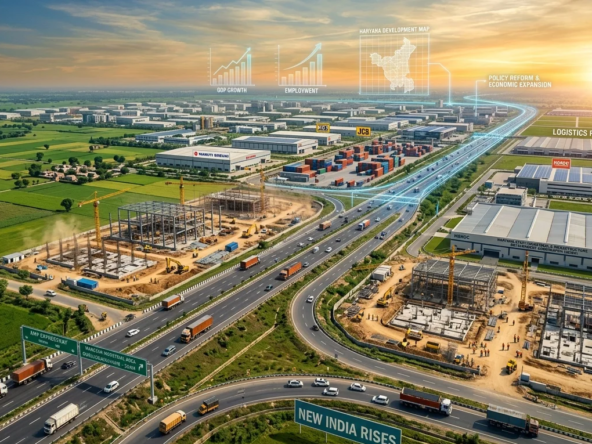
These corridors will transform connectivity across Haryana and Delhi NCR.
For instance, travel time between major cities will reduce significantly. Additionally, these routes will connect key industrial and residential hubs. Consequently, economic activity along these corridors will increase rapidly.
Massive Land Requirement for a Mega Project
The scale of this project is enormous. NCRTC requires:
- Over 202 hectares of government land
- Around 154 hectares of private land
This land will support tracks, stations, depots, and other infrastructure components.
Furthermore, the Delhi–Gurugram–Bawal corridor spans more than 93 km, while the Delhi–Panipat–Karnal corridor extends beyond 136 km. As a result, both corridors together will reshape regional connectivity in a big way.
Project Timeline: A Structured Vision
The project follows a well-defined timeline. If everything progresses as planned, the key milestones will include:
- Land acquisition between December 2025 and November 2027
- Construction starting around August 2026
- Major construction phases continuing till August 2030
- Underground works extending till early 2031
- Track laying and signalling completed by mid-2031
- Testing between May and October 2031
- Full commissioning expected by November 2031
However, the success of this timeline depends heavily on timely land acquisition. Therefore, the direct purchase policy becomes crucial.
Why This Policy Can Change the Game
If Haryana approves the direct purchase policy, it can unlock several benefits.
1. Faster Execution of Mega Projects
Direct negotiation reduces delays significantly. Consequently, construction can begin earlier and progress faster.
2. Reduced Legal Complexity
By avoiding prolonged legal procedures, authorities can streamline the entire acquisition process. This saves both time and administrative effort.
3. Improved Transparency
Direct discussions with landowners ensure clear communication. Therefore, disputes reduce, and trust increases.
4. Boost to Real Estate Growth
Better connectivity always drives property demand. As a result, areas along RRTS corridors may see rapid price appreciation.
5. Economic Development Along Corridors
New transport links attract businesses, industries, and investors. Thus, the region becomes more economically vibrant.
Expert Perspective on Infrastructure Growth

According to Sanjeev Singh, MD of SKJ Landbase, faster land acquisition policies play a vital role in shaping infrastructure growth.
He highlights that when governments reduce delays and ensure fair compensation, both developers and landowners benefit equally. Moreover, he believes that RRTS corridors will act as “growth catalysts” for NCR.
Additionally, he points out that improved connectivity directly influences real estate demand. As a result, both residential and commercial markets grow steadily along these corridors.
Haryana Government’s Decision in Focus
At present, the proposal is under review by the Haryana government. Officials have acknowledged the importance of the direct purchase model.
Moreover, the town and country planning department is expected to submit a detailed report soon. Once reviewed, the government may decide whether to approve or modify the policy.
If approved, Haryana could set a benchmark for other states. Consequently, more infrastructure projects across India may adopt similar methods.
Conclusion: A Step Toward Faster Urban Growth
The NCRTC’s request highlights a crucial need for balance between fairness and efficiency. While existing laws protect landowners, modern infrastructure projects require faster execution.
Therefore, the direct purchase policy can offer a practical solution. It ensures transparency, reduces delays, and accelerates development. If Haryana gives its approval, it will not only benefit the Namo Bharat corridors but also transform how India builds its future infrastructure.
In the end, this step can bring us closer to a well-connected, economically strong, and future-ready NCR where high-speed travel becomes a reality for millions.