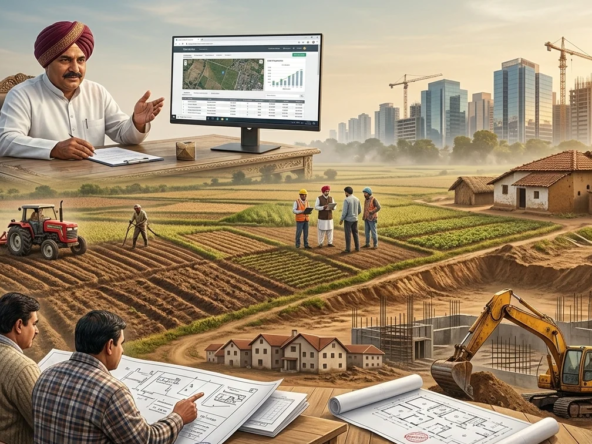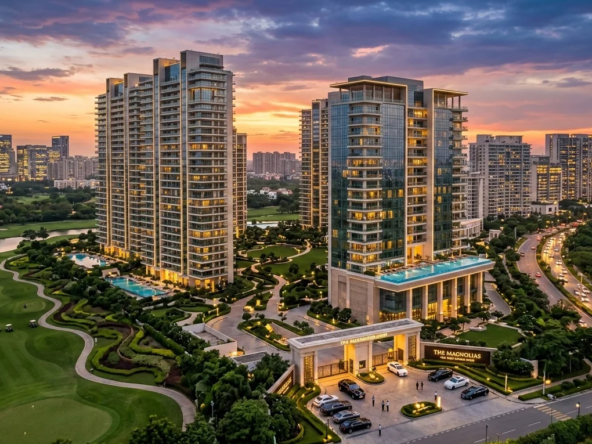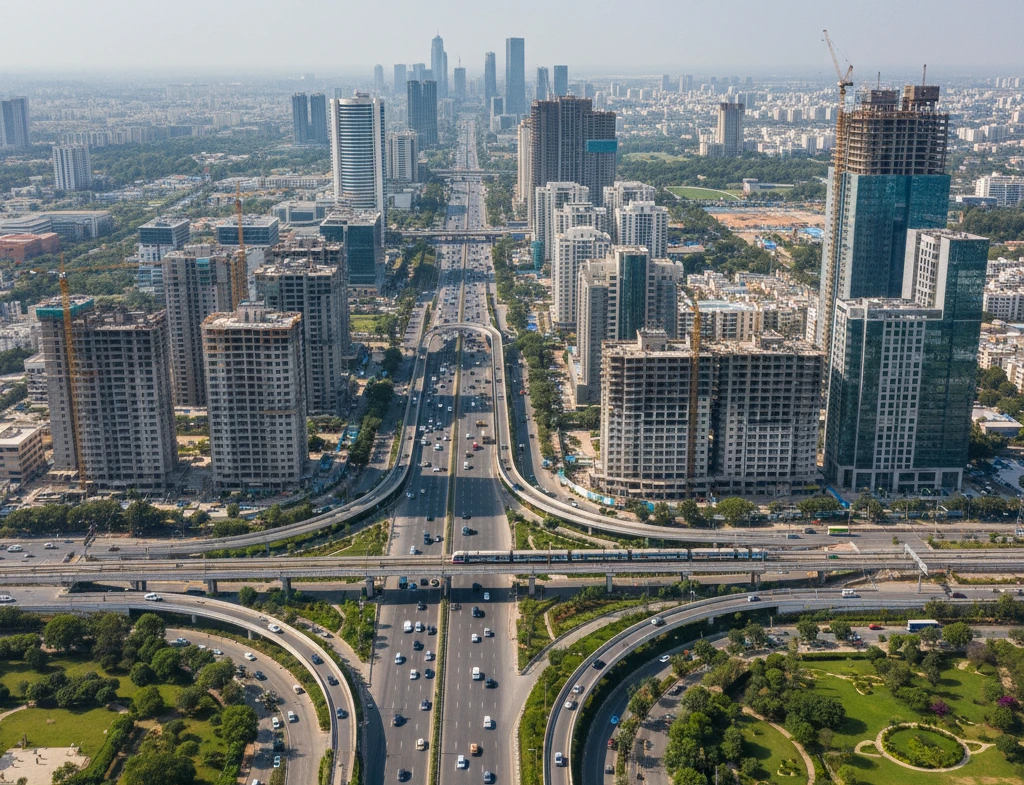
Gurgaon has always been a city of ambition, and today, it’s evolving faster than ever. The rise of futuristic infrastructure projects from metro expansions to expressways is reshaping its skyline and unlocking immense potential in micro markets across the region. These developments aren’t just about better connectivity; they’re about creating a self-sustaining urban ecosystem ready for the future.
Let’s explore how these big-ticket projects are making Gurgaon’s micro-markets future-ready and why investors are taking notice.
1. Metro Expansions: The Real Game Changer
One of the biggest transformations in Gurgaon’s real estate journey comes from the new metro corridors. The upcoming Delhi–Gurgaon–Alwar RRTS and the extension of the Dwarka Expressway Metro are to revolutionize mobility.
These projects will drastically cut travel time between Delhi, Gurgaon, and Manesar. As a result, areas like Sector 104, 111, 113, and 37D are witnessing a sharp rise in demand. People want homes where connectivity and convenience blend effortlessly.
Every metro pillar being laid is translating into stronger property appreciation. It’s no longer just about location it’s about lifestyle accessibility.
2. Dwarka Expressway: Gurgaon’s Next Growth Engine
The Dwarka Expressway is not just another road. It’s a symbol of how Gurgaon is aligning with the future of smart urban development. Stretching across 29 km, this expressway connects Dwarka in Delhi to Gurugram’s New Sectors and NH-8 near Manesar.
This one corridor alone has triggered the birth of new micro-markets such as Sectors 102 to 115 where developers are building high-end projects, smart offices, and retail hubs. The expressway has also reduced traffic load from NH-8 and improved access to IGI Airport and Dwarka’s diplomatic enclave.
No wonder investors are calling it the “new Golf Course Road” of the next decade.
3. Global Business Hubs: Redefining Work and Life Balance
As major business hubs like DLF Cyber Park, Cyber City, and Global City (Sector 36B) expand, it is emerging as a global business powerhouse. These developments are designed to attract multinational corporations, startups, and innovation centers.
What’s truly exciting is the ripple effect. Residential demand is surging in nearby micro-markets such as Sector 88, 89, 95, and 99, where employees prefer living close to their workplaces. With new social infrastructure including schools, hospitals, and shopping zones these areas are turning into self-sustained ecosystems.
This is how infrastructure and lifestyle now walk hand in hand.
4. Elevated Corridors and Road Widening Projects
The Haryana government has launched multiple elevated corridors and road expansion projects, especially around Sohna Road, SPR (Southern Peripheral Road), and NH-48. These projects ensure smoother traffic flow and reduced congestion, making Gurgaon’s mobility network future-ready.
For example, the Sohna Elevated Corridor has transformed commuting from South Gurgaon to Cyber City. It’s now faster, cleaner, and more reliable. With each road upgrade, nearby sectors such as Sector 68 to 75 are seeing renewed investor enthusiasm.
Better roads don’t just make driving easier they build confidence in long-term investment.
5. Emerging Micro-Markets: A Shift Beyond Traditional Hotspots
While Golf Course Road and MG Road were once the crown jewels, new-age micro-markets like Sector 111, Sector 82, and Manesar are now emerging as the next frontier.
The credit goes to the synergy between infrastructure and planning. Developers are focusing on sustainability, open spaces, and integrated living. Projects such as M3M GIC (Gurgaon International City) and Puri Diplomatic Residences represent this next phase where modern design meets futuristic connectivity.
These micro-markets are “future-proofed” not just in infrastructure but in vision. They’re planned to adapt, grow, and evolve with changing times.
6. Sustainability: The Invisible Force Behind Every Project
Infrastructure in Gurgaon isn’t just about roads and rails anymore it’s about sustainable growth. Rainwater harvesting systems, solar-ready rooftops, green corridors, and smart waste management are becoming standard.
This mindset shift is ensuring Gurgaon remains livable and eco-friendly even as it expands. Developers and planners are building cities within cities, where nature and technology coexist beautifully.
Sanjeev Singh, MD, SKJ Landbase, on Gurgaon’s Future

In the words of Sanjeev Singh, Managing Director, SKJ Landbase,
“Gurgaon is entering a golden phase of real estate growth, driven by infrastructure that doesn’t just connect places it connects opportunities. The upcoming corridors and green mobility plans are positioning Gurgaon as India’s most future-ready city, where living, working, and investing will all find new meaning.”
His statement perfectly captures the optimism that defines today’s market sentiment.
7. The Road Ahead: Gurgaon’s Future Is Built Today
As infrastructure continues to shape Gurgaon’s identity, its micro-markets are evolving from being residential clusters into smart, connected urban zones. Every project be it a metro line, expressway, or business district is designed to make the city more accessible, resilient, and future-ready.
Investors, developers, and residents are no longer betting on “what Gurgaon is” they’re investing in what Gurgaon is becoming.