India’s Ghost Malls Hold a ₹357-Crore Opportunity: Knight Frank’s 2025 Breakthrough Insight
India’s retail sector is entering a turning point, and the latest Knight Frank report captures this shift brilliantly. The study, Think India, Think Retail 2025 – Value Capture: Unlocking Potential, reveals a surprising but powerful reality: India now has a large stock of ghost malls, but these same underperforming spaces can unlock ₹357 crore in annual rentals if developers act with clarity and speed.
The headline feels alarming. Yet the deeper numbers tell a story full of possibility.
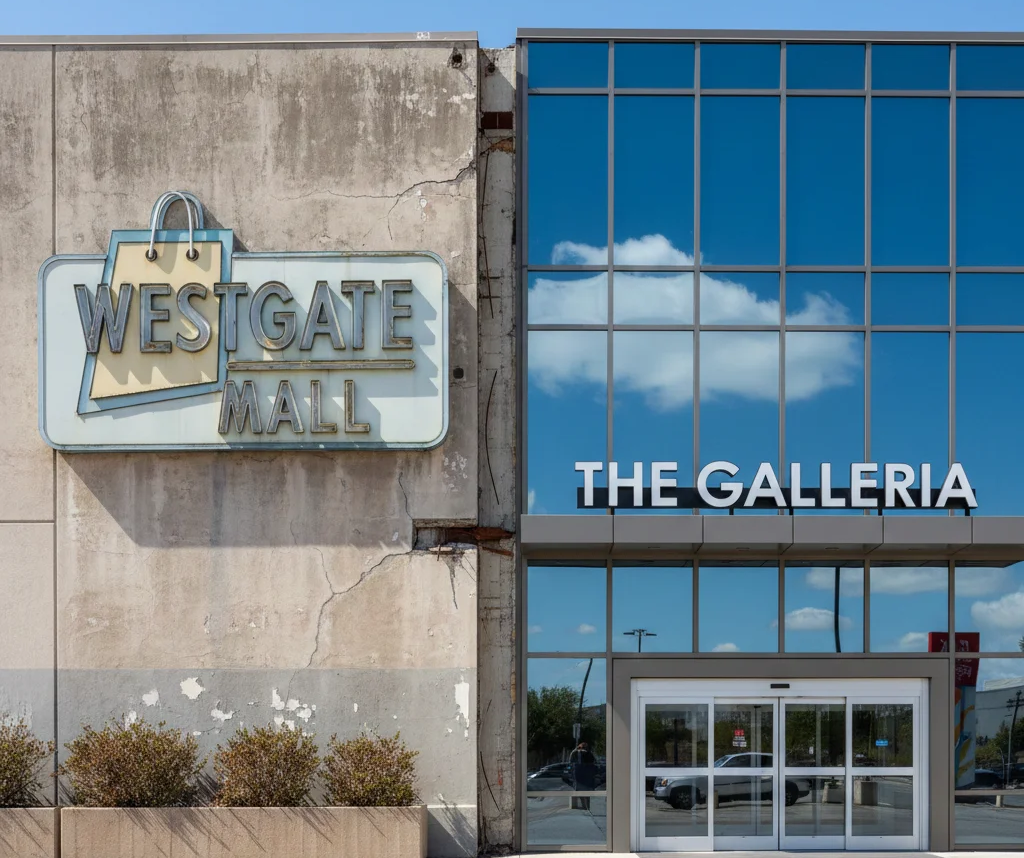
India operates 365 shopping centres across 134 million sq ft. Out of this, 74 malls have slipped into the “ghost mall” zone. These malls show 40% or higher vacancy, which means 15.5 million sq ft lies idle in the country’s top cities. This is not just unused space. It is locked economic value. It is frozen demand. And it is a missed opportunity for retailers, developers and consumers.
But the Knight Frank report cuts through the noise. It identifies 15 high-potential centres with 4.8 million sq ft that can alone generate ₹357 crore in annual rentals when developers reposition, redevelop or reimagine them. The moment this stock gets activated, India’s retail environment will gain immediate depth and modernity.
Tier 1 Cities Lead the Reinvigoration Opportunity
The strongest revival opportunity sits in India’s Tier 1 markets. These cities contribute ₹236 crore of the total potential rental income across 2.9 million sq ft. This is where brands show the highest appetite, footfall scores remain stable and demand for modern retail formats rises every month.
Interestingly, these same Tier 1 cities also hold 11.9 million sq ft of ghost mall space. So even the most advanced retail markets struggle with ageing stock. Consumers want better design, better circulation, better food zones and better entertainment options. Old malls cannot keep up. And when they fall behind, tenants slowly exit. That’s how high-vacancy pockets form inside otherwise thriving cities.
However, Grade A malls tell a different story. They run at just 5.7% vacancy, which proves one thing:
Quality retail never struggles. Poor-quality retail always does.
This is the gap developers now need to bridge.
Tier 2 Cities Are Quietly Winning the Fundamentals Game
While metros draw the spotlight, Tier 2 cities now show impressive performance. Some of them outperform major metros on basic fundamentals. Cities like Mysuru, Vijayawada, Vadodara, Thiruvananthapuram and Visakhapatnam run at near-full occupancy. They show steady consumer spending, strong weekend footfalls and a balanced tenant mix.
Mysuru stands at the top with just 2% vacancy.
This number reflects a clear trend. Demand rises, but high-quality supply remains limited. This creates strong retention for brands and consistent footfalls for malls.
However, not all Tier 2 cities enjoy this stability. Nagpur (49%), Amritsar (41%) and Jalandhar (34%) face issues created by oversupply, weak planning and poor anchor strategies. When multiple malls chase the same tenants, vacancy spreads fast. And once the cycle begins, it becomes difficult to reverse without a major revamp.
This contrast in Tier 2 markets shows that success in retail depends more on planning and design than on city size.
West and South India Dominate the ₹357-Crore Potential
The Knight Frank report identifies the West as the biggest hotspot for ghost malls. Nearly 44% of India’s dormant retail inventory sits here. When combined with the South, both regions account for 77% of the entire ₹357-crore reinvigoration opportunity.
These are also regions with strong economic growth, rising disposable incomes and a young, aspirational consumer base. The moment developers update old retail centres, the market rewards them quickly.
The top eight cities Bengaluru, Chennai, Hyderabad, Mumbai, Delhi-NCR, Ahmedabad, Nagpur and Thiruvananthapuram contribute 66% of the projected rental gains. These cities run on high brand demand and strong urban migration. They need better spaces, not more spaces.
Why Redevelopment Wins Over New Construction in 2025
New mall construction takes years. It needs land, approvals, funding and long development cycles. But India’s retail demand is rising right now. Brands want locations today. Consumers want experience-led retail today.
So redevelopment becomes the smarter route.
Developers now prefer to reposition old malls as mixed-use hubs, food-focused centres, entertainment clusters, co-working integrations or community-driven spaces. This transformation demands less money, less time and less risk.
It also aligns perfectly with India’s rising appetite for experiential spaces. With rental yields at 5.86%, redevelopment gives investors faster and healthier returns.
India’s Evolving Retail Mix Shows a New Market Confidence
The Knight Frank report highlights an important trend shaping India’s retail identity.
- Shopping malls host the most balanced brand mix: 67% Indian brands and 33% international brands.
- High streets remain rooted in domestic culture with 86% Indian brands.
- Airports cater to premium global shoppers with a 70:30 mix.
This mix proves that India has become a major launchpad for global retail. And malls act as the preferred gateway for these international brands.
But without enough high-quality space, many brands choose to delay entry. This is where ghost mall redevelopment becomes a direct growth accelerator for the country.
Expert View: Sanjeev Singh, MD, SKJ Landbase

Sanjeev Singh, Managing Director of SKJ Landbase, offers a sharp perspective on the report’s findings:
“Ghost malls do not signal weakness. They signal opportunity. India’s consumer base is expanding faster than its retail infrastructure. Developers who transform older assets will set the tone for the next decade. Value creation now sits in reinvention, not new construction.”
His comment captures the exact spirit of the Knight Frank report.
The Road Ahead: India Moves Into a Retail Renaissance
India stands at the edge of a retail transformation. Rising incomes, urban expansion, global brand entry and demand for experiential retail now shape the country’s shopping behaviour. But India cannot afford 15.5 million sq ft of idle retail capacity.
The Knight Frank study gives developers a clear map. It shows where the demand rises, which cities hold potential, what models work and how much value sits ready for conversion.
If developers act now, they can unlock ₹357 crore in annual rentals and reshape India’s retail future.