Why the New Metro Matters for Gurgaon
Ever since the announcement of the new metro corridor linking Gurugram line with multiple neighbourhoods from old‑city sectors to modern business hubs talk of “location value” in Gurgaon has changed dramatically.
First, improved connectivity always boosts demand. When commuting becomes easier and faster, people prefer living closer to transit lines. That drives up interest for both buying and renting homes near metro stations.
Second, as commuters save time and energy, areas previously seen as “remote” or “inconvenient” suddenly become viable triggering influx of professionals, families, and investors.
Third, the metro isn’t just about homes. It invites commercial growth: offices, retail, services all flourish near transit hubs. That means more employment options, amenities, and lifestyle changes that in turn push up real estate demand.
Which Areas in Gurgaon Are Likely to Benefit Most
Let’s look at some micro‑markets that appear poised to gain most from the metro’s arrival:
- Dwarka Expressway corridor This stretch has already seen strong real estate momentum. With the metro combining with the expressway infrastructure, localities along this corridor become high‑potential residential zones.
- Palam Vihar & nearby sectors As a relatively mature locality, Palam Vihar stands to gain renewed interest. Metro access will re‑energize demand among homebuyers seeking both connectivity and a comfortable neighbourhood.
- Sectors along the corridor in “Old Gurgaon” and near commercial hubs Areas such as those close to upcoming stations like Subhash Chowk, Hero Honda Chowk and Udyog Vihar are being eyed for rapid growth. As offices, retail and residential demand grow, these sectors could become hot investment zones.
- Emerging sectors beyond the city core (new sectors along projected expansion) As the metro connects farther zones, even peripheries might see rising demand ideal for early‑stage investors.
What Happens to Real Estate Prices & Rental Demand
Because of the metro:
- Property values and land rates in areas near the planned stations are already seeing an uptick. Demand is rising, and buyers anticipate long‑term gains.
- Residential demand both for mid‑income and premium housing is expected to rise significantly over the next few years.
- Commercial and rental markets will also benefit. Office spaces near metro‑enabled zones are likely to see increased interest. Retail, services, and convenience‑oriented businesses will sprout around these stations.
- As a result, more mixed‑use developments (residential + commercial + retail) are likely to come up making these areas self‑sufficient and lively.
In short: metro connectivity doesn’t just raise “ease of commute” it reshapes the very demand‑supply dynamics of real estate, turning zones into thriving urban pockets.
What It Means for Homebuyers, Investors, and Residents
- If you’re looking to buy a home, investing in a sector along or near the upcoming metro line could give you long-term value both in resale and lifestyle.
- For renters or investors in rental properties, properties close to metro stations will likely see better occupancy, higher yield, and increased demand.
- First-time buyers or middle‑income families may find relatively affordable options in newly connected sectors, as developers anticipate demand and offer competitive pricing.
- For long-term investors, metro‑adjacent properties offer a compelling narrative: convenience, growth, rising demand, and potential capital appreciation over 5–7 years.
What to Watch Out For Sensible Considerations
Of course, this development is not an automatic guarantee of success. Here are a few caveats:
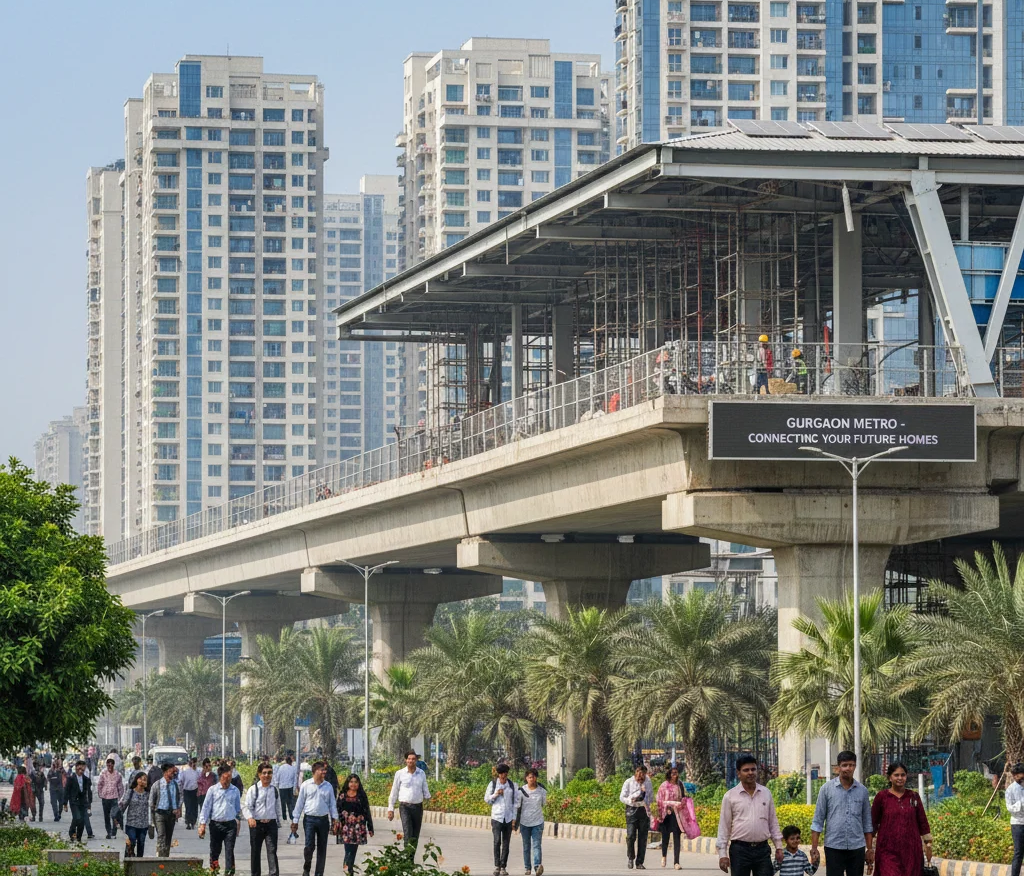
- During construction phase, there could be noise, traffic disruption, dust which may affect livability temporarily. Demand usually spikes after the metro becomes operational.
- Areas too close to these tracks or stations sometimes face issues like noise or congestion. The sweet spot is often within walking or short driving distance but not immediately adjacent.
- Over–development without proper planning can strain local infrastructure especially roads, parking, civic amenities so it’s wise to assess infrastructure plans alongside realty potential.
Expert Insights

Sanjeev Singh, MD of SKJLandbase see immense promise in Gurgaon’s unfolding metro‑driven urban transformation. sectors like the Dwarka Expressway corridor, Old Gurgaon‑to‑New Gurgaon link zones, and mature clusters like Palam Vihar offer the best balance of growth and stability. As these lines become operational, these zones will transform into self‑sustaining neighbourhoods with homes, offices, retail and lifestyle amenities making them ideal for both homebuyers and investors.
he said early‑stage investments in such areas will yield the best returns in the next 5–7 years. Over the coming months, expect a good number of mid‑income, premium and mixed‑use projects to get launched all riding the metro wave.
Conclusion: Metro Is More Than Transport – It’s a Game‑Changer for Gurgaon Real Estate
The upcoming expansion isn’t simply about moving people it’s about reshaping cities. In Gurgaon, this transformation translates into smarter urban growth, dynamic housing markets, and renewed opportunity across residential and commercial real estate.
If you think strategically, buy or invest near corridors that choice may define your real‑estate outcome for the next decade.
Let me know if you’d like a sector‑wise list of upcoming metro‑linked neighbourhoods with estimated price ranges and investment potential I can draft one for you now.