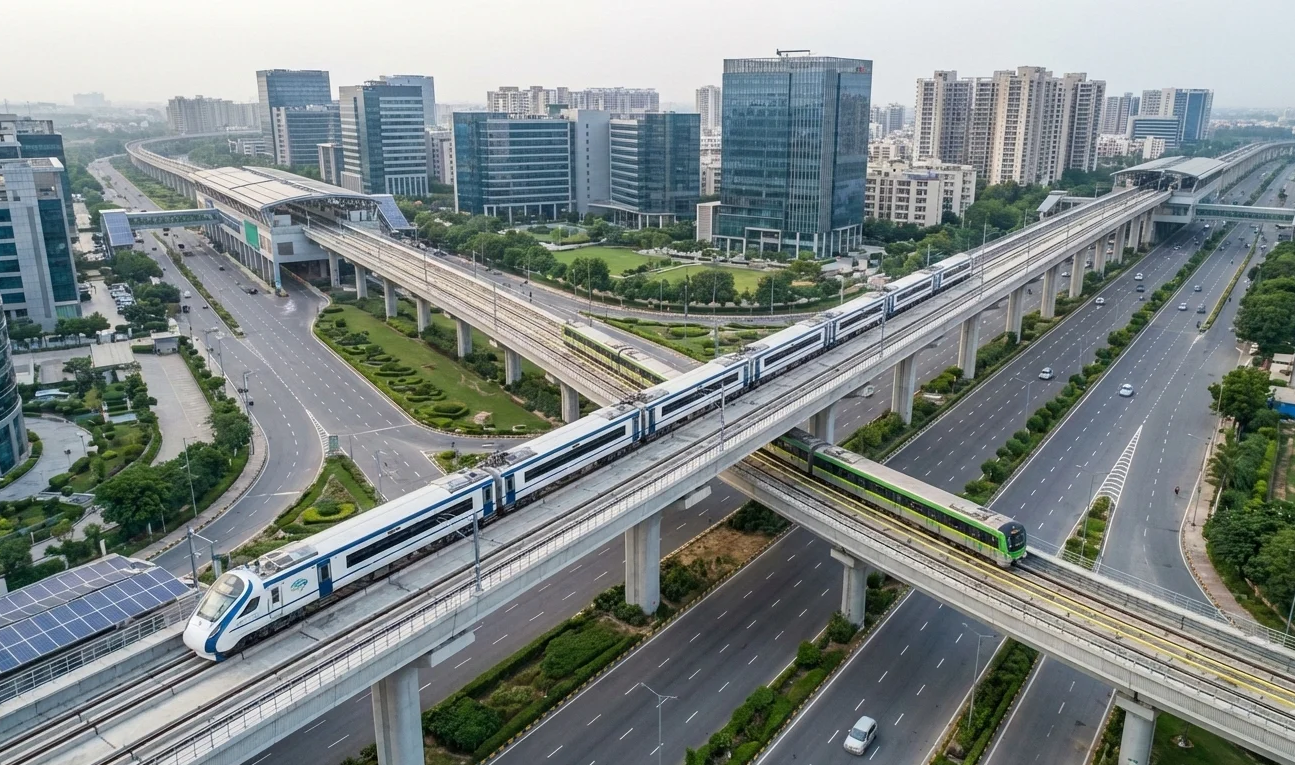
NCR’s urban mobility story is evolving rapidly. Cities no longer look at transport as isolated projects. Instead, planners now focus on integration, efficiency, and future readiness. In this context, the Haryana Mass Rapid Transport Corporation’s proposal to run Metro and Namo Bharat RRTS trains on a shared corridor between Gurugram and Faridabad marks a decisive shift. This plan can redefine how people move across the region every single day.
Rather than building parallel systems, HMRTC wants one smart corridor that serves both long-distance and local commuters. This approach reflects mature planning and a clear understanding of NCR’s growing travel demands.
Why an Integrated Corridor Makes Strategic Sense
Gurugram and Faridabad continue to expand at a fast pace. Residential density keeps rising. Office hubs attract thousands of daily commuters. Meanwhile, roads struggle to cope with growing traffic pressure. HMRTC’s proposal directly addresses this challenge by reducing dependence on private vehicles and improving public transport efficiency.
During a meeting held on December 16, HMRTC urged NCRTC to design the Gurugram–Faridabad Namo Bharat corridor on the lines of the Delhi–Meerut route. That corridor already demonstrates how Metro and RRTS services can operate smoothly on the same tracks. By following this tested model, authorities can avoid trial-and-error planning and move straight toward execution.
Shared Infrastructure, Seamless Commuting
The proposal focuses strongly on operational synergy. HMRTC wants the first eight to nine kilometers of the RRTS corridor, stretching from IFFCO Chowk to Sector 53 in Gurugram, to support Metro services as well. This stretch already aligns with the proposed HMRTC Metro corridor. Because of this natural convergence, planners can avoid duplicating infrastructure and optimize land use.
As a result, commuters gain multiple travel options on a single corridor. They can choose the Metro for shorter city trips or shift to Namo Bharat trains for faster intercity travel. This flexibility improves daily travel experiences and reduces unnecessary transfers.
Meerut’s Model Inspires NCR’s Next Leap
The integrated Metro–RRTS concept is not theoretical. NCRTC has already implemented and tested this system successfully in Meerut. There, passengers use Namo Bharat trains for long-distance journeys while relying on Metro services for shorter urban routes. Both systems coexist seamlessly on shared tracks.
During discussions, Dr. Chandar Shekhar Khare, Managing Director of HMRTC, strongly advocated this model for NCR. He emphasized that such integration allows local passengers to enjoy Metro connectivity while enabling rapid intercity movement through Namo Bharat services. This balance ensures that the corridor serves diverse travel needs without compromise.
How Gurugram Stands to Benefit
For Gurugram residents, the proposal brings tangible advantages. Metro operations on the integrated corridor will likely run from IFFCO Chowk to Golf Course Extension Road, covering nearly eight kilometers. This stretch connects busy residential sectors, commercial zones, and office districts that witness heavy daily footfall.
Additionally, the corridor will integrate with the Rapid Metro on Golf Course Road and the proposed Metro line from Golf Course Extension Road to Sector 5. Together, these connections will strengthen Gurugram’s public transport network and significantly reduce travel time within the city.
Strengthening Regional Connectivity Across NCR
The proposed Gurugram–Faridabad–Greater Noida Namo Bharat corridor includes six key stations across NCR. These stations will link Gurugram, Faridabad, Noida, and Greater Noida through a high-speed transit spine. This alignment improves east–west connectivity and shortens travel times between major employment and residential clusters.
As the corridor takes shape, intercity commuting will feel smoother and more predictable. Professionals, students, and businesses will benefit equally from faster and more reliable travel options.
Policy Support Adds Confidence
The Haryana government’s earlier approvals further strengthen this proposal. While clearing draft DPRs for other RRTS corridors, the state government advised NCRTC to plan alignments and signalling systems that can support future Metro services. This direction clearly supports integrated infrastructure planning.
Now, NCRTC will assess feasibility and operational requirements for the Gurugram–Faridabad route. Once the Union Government grants approval, authorities can move toward execution with confidence.
Integrated Transit Drives Real Estate Momentum
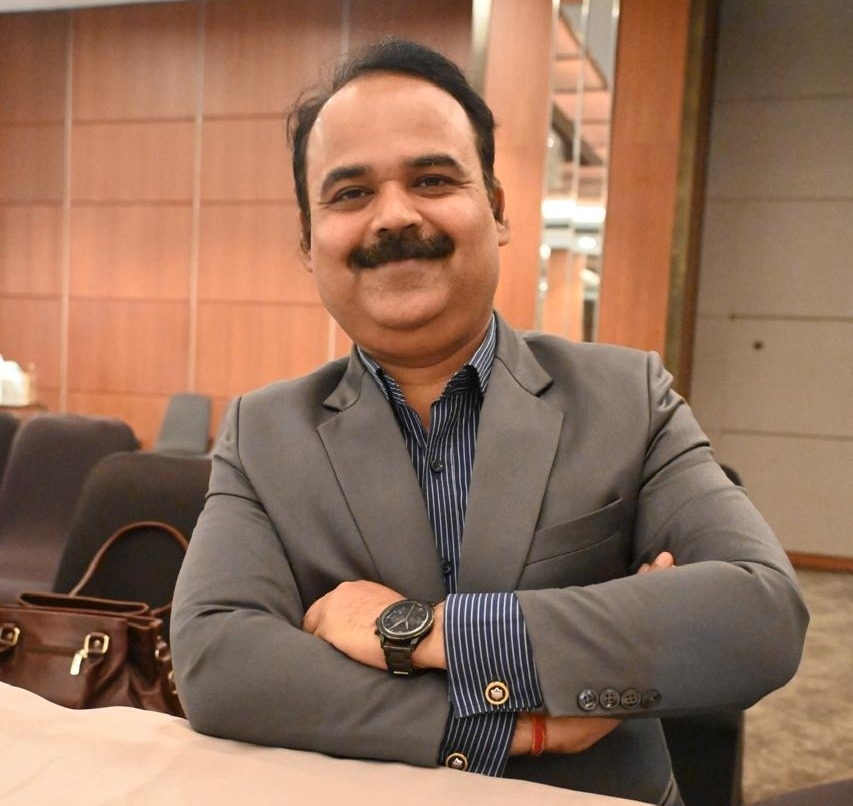
Infrastructure upgrades often reshape real estate markets, and integrated transit corridors amplify this effect. According to Sanjeev Singh, Managing Director, SKJ Landbase,
“Integrated Metro and RRTS corridors create long-term value. Locations near such projects attract stronger buyer interest, higher demand, and sustained appreciation. Gurugram and Faridabad will witness a clear shift toward transit-oriented residential and commercial development.”
As connectivity improves, developers will plan smarter projects. End-users will prioritize locations with seamless mobility. Investors will view the corridor as a long-term growth zone.
Final Outlook
HMRTC’s integrated Metro–RRTS proposal reflects forward-looking governance. It combines proven success with future scalability. By focusing on shared infrastructure and seamless travel, authorities have taken a step that aligns perfectly with NCR’s evolving urban needs.
Once implemented, this corridor will not just move people faster. It will reshape how NCR lives, works, and grows.