India’s Flex Office Space to Cross 100 Million sq ft by 2027: A New Era of Workspaces Begins
India’s flex office space market grows faster than ever before. Every quarter reshapes the workplace story with stronger demand from enterprises and Global Capability Centres (GCCs). Now, according to the latest Colliers report, the country races towards 100 million sq ft of flex stock by 2027, rising sharply from 72.3 million sq ft in 2025.
The shift looks bold. The momentum looks unstoppable. And the future looks smarter, scalable, and tech-driven.
Bengaluru Leads the Race as India’s Flex Capital
Bengaluru holds the top spot with a 31% share of India’s total flex office space. The city’s strong tech ecosystem, deep talent pool, and large enterprise base keep flex spaces in constant demand.
Pune follows closely, but with a different strength. Pune now enjoys the highest flex penetration at 11.5%, showing how rapidly companies adopt flexible models in emerging business hubs.
This leadership from both cities sets the tone for India’s next chapter in office evolution.
Flex Penetration to Touch 10.5% by 2027
Flex penetration hits 8.5% in 2025. Colliers expects this number to rise steadily to 10.5% by 2027.
The reason looks simple. Flex operators expand aggressively. Enterprises want scalability. GCCs demand plug-and-play solutions. And companies need smarter, faster, and cost-effective workspace strategies.
All these factors push flex offices from a trend to a long-term workplace strategy.
Enterprise Demand Shoots Up Across India
Enterprise occupiers run the show with nearly 70% of total flex seat demand. Their seat uptake grows from 50,000 in 2021 to almost 160,000 seats across 2024–25.
Technology firms and BFSI companies dominate. Together, they generate 60–65% of enterprise demand.
Colliers also expects annual seat uptake to rise to almost 200,000 seats over the next two years. Enterprises want speed. They want lower capex. And they want ready infrastructure. Flex solves all of that.
GCCs Become India’s Strongest Flex Powerhouse
GCCs are no longer just participants. They behave like market shapers.
In 2025, they took 40–45% of the total 160,000 enterprise seats. By 2027, they may contribute nearly half of total enterprise demand.
GCCs now scale high-value functions such as:
- Engineering
- Artificial Intelligence
- Analytics
- R&D
Because of this, flex operators design advanced solutions:
- Compliance-ready infrastructure
- Fully managed services
- Rapid deployment models
- Tech-integrated environments
- PropTech-enabled monitoring
GCCs want speed and sophistication. Flex delivers both.
Tier I CBDs and SBDs Stay Strong, But Tier II Cities Rise Fast
Secondary Business Districts (SBDs) in Tier I cities continue as core hubs for flex demand. These locations offer:
- Strong connectivity
- Great talent access
- Modern buildings
- Enterprise-grade infrastructure
But the most exciting shift comes from Tier II cities.
Cities like Chandigarh, Ahmedabad, Kochi, Coimbatore, and Jaipur rise rapidly. Rentals stay 30–35% lower than Tier I markets. And companies love the cost advantage.
Colliers predicts Tier II cities may contribute 10–15% of India’s total flex stock by 2027.
India’s flex story expands beyond metros. That creates a more balanced and distributed workspace landscape.
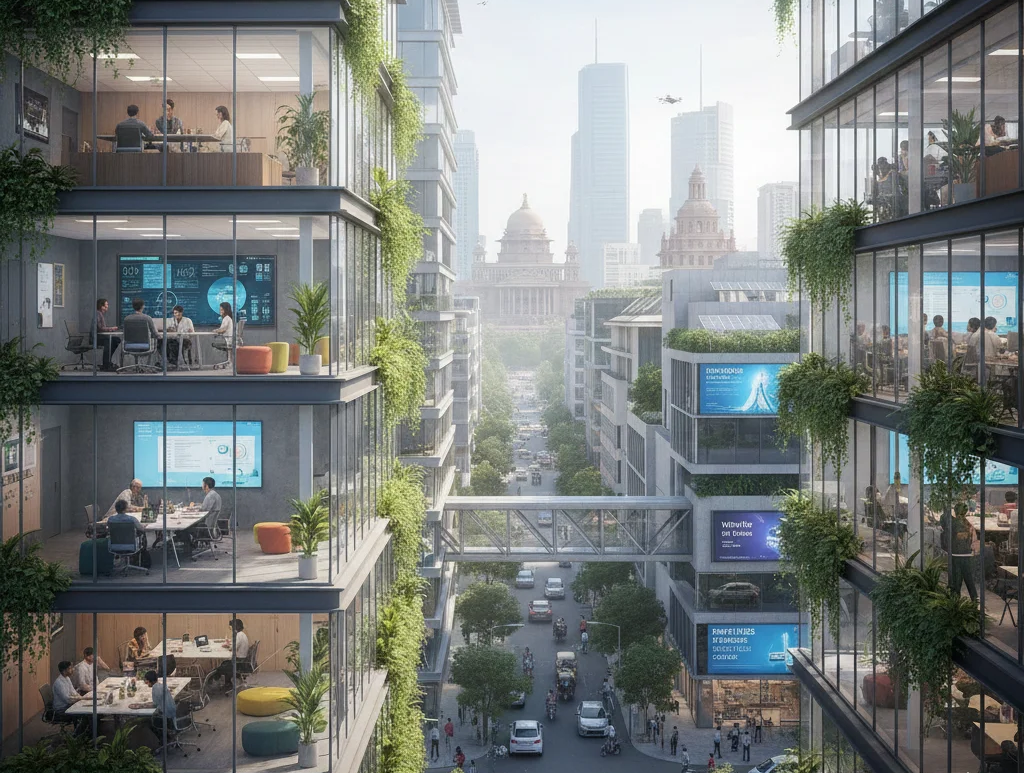
Tech and Sustainability Reshape Flex Office Models
Operators now create smarter spaces built for:
- Energy efficiency
- Smart IoT-enabled management
- Automated access and monitoring
- Hybrid collaboration tools
- ESG-focused solutions
Companies want sustainability. Employees want experience. Operators combine both into one powerful offering.
This shift increases long-term adoption and builds more future-ready workplaces.
Statement from Sanjeev Singh, MD, SKJ Landbase
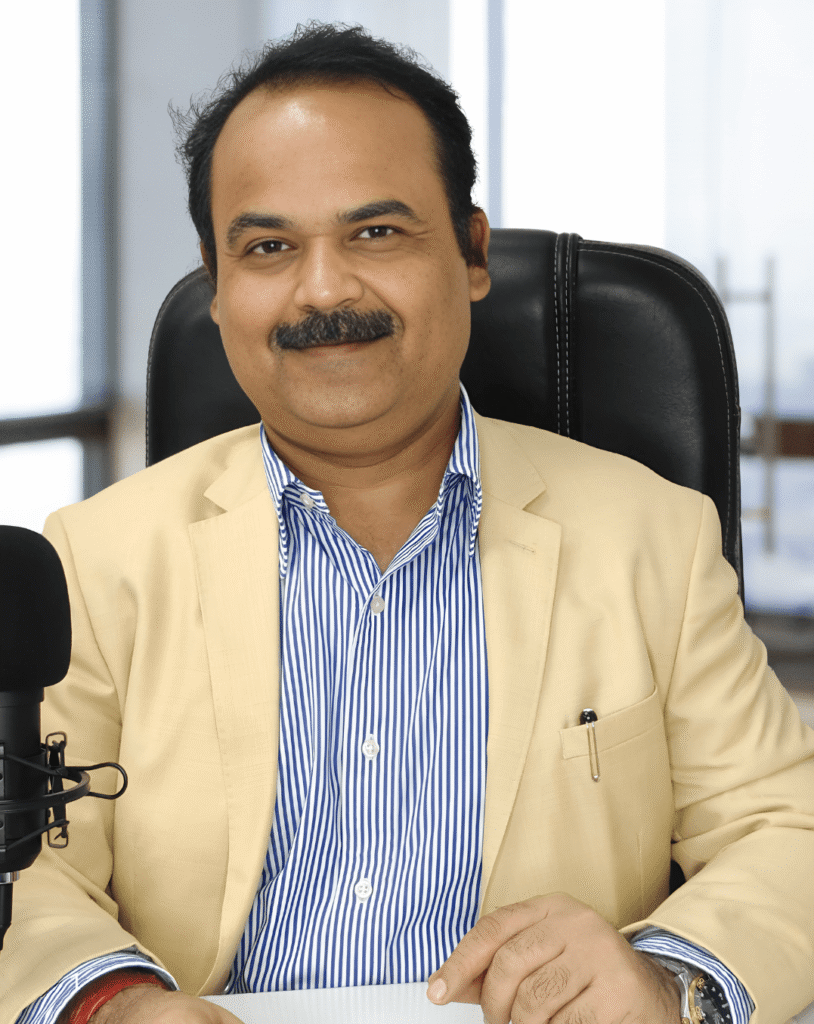
India’s flex workspace revolution reflects a powerful mindset shift across enterprises and GCCs. Companies now value agility, speed, and cost optimisation more than ever. Flex spaces offer exactly that. As technology and sustainability shape the next decade of office consumption, India stands at the forefront of the global flexible workspace movement.
Why Flex Offices Now Define the Future of Work
India moves into a phase where flexibility becomes the default. Enterprises avoid long-term lock-ins. GCCs rethink scale. Startups push for cost optimisation. And employees demand better-designed workplaces.
Flex answers every need:
- Zero upfront investment
- Faster setup
- Custom design
- Scalable and de-scalable workspace
- Plug-and-play operations
- Decentralised hubs and spokes
The future belongs to workplaces that adjust, evolve, and grow with the organisation. Flex fits perfectly.
Conclusion: The Flex Market Expands, and India Leads with Confidence
By 2027, India will cross 100 million sq ft of flex office stock. Bengaluru and Pune guide the growth. Tier II cities expand the map. Enterprises and GCCs fuel the engine. And technology pushes the sector into a new era.
India stands ready for a powerful workplace transformation. And flex offices sit at the heart of it.