A Big Boost to Government Housing in Delhi
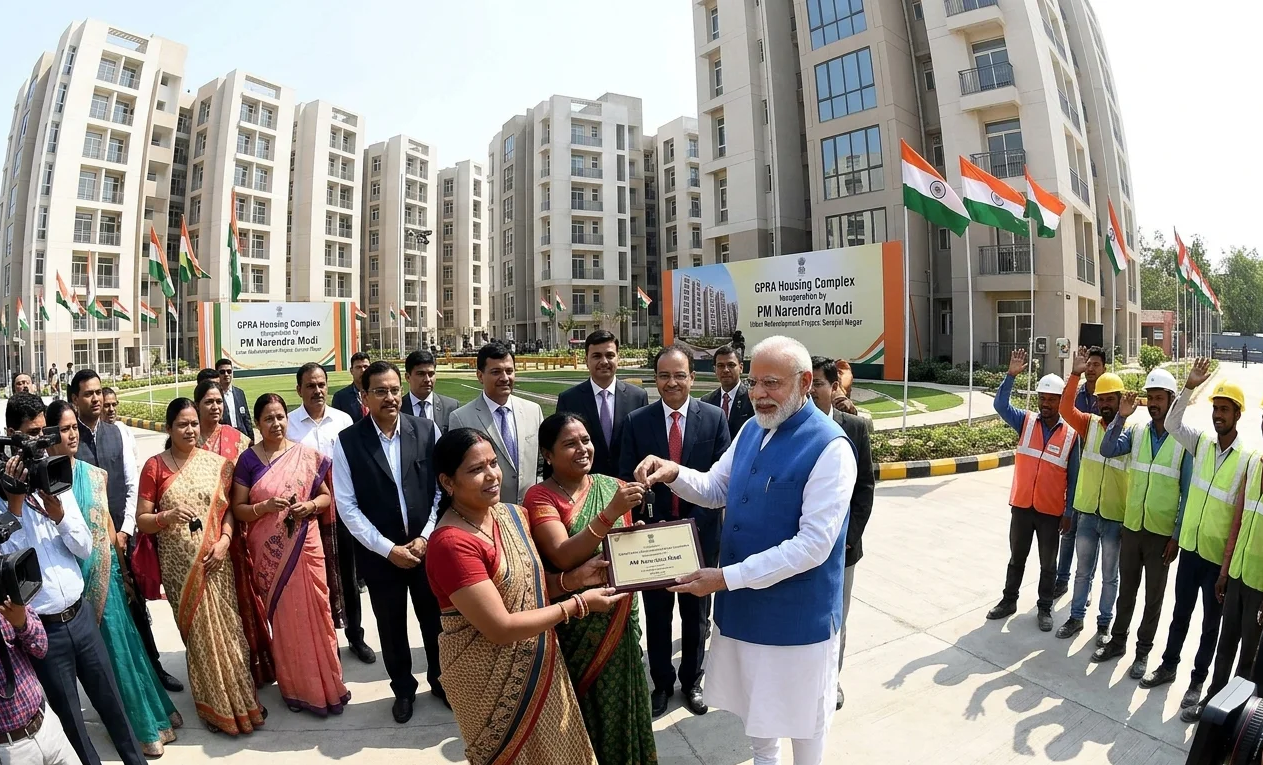
Prime Minister Narendra Modi recently marked an important milestone in Delhi’s urban development. He inaugurated 2,722 newly constructed General Pool Residential Accommodation (GPRA) flats in the capital. These modern homes stand across Sarojini Nagar and Kasturba Nagar, two key government residential areas.
The event became even more meaningful because it took place on International Women’s Day. During the ceremony, the Prime Minister handed over the keys of these flats to women allottees, symbolizing empowerment and inclusion in public housing initiatives.
Moreover, the Prime Minister also laid the foundation stone for another 6,632 flats. These upcoming homes will rise in Netaji Nagar, Sarojini Nagar, Sriniwaspuri, and Kasturba Nagar. With this step, the government has accelerated one of the largest housing redevelopment programs in Delhi.
The project focuses on replacing old residential quarters with modern, well-planned apartments that meet today’s urban lifestyle requirements.
Redevelopment of Seven Major Government Colonies
The housing initiative forms part of the central government’s massive redevelopment plan for seven GPRA colonies in Delhi. Many of these residential areas were originally built several decades ago. Over time, the infrastructure became outdated and inefficient.
Therefore, the government launched a comprehensive redevelopment strategy to modernize these spaces.
Once completed, the redevelopment will deliver 24,917 new residential units. Earlier, these colonies had about 12,970 housing units. In simple terms, the project will nearly double the residential capacity.
The redevelopment covers several prominent government housing colonies, including:
- Netaji Nagar
- Sarojini Nagar
- Kasturba Nagar
- Sriniwaspuri
- Nauroji Nagar
- Mohammadpur
- Thyagraj Nagar
The Central Public Works Department (CPWD) is leading the project. Authorities have designed the new housing complexes with modern infrastructure, better planning, and improved living standards.
Additionally, the new residential units include features such as efficient layouts, green spaces, improved roads, and better utilities.
Commercial Projects Help Fund the Redevelopment
Interestingly, the government has adopted a self-financing model to complete this large redevelopment initiative. Under this model, commercial developments generate revenue that supports residential construction.
For this purpose, NBCC (India) Ltd, a public sector enterprise, plays a major role in executing the project.
NBCC has already developed or planned major commercial projects in these areas, including:
- World Trade Centre at Nauroji Nagar
- Downtown commercial complex at Sarojini Nagar
These premium commercial properties attract strong demand from businesses. As a result, the government earns significant revenue through the sale or leasing of office spaces.
That revenue then helps finance the construction of modern government housing without placing a heavy burden on public funds.
Notably, the government successfully used the same redevelopment model earlier in East Kidwai Nagar and Moti Bagh colonies. Because the approach proved effective, authorities decided to implement it on a larger scale.
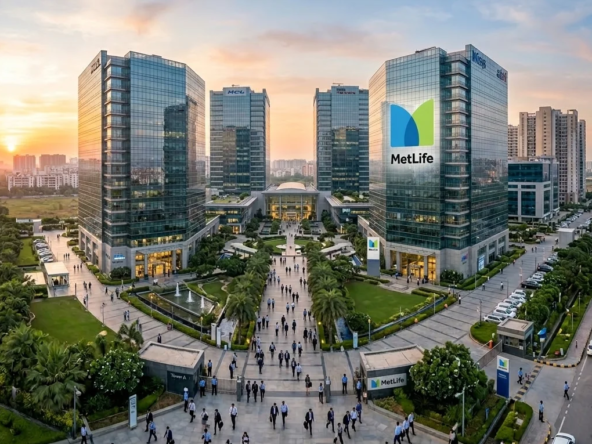
Bharat Business Park to Add Modern Office Space
Apart from residential housing, the project also includes the development of Bharat Business Park, a large commercial office complex.
This project aims to create world-class office infrastructure in Delhi. Officials plan the complex with modern architectural design and sustainable construction features.
The project will include:
- 217,000 square metres of built-up office space
- Energy-efficient building design
- Modern office facilities
- Premium commercial infrastructure
Authorities estimate the value of the project at around ₹2,270 crore.
Once operational, Bharat Business Park will strengthen Delhi’s commercial ecosystem. Additionally, it will generate employment opportunities and attract businesses seeking premium office space in the capital.
Women Workers and Beneficiaries Take the Spotlight
The inauguration ceremony highlighted the important role of women in India’s workforce and development sector.
Prime Minister Modi interacted with women construction workers involved in building the housing project. He also met women employees from NBCC, appreciating their contribution to infrastructure development. Later in the day, the Prime Minister visited Burari, where he distributed PM-Ayushman Bharat cards and PM SVANidhi credit cards to women beneficiaries.
These initiatives aim to strengthen financial inclusion, healthcare access, and economic empowerment for women across the country.
The symbolic gesture of handing over housing keys to women allottees further reinforced the government’s commitment to gender empowerment in housing and welfare schemes.
Positive Signals for Delhi’s Real Estate Landscape

Sanjeev Singh, Managing Director of SKJ Landbase, shared his insights on the development:
“Government-led redevelopment in prime locations like Sarojini Nagar and Netaji Nagar can significantly improve urban infrastructure. Such projects not only enhance living standards for government employees but also positively impact surrounding real estate markets by improving connectivity, infrastructure, and commercial activity.”
He further added that integrated developments combining residential and commercial infrastructure represent the future of urban planning in Indian cities.
Transforming Delhi’s Urban Housing Landscape
Delhi continues to face growing urban pressure due to population growth and rising infrastructure demand. Therefore, modern redevelopment projects have become essential for efficient land utilization.
The GPRA redevelopment initiative addresses this challenge by transforming low-density, aging housing clusters into modern, high-quality residential communities.
Furthermore, the integration of commercial spaces, green infrastructure, and modern urban planning ensures that these developments support sustainable city growth. As construction progresses in the coming years, the redevelopment of these seven colonies will reshape significant parts of Delhi’s residential landscape.
Ultimately, the inauguration of 2,722 GPRA flats and the foundation of 6,632 more units signals a strong commitment to modern infrastructure, better housing, and inclusive urban development in the national capital.