DDA’s Mega 8-Point Urban Transformation Plan: How Delhi’s Future Real Estate Landscape Is About to Change Forever
Delhi is on the verge of a historic urban transformation. The Delhi Development Authority (DDA) has announced an ambitious eight-point development roadmap that aims to reshape the national capital into a more sustainable, connected, and livable city. As Delhi continues to expand, the need for planned development has become more important than ever. Therefore, DDA has introduced a strategy that focuses on affordable housing, modern infrastructure, environmental sustainability, and balanced urban growth.
The roadmap also addresses several long-standing urban issues, including traffic congestion, pollution, urban flooding, water shortages, heat islands, and the redevelopment of aging neighborhoods. At the same time, it seeks to preserve Delhi’s rich heritage while preparing the city for future economic and population growth.
For homebuyers, developers, and investors, this initiative represents a significant step toward building a better and more organized capital city.
Affordable Housing Becomes a Top Priority
One of the strongest pillars of DDA’s roadmap is its renewed commitment to affordable housing. Delhi has witnessed a continuous rise in housing demand over the past few years. However, supply has not always kept pace. Consequently, many families continue to struggle to find quality homes within their budget.
To address this challenge, DDA plans to increase the supply of affordable housing while reviewing the redevelopment of unauthorized colonies and the rehabilitation of slum and Jhuggi Jhopri clusters. This balanced approach can provide better living conditions for thousands of families and improve access to essential civic infrastructure.
Moreover, organized housing development often creates healthier communities with improved roads, parks, schools, healthcare facilities, and public transport. As a result, affordable housing will not only benefit residents but also strengthen Delhi’s overall urban ecosystem.
Transit-Oriented Development Will Improve Daily Life
Better connectivity remains essential for any modern city. Recognizing this need, DDA has proposed Transit-Oriented Development (TOD) across approximately 207 square kilometres.
The concept encourages residential and commercial development near metro stations and public transport corridors. Consequently, people can travel more efficiently while reducing dependence on private vehicles.
Furthermore, improved connectivity usually enhances the value of nearby properties. Areas located close to metro networks often witness stronger residential demand and better long-term appreciation. Therefore, Transit-Oriented Development can become one of the biggest growth drivers for Delhi’s real estate market over the coming years.
At the same time, better public transport helps reduce traffic congestion, lowers fuel consumption, and supports cleaner urban mobility.
Green Infrastructure Will Create a Healthier Capital
Environmental sustainability forms another key component of DDA’s development strategy. Delhi has long battled pollution and declining environmental quality. Therefore, increasing green cover has become a major priority.
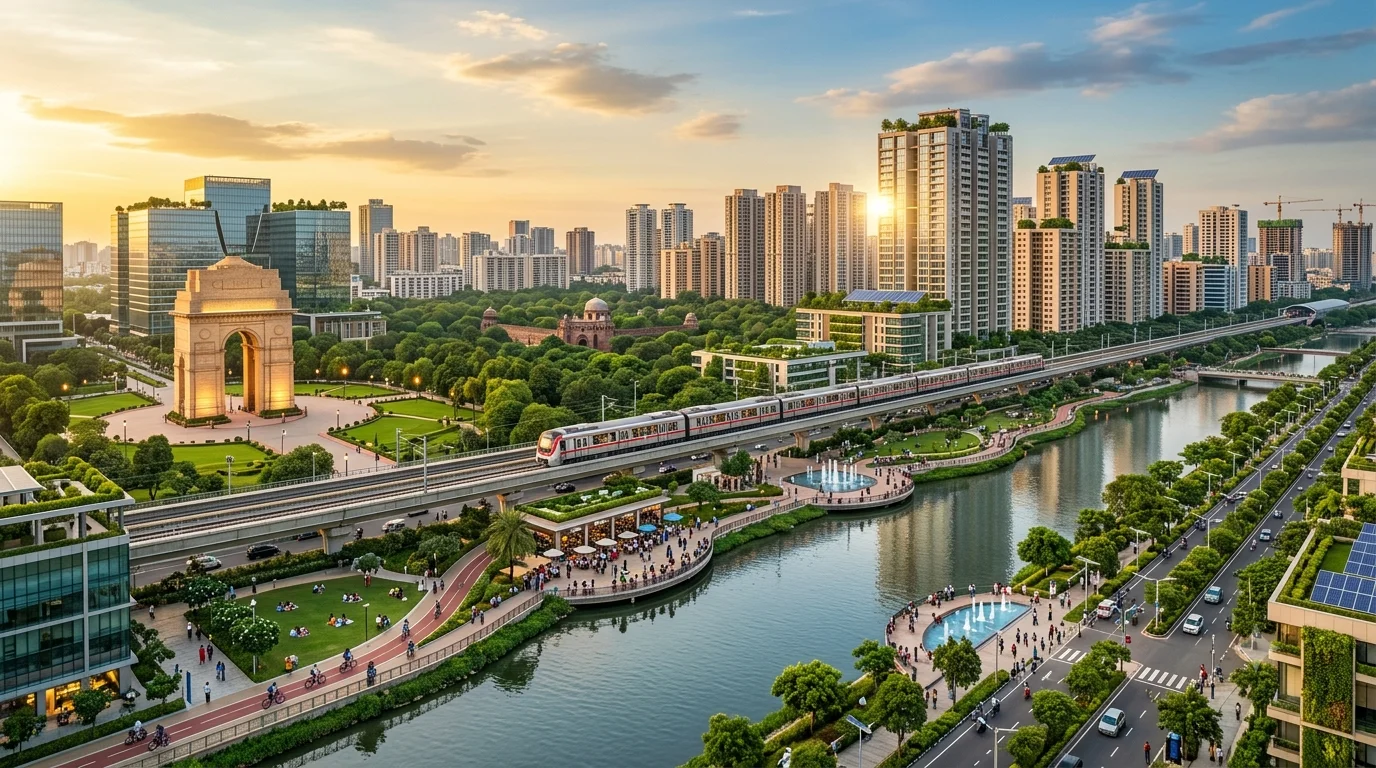
DDA plans to develop one of the country’s highest per capita green cover networks through interconnected parks, green belts, open spaces, and water bodies. Additionally, authorities aim to strengthen blue-green infrastructure that improves ecological balance while enhancing public spaces.
These initiatives can reduce urban heat, improve air quality, promote biodiversity, and create healthier neighborhoods for future generations.
Moreover, green surroundings significantly improve residential appeal, making nearby properties more desirable for both buyers and investors.
Riverfront Development Will Redefine Public Spaces
Among the most exciting proposals is the 100-square-kilometre riverfront development project in Zone-O.
Rather than leaving valuable land underutilized, DDA plans to transform the riverfront into vibrant public spaces featuring landscaped gardens, walking tracks, cycling paths, recreational zones, and environmentally sustainable infrastructure.
Such developments can dramatically improve the quality of urban life while creating attractive destinations for residents and tourists alike.
In addition, riverfront projects often stimulate surrounding real estate development by increasing demand for nearby residential and commercial properties.
Preserving Heritage While Embracing Modern Growth
Delhi is one of the world’s oldest continuously inhabited cities. Therefore, preserving its historical identity remains equally important.
DDA intends to redevelop approximately 24 square kilometres of the Old City while maintaining its cultural and architectural significance. Similarly, the 31-square-kilometre Bungalow Zone will continue to receive planned attention that balances conservation with future development.
Instead of replacing heritage with modern construction, the authority aims to integrate both. This thoughtful approach allows Delhi to modernize without losing its historical character.
Consequently, heritage conservation can also strengthen tourism, support local businesses, and preserve the city’s unique identity.
Land Pooling Will Encourage Planned Expansion
Urban expansion often creates challenges when development occurs without proper planning. To avoid this, DDA has allocated more than 200 square kilometres under the Land Pooling Policy.
This initiative encourages systematic urban growth while ensuring adequate infrastructure, wider roads, public utilities, schools, healthcare facilities, and green spaces.
Currently, developed residential areas cover nearly 700 square kilometres, while another 150 square kilometres remain designated as low-density zones.
Planned expansion will reduce pressure on existing neighborhoods and create new opportunities for residential, commercial, and mixed-use developments across Delhi.
Solving Delhi’s Biggest Urban Challenges
Beyond housing and infrastructure, DDA’s roadmap directly addresses several urban concerns that affect millions of residents every day.
The authority plans to improve disaster resilience, strengthen water security, develop safer roads, reduce urban flooding, control pollution, and tackle heat island effects through integrated planning.
Additionally, redevelopment of aging neighborhoods will improve civic infrastructure while creating safer and more efficient urban communities.
Instead of introducing isolated projects, DDA aims to solve these issues through one coordinated urban development strategy.
Commercial Growth Will Strengthen Delhi’s Economy
The roadmap also focuses on strengthening Delhi’s economic foundation.
Authorities plan to redevelop commercial markets, modernize business centers, establish logistics hubs, and improve trade infrastructure. These initiatives can attract new businesses, generate employment, and support long-term economic growth.
As commercial activity expands, residential demand usually follows. Therefore, improved business infrastructure can create fresh opportunities across multiple real estate segments.
Expert Opinion
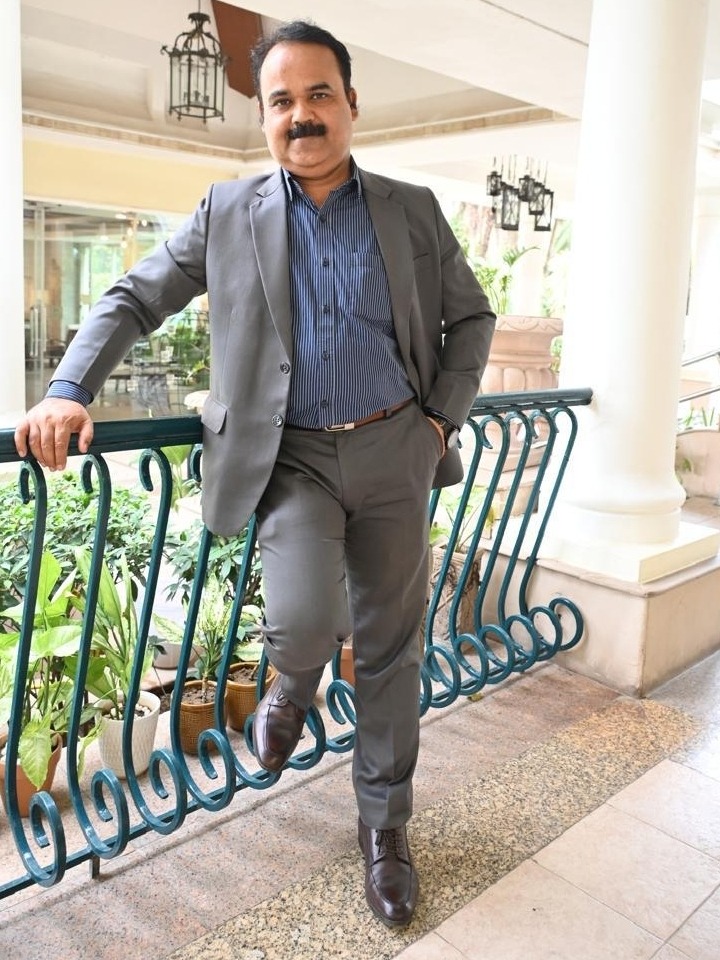
Sanjeev Singh, MD, SKJ Landbase, said:
DDA’s eight-point development roadmap reflects a progressive vision for Delhi’s future. Affordable housing, sustainable infrastructure, Transit-Oriented Development, and environmental conservation will strengthen the city’s real estate ecosystem while improving the quality of life for residents. Planned urban growth always creates stronger investment confidence, and this initiative has the potential to unlock significant long-term value across Delhi’s property market.
Conclusion
Delhi’s eight-point development roadmap marks the beginning of a new chapter in the capital’s urban journey. By combining affordable housing, sustainable infrastructure, green development, heritage conservation, better mobility, commercial redevelopment, and planned expansion, DDA has laid the foundation for a more organized and future-ready city.
Although successful implementation will remain the key, the vision itself reflects a comprehensive approach toward balanced urban growth. For homebuyers, the roadmap promises improved living standards. For investors, it opens the door to long-term opportunities in one of India’s most important real estate markets.
As these projects move from planning to execution, Delhi could emerge as a benchmark for sustainable urban development, proving that economic growth and environmental responsibility can progress together.