GMDA’s Mega Traffic Plan: Signal-Free Corridor from Iffco Chowk to Greater SPR Could Revolutionize Gurugram Commutes
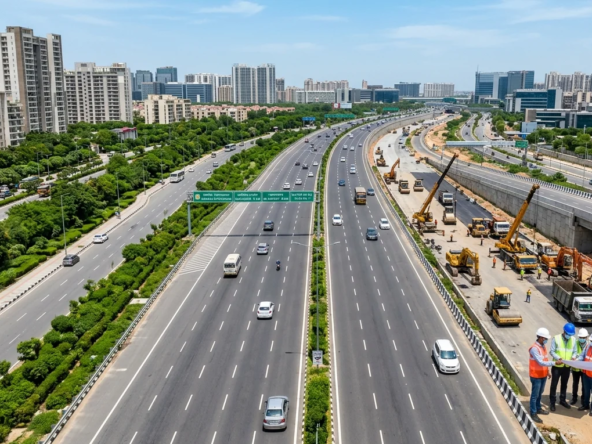
Gurugram is once again preparing for a major infrastructure upgrade. This time, the Gurugram Metropolitan Development Authority (GMDA) has proposed a 10-kilometre signal-free corridor connecting Iffco Chowk to the upcoming Greater Southern Peripheral Road (SPR). The ambitious project aims to improve connectivity, reduce congestion, and create a smoother travel experience for thousands of daily commuters.
As the city continues to expand rapidly, traffic management has become one of the biggest challenges. New residential sectors, commercial hubs, and office districts attract more people every year. Consequently, roads experience increasing pressure, especially during peak hours. Therefore, infrastructure projects like this signal-free corridor have become essential for Gurugram’s future growth.
A Vision for Faster and Smoother Connectivity
The proposed corridor will stretch from Iffco Chowk to Greater SPR, creating a seamless travel route through some of the city’s busiest areas.
Unlike traditional roads that require vehicles to stop at multiple traffic signals, the new corridor will allow uninterrupted movement. As a result, commuters can expect shorter travel times and a more comfortable driving experience.
To move the project forward, GMDA has appointed a consultancy firm to conduct a detailed feasibility study. Officials believe that several flyovers and underpasses will be necessary to make the route completely signal-free.
Moreover, the corridor will improve connectivity between key roads such as the Gurugram-Faridabad Road, Sohna Road, and the Delhi-Jaipur Highway near Manesar. This integration will create a stronger transportation network across the region.
Major Infrastructure Upgrades Planned
One of the most important aspects of the project involves constructing grade separators at major intersections.
According to officials, the route may require four to five grade separators, including flyovers and underpasses. These structures will help eliminate bottlenecks and maintain continuous traffic flow.
Proposed underpasses are expected at:
- Z-Chowk near Millennium City Centre Metro Station
- RD Ardee City Chowk
- Sector 52 Chowk
- Golf Course Extension Road Junction
- Sector 61/62 Intersection
These locations currently witness heavy traffic throughout the day. Therefore, upgrading them will significantly improve mobility.
Additionally, GMDA plans to integrate several connecting roads with the corridor. This broader approach will ensure that benefits extend beyond the main route and improve overall traffic management across nearby sectors.
Cloverleaf Interchange to Transform Traffic Movement
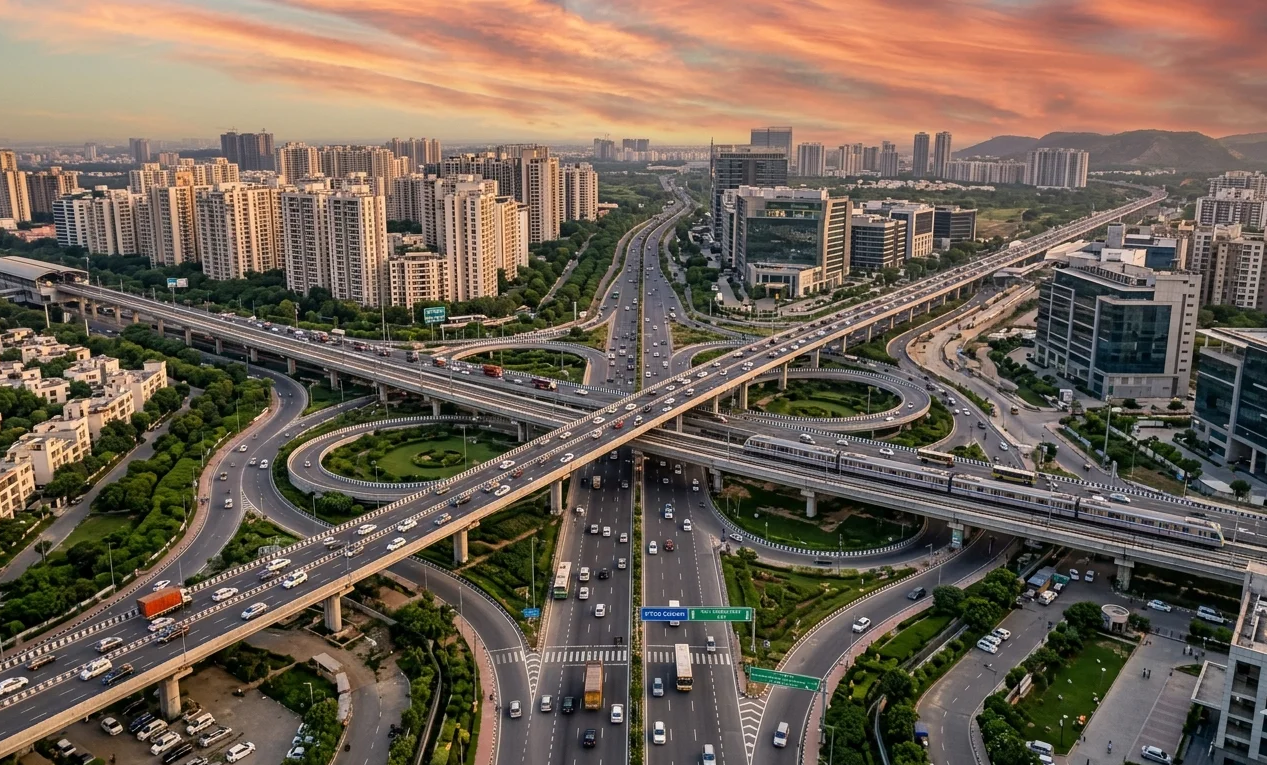
A major highlight of the project is the proposed cloverleaf interchange.
This advanced road design allows vehicles to merge and exit without crossing opposing traffic lanes. Consequently, it minimizes delays and improves safety.
In addition, officials have proposed a flyover connecting the corridor directly to the Delhi-Gurgaon Expressway. This connection will further enhance traffic movement between Delhi, Gurugram, and emerging residential zones.
Around the world, cloverleaf interchanges have proven highly effective in managing heavy traffic volumes. Therefore, their inclusion in this project reflects GMDA’s focus on long-term urban planning.
Strong Support from Upcoming Metro and RRTS Projects
The significance of this corridor goes beyond road transportation.
The Haryana Mass Rapid Transport Corporation (HMRTC) and the National Capital Region Transport Corporation (NCRTC) are planning major public transport projects along this stretch.
Current proposals include:
- Metro connectivity up to Golf Course Extension Road
- Regional Rapid Transit System (RRTS) corridor connecting Iffco Chowk and Faridabad
As these projects move forward, the corridor will become a critical transportation spine for the city.
Furthermore, improved coordination between road infrastructure and public transit networks will create a more efficient mobility ecosystem. This combination can significantly reduce travel stress and support sustainable urban development.
A New Alternative Route to Manesar
Currently, thousands of commuters depend on the Delhi-Jaipur Highway (NH-48) to travel towards Manesar.
However, increasing traffic often leads to delays and congestion.
The proposed corridor offers a valuable alternative. Once completed, travelers from Gurugram, Delhi, Faridabad, and Sohna will have another efficient route to reach Manesar and surrounding industrial zones.
As a result, traffic pressure on NH-48 may reduce considerably.
This alternative route will become even more important as development accelerates in New Gurugram and along the Greater SPR corridor.
Boost for Real Estate and Urban Growth
Infrastructure and real estate development share a strong relationship.
Whenever connectivity improves, property demand often increases. Buyers prefer locations that offer faster access to workplaces, schools, hospitals, and entertainment destinations.
The proposed corridor could positively impact several key micro-markets, including:
- Golf Course Extension Road
- Southern Peripheral Road (SPR)
- New Gurugram
- Sohna Road
- Greater SPR region
- Sectors along the proposed route
Moreover, better connectivity often attracts commercial investments. Businesses look for locations that provide smooth transportation access for employees and customers.
Therefore, the project could create new opportunities for both residential and commercial development across Gurugram.
Benefits Beyond Traffic Reduction
While reducing congestion remains the primary goal, the corridor offers several additional benefits.
First, smoother traffic flow can lower fuel consumption because vehicles spend less time idling at signals.
Second, fewer traffic stoppages can help reduce carbon emissions.
Third, improved mobility can increase productivity by allowing people to spend less time on the road and more time on productive activities.
Consequently, the project supports both economic growth and environmental sustainability.
Sanjeev Singh’s Perspective
Sanjeev Singh, Managing Director of SKJ Landbase, believes that the proposed signal-free corridor could become one of Gurugram’s most impactful infrastructure developments in the coming years.
According to him, modern urban infrastructure plays a crucial role in determining the growth potential of any city. He states that improved road connectivity, combined with upcoming metro and RRTS networks, will enhance accessibility across multiple sectors of Gurugram.
He further adds that areas benefiting from large-scale transportation projects often witness stronger real estate demand, higher investor confidence, and long-term value appreciation.
Conclusion
The proposed signal-free corridor from Iffco Chowk to Greater SPR represents a bold step toward solving Gurugram’s growing traffic challenges. With underpasses, flyovers, a cloverleaf interchange, and integration with future metro and RRTS projects, the initiative promises to reshape the city’s transportation landscape.
More importantly, it aligns with Gurugram’s vision of becoming a smarter, more connected, and future-ready urban destination. As the feasibility study progresses and plans take shape, residents, businesses, and investors will watch closely. If executed successfully, this corridor could transform daily commuting and unlock a new phase of growth for Gurugram.