Gurugram’s Green Revolution Begins! GMDA’s Massive Beautification Drive Set to Transform City Junctions
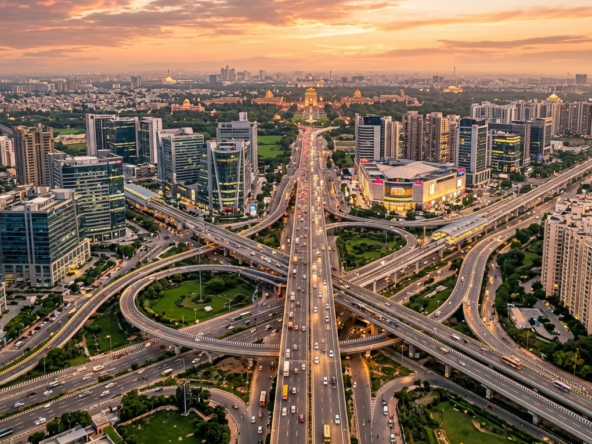
Gurugram is preparing for a refreshing transformation. Known for its modern skyline, corporate hubs, and fast-growing infrastructure, the city has often struggled with pollution, rising temperatures, and shrinking green spaces. However, things are finally starting to change. The Gurugram Metropolitan Development Authority (GMDA ) has launched a large-scale greening and beautification campaign across major junctions and roads in the city.
From Rajiv Chowk to Mahavir Chowk and Atul Kataria Chowk, plantation and landscaping work has already started. The authority aims to improve the city’s appearance while also tackling environmental challenges like air pollution and urban heat.
Moreover, this initiative arrives at the perfect time as Gurugram prepares for the upcoming monsoon season.
GMDA Starts Beautification Work Across Key Intersections
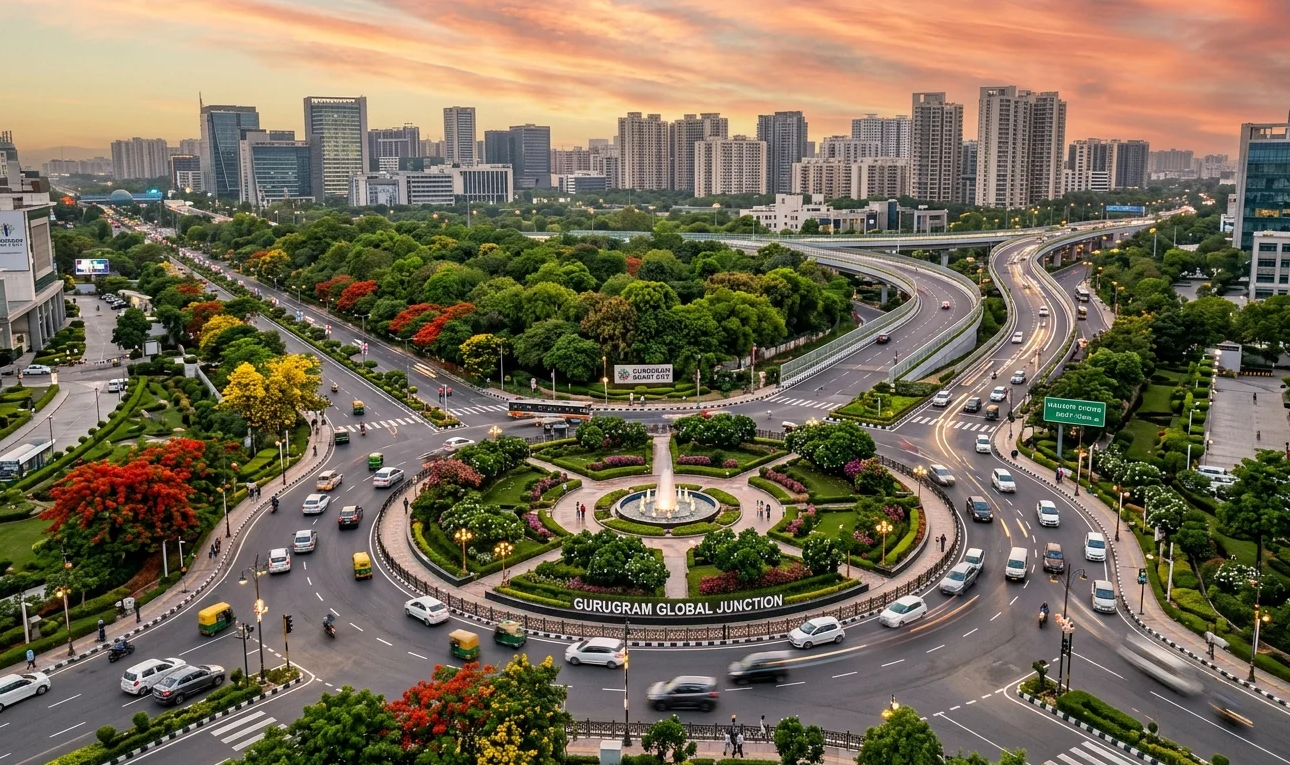
The city’s busiest junctions are now witnessing a visible makeover. GMDA has started plantation drives, landscaping activities, fencing work, and aesthetic improvements at several major intersections including Rajiv Chowk, Atul Kataria Chowk, Mahavir Chowk, Jharsa Chowk, and Kanhai Chowk.
These areas experience heavy traffic throughout the day. Because of constant vehicular movement, the junctions often suffer from high pollution levels, dust accumulation, and excessive heat.
To solve these issues, officials are developing greener spaces around roundabouts, medians, and roadside islands. Workers are planting grass, shrubs, flowering plants, and trees across the city’s green belts.
At the same time, authorities are improving the overall visual appeal by adding decorative stonework, repainting kerbstones, and installing fencing around green areas to prevent encroachments.
As a result, these busy roads may soon look cleaner, cooler, and more organized.
Native and Ornamental Trees to Enhance Gurugram’s Landscape
One of the biggest highlights of this project involves the plantation of carefully selected native and ornamental tree species. Instead of random planting, GMDA has chosen trees that can survive Gurugram’s climate while improving biodiversity and aesthetics.
The authority is planting species such as Gulmohar, Amaltas, Kachnar, Spathodea, Tabebuia Rosea, Pilkhan, Ashok Desi, and Ficus Shiela.
These trees offer several environmental benefits. They absorb dust particles, reduce air pollution, and provide shade during extreme summers. Additionally, flowering trees like Gulmohar and Tabebuia Rosea will add vibrant colors to the city’s roads during blooming seasons.
Consequently, commuters and residents can expect a greener and visually attractive environment in the coming months.
Atul Kataria Chowk Receives ₹1.5 Crore Green Upgrade
Among all the redevelopment projects, Atul Kataria Chowk stands out as one of the most ambitious initiatives. GMDA plans to spend nearly ₹1.5 crore on upgrading the junction.
The project includes plantation work, landscaping, beautification of pillars, and redevelopment of surrounding spaces. Officials want to create a modern urban gateway that reflects Gurugram’s evolving identity.
Furthermore, improved greenery around the junction can help reduce dust and heat generated by continuous traffic movement.
The transformation will also improve the experience for daily commuters who pass through the area every day.
Rajiv Chowk Beautification to Receive CSR Funding
Rajiv Chowk, one of Gurugram’s busiest traffic intersections, is also undergoing major redevelopment. Plantation and landscaping work has already started at the site.
Interestingly, the project is receiving financial support through Corporate Social Responsibility (CSR) funding. Officials revealed that around ₹1 crore will be spent on improving green islands, fencing open spaces, and strengthening landscaping around the junction.
Since Rajiv Chowk handles massive traffic flow daily, officials believe the additional green cover will help reduce the urban heat island effect in the surrounding areas.
Moreover, the beautification work will improve the overall appearance of one of the city’s most important intersections.
Mahavir Chowk to Get a Dense Miyawaki Forest
GMDA is also introducing a unique eco-friendly concept at Mahavir Chowk. The authority plans to develop a Miyawaki forest in the area.
Unlike traditional plantation methods, the Miyawaki technique creates dense forests using native species planted close together. These forests grow much faster and absorb significantly more carbon dioxide.
Additionally, Miyawaki forests improve biodiversity and help restore ecological balance in urban areas.
Officials have allocated around ₹50 lakh for this project. According to GMDA, the work will finish by June 15.
Once completed, the dense green patch will completely transform the surrounding environment and provide a natural cooling effect.
Green Belts to Reduce Heat and Improve Drainage
Over the past few years, Gurugram has experienced rising temperatures due to rapid urbanization and shrinking green cover. Concrete roads, glass buildings, and increasing vehicle numbers have intensified the city’s urban heat island effect.
However, GMDA’s latest initiative directly targets this growing concern.
Authorities are currently clearing debris, excess soil, and construction waste from nearly 45 kilometers of roadside green belts. Workers are also leveling these spaces to improve stormwater drainage before the monsoon season.
This step will help green belts function as natural drains during heavy rainfall. Consequently, the city may witness reduced waterlogging problems during monsoons.
At the same time, additional trees and plants will help lower surrounding temperatures and improve air quality.
Gurugram Moves Towards Sustainable Urban Development
The latest beautification drive reflects a major shift in Gurugram’s development strategy. Instead of focusing only on roads and commercial projects, authorities are now prioritizing environmental sustainability and urban wellness.
Cleaner roads, greener junctions, and better-maintained public spaces can significantly improve residents’ quality of life. Moreover, such projects increase the attractiveness of nearby residential and commercial areas.
As global cities continue investing in green infrastructure, Gurugram also appears ready to embrace sustainable urban planning.
Sanjeev Singh Shares His Perspective on Gurugram’s Green Push

Sanjeev Singh, Managing Director of SKJ Landbase, praised the initiative and highlighted its long-term impact on the city.
He said, “Modern urban development requires a balance between infrastructure and nature. Gurugram’s greening initiative represents a very positive step toward sustainable city planning. Better green cover improves not only environmental conditions but also the overall lifestyle experience for residents. Such developments can also increase the appeal of nearby real estate zones over time.”
Final Thoughts
GMDA’s greening and beautification campaign brings much-needed positivity to Gurugram’s urban landscape. Through plantation drives, Miyawaki forests, landscaped junctions, and improved green belts, the authority is working toward a cleaner and healthier city.
Although the transformation will take time, the initiative clearly signals a greener future for Gurugram.
Most importantly, the project proves that modern urban growth and environmental sustainability can move forward together.