A Transformational Launch for India
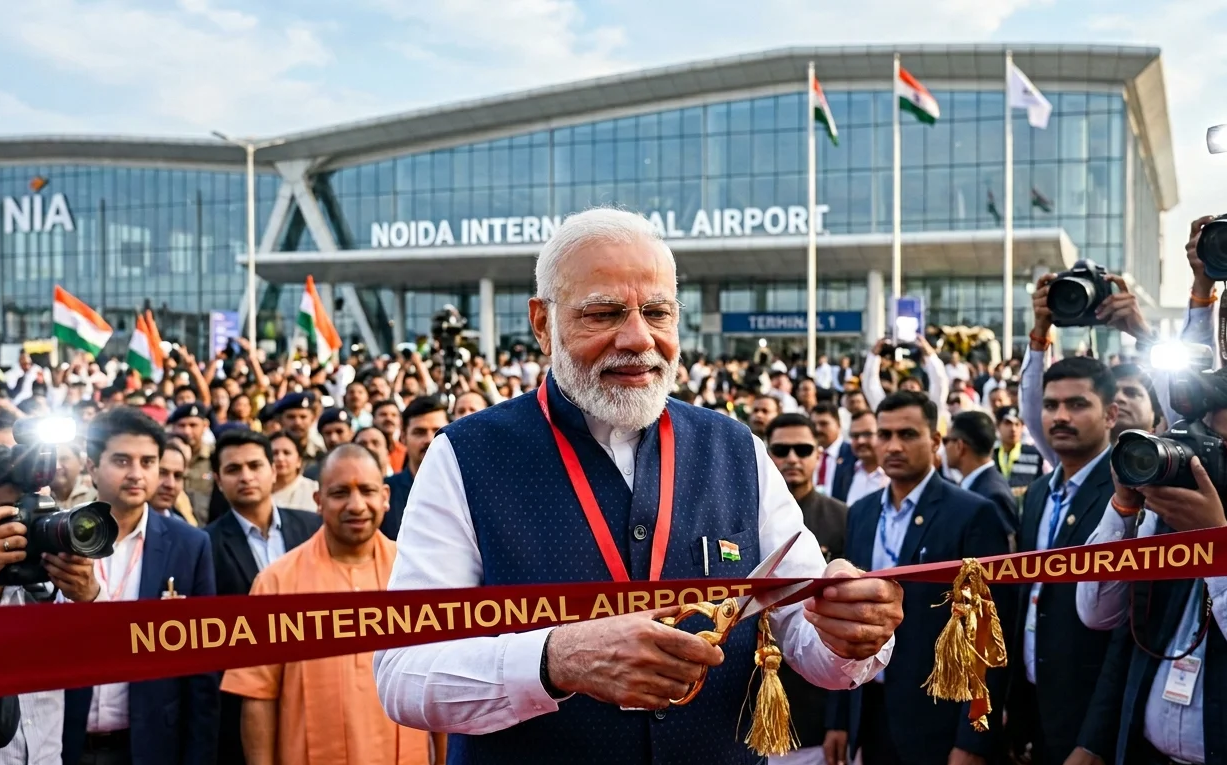
India has stepped into a new aviation era. Narendra Modi inaugurated the Noida International Airport in Jewar, and this moment marks a major milestone for infrastructure development. The project strengthens India’s position in global aviation while solving one of NCR’s biggest challenges airport congestion.
For years, Indira Gandhi International Airport handled overwhelming passenger traffic. Consequently, travelers often faced delays and crowding. Now, with the addition of Noida International Airport, the region finally gains breathing space. This new airport will share the load and improve efficiency across the board.
Moreover, the timing could not have been better. Air travel demand continues to rise rapidly in India. Therefore, expanding capacity has become essential rather than optional.
Strategic Location That Changes Everything
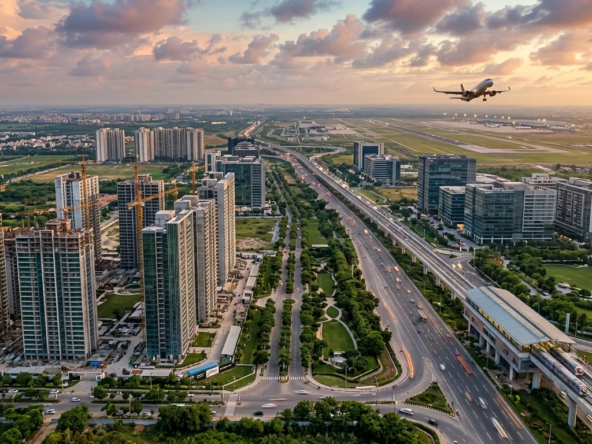
Location plays a crucial role in infrastructure success. Fortunately, Noida International Airport enjoys a powerful geographic advantage. It sits in Jewar, Uttar Pradesh, and connects seamlessly to major cities like Noida, Greater Noida, Ghaziabad, Meerut, Agra, and Mathura.
As a result, millions of people will benefit from faster access to air travel. In addition, the airport will act as a gateway for tourists visiting iconic destinations. Travelers heading to Agra or Vrindavan will now experience smoother and quicker journeys.
Furthermore, the airport strengthens regional integration. It connects multiple economic zones and encourages balanced development across NCR. This shift will reduce pressure on central Delhi while promoting growth in emerging corridors.
Capacity Built for the Future
The airport begins with impressive numbers. In its first phase, it will handle around 12 million passengers annually. However, the long-term vision tells an even bigger story. Once fully developed, the airport aims to reach a capacity of 70 million passengers every year.
This scalability ensures long-term relevance. India’s aviation sector continues to expand. Therefore, infrastructure must grow alongside demand. Noida International Airport does exactly that.
Additionally, the airport features a 3,900-metre runway. This allows it to handle wide-body aircraft like the Boeing 777-300ER. Consequently, airlines can operate long-haul international flights without limitations.
Seamless Multi-Modal Connectivity
One of the airport’s strongest features lies in its connectivity. It does not function in isolation. Instead, it integrates with roads, railways, metro lines, and regional transit systems.
Because of this, passengers will enjoy smooth end-to-end journeys. They will not struggle with last-mile connectivity. Instead, they will move efficiently from home to terminal.
At the same time, logistics operations will become faster and more cost-effective. Businesses will benefit from reduced transportation delays. This improvement will strengthen supply chains and support industrial growth in NCR.
A Design That Reflects India
Unlike many modern airports, this project embraces cultural identity. Designers have drawn inspiration from the ghats of Varanasi and Haridwar. They have also incorporated haveli-style architecture with open courtyards.
Moreover, the use of local materials and intricate lattice screens creates a unique atmosphere. Travelers will not feel like they are in a generic airport. Instead, they will experience a space that reflects Indian heritage.
This thoughtful design enhances the overall passenger experience. It adds warmth and character while maintaining global standards.
Sustainability at Its Core
Sustainability stands at the heart of this project. The airport includes natural lighting and ventilation systems. It also uses rainwater harvesting to conserve resources.
In addition, authorities plan to rely on renewable energy sources. These steps align with a long-term goal of achieving net-zero emissions.
As environmental concerns continue to grow, such initiatives become increasingly important. Noida International Airport sets a benchmark for future infrastructure projects in India.
Economic Boost and Investment Growth
The first phase of the airport required an investment of approximately ₹11,200 crore. The project follows a public-private partnership model, which ensures efficiency and accountability.
This investment will generate thousands of jobs. It will also attract hotels, logistics hubs, retail spaces, and commercial developments.
Consequently, the surrounding region will experience rapid economic growth. Infrastructure improvements will follow. Business opportunities will multiply.
Real Estate Set for a Major Upswing

Real estate markets have already started reacting positively. Areas near Jewar and the Yamuna Expressway are witnessing increased demand.
Better connectivity always drives property appreciation. Therefore, investors are actively exploring opportunities in this region.
According to Sanjeev Singh, MD of SKJ Landbase,
“Jewar Airport will redefine the real estate dynamics. It will create strong long-term investment potential and significantly enhance connectivity-driven growth.”
Clearly, the airport acts as a catalyst. It transforms not only travel but also the entire property ecosystem.
The Future Looks Promising
The inauguration marks only the beginning. Authorities plan multiple expansion phases. Each phase will add new infrastructure and increase capacity.
Simultaneously, metro connectivity and expressway networks will improve. These developments will further enhance accessibility.
Over time, Noida International Airport will evolve into a global aviation hub. It will connect India to the world more efficiently than ever before.
Conclusion
Noida International Airport represents vision and execution at scale. It reduces congestion, improves connectivity, and supports economic growth.
More importantly, it reshapes how people travel across NCR. It brings convenience, efficiency, and opportunity together.
In the coming years, this airport will not just serve passengers. It will drive the future of an entire region.