A Historic Shift in India’s Luxury Real Estate Market
For decades, Mumbai stood tall as India’s undisputed luxury housing capital. South Mumbai, Bandra, and Worli symbolised generational wealth and elite living. However, the tide has turned. Today, Gurugram has emerged as the new epicentre of ultra-luxury real estate.
A recent report by India Sotheby’s International Realty and CRE Matrix highlights this shift clearly. In 2025, Gurugram recorded ₹24,120 crore in sales for homes priced above ₹10 crore. In comparison, Mumbai closed at ₹21,902 crore in the same category.
Clearly, the momentum has moved northward. Now the big question arises what makes Gurugram so attractive to India’s wealthiest buyers?
Space, Scale & Lifestyle Define the New Luxury
First and foremost, space drives decision-making in today’s ultra-luxury segment. Buyers no longer look for just a prestigious address. Instead, they seek expansive homes, privacy, and curated lifestyle ecosystems.
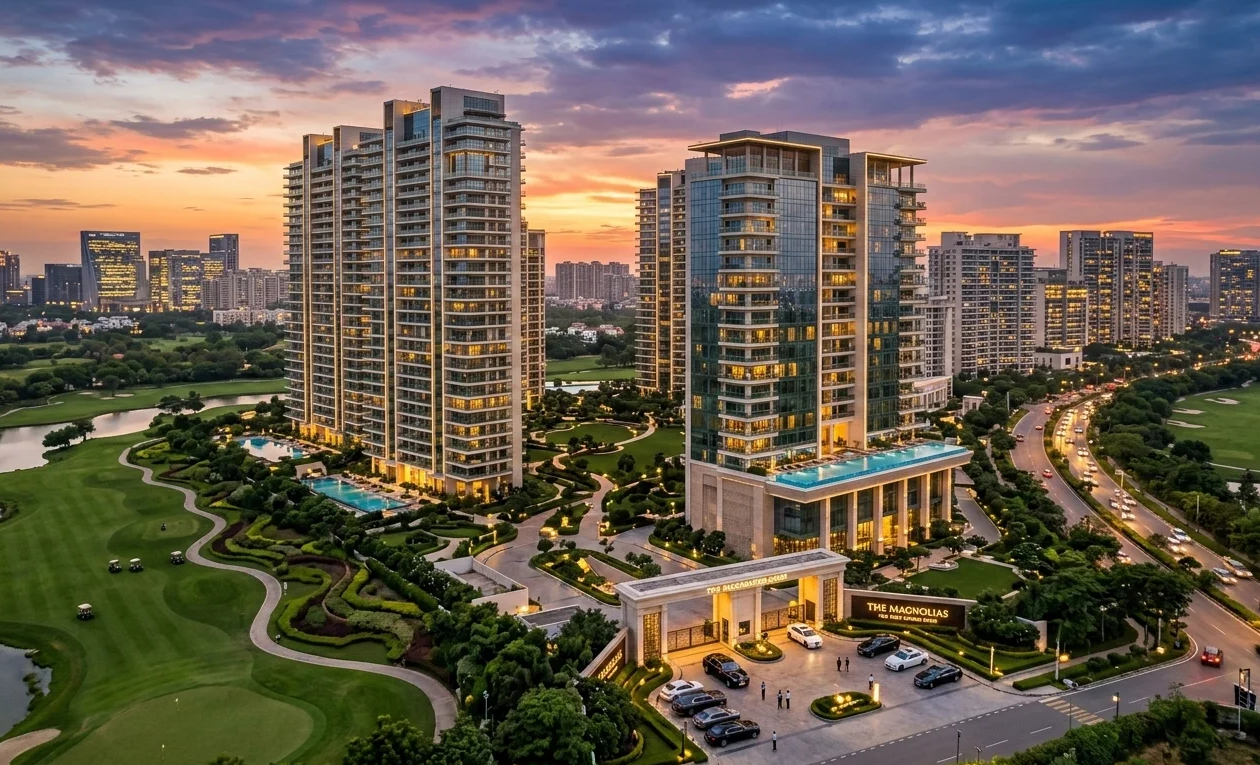
In Mumbai’s prime districts such as Worli or Tardeo, buyers often pay ₹15–20 crore for relatively compact apartments. On the other hand, Gurugram offers sprawling residences inside gated communities. Residents enjoy golf-course views, landscaped gardens, private lift lobbies, and world-class clubhouses.
Projects like DLF The Camellias reflect this transformation. Recently, Ajit Jain, Vice Chairman of Berkshire Hathaway, purchased a 7,400 sq ft apartment there for approximately ₹85 crore. That deal set a benchmark close to ₹1.10 lakh per sq ft.
Such transactions signal confidence. More importantly, they establish Gurugram as a serious luxury powerhouse.
Wealth Creation in NCR Fuels Premium Demand
Simultaneously, NCR’s startup and corporate ecosystem accelerates wealth creation. Gurugram houses multinational corporations, tech giants, consulting firms, and unicorn founders. As a result, a younger group of affluent buyers has entered the luxury market.
Interestingly, many of these buyers sit in their early 30s. They prefer modern gated communities over traditional standalone bungalows. They value organised parking, in-house sports facilities, security, and a community of like-minded residents.
Moreover, NRIs show strong interest in Gurugram’s premium developments. They recognise global construction standards and lifestyle offerings comparable to Dubai or Singapore. Wide internal roads, Olympic-size pools, wellness centres, and private golf greens create strong global appeal.
Therefore, lifestyle aspirations align perfectly with investment logic.
Infrastructure & Connectivity Offer a Clear Edge
Connectivity further strengthens Gurugram’s rise. The city connects to Delhi through MG Road, NH-8, and the Dwarka Expressway. Corporate hubs such as Cyber City and Golf Course Road remain within easy reach of luxury projects.
In contrast, Mumbai struggles with land scarcity and traffic congestion. Developers often face redevelopment complexities and prolonged approval cycles. Large-format townships rarely find space in the island city.
Meanwhile, Gurugram still holds substantial land parcels. Developers design integrated master-planned communities instead of standalone vertical towers. Consequently, residents experience cohesive neighbourhood living rather than fragmented luxury blocks.
Thus, infrastructure plays a decisive role in shaping buyer preference.
The “Space vs Price” Advantage
Now let’s examine value perception. Mumbai commands extremely high per-square-foot rates. However, buyers frequently compromise on usable area.
Conversely, Gurugram offers significantly larger homes at competitive pricing. Buyers gain expansive layouts, multiple balconies, staff quarters, and private amenities within gated environments.
This “space versus price” equation strongly attracts HNIs. Wealthy buyers focus on long-term usability and asset growth. Many early investors in Gurugram now hold homes valued between ₹40 crore and ₹100 crore. That appreciation reinforces market confidence.
Additionally, luxury launches in Gurugram often sell out within days. In comparison, Mumbai projects usually witness slower absorption due to pricing fatigue.
Therefore, demand momentum continues to favour Gurugram.
Developer Confidence Signals Long-Term Growth
Interestingly, several Mumbai-based developers have started acquiring land in Gurugram. They recognise rising absorption and premium buyer interest.
Ample land availability allows for scale. Developers can plan golf communities, large green zones, and curated retail boulevards within residential townships. Such integrated luxury ecosystems rarely find room in land-starved Mumbai.
However, sustainability remains critical. The ₹50 crore-plus segment may enter a normalisation phase. Buyers in this bracket prefer exclusivity and limited inventory. If developers control supply carefully, absorption will remain steady.
On the other hand, the ₹10 crore segment may witness moderate price growth due to increased new supply over the last two years. Balanced inventory management will determine the next growth cycle.
Expert Advice

Sanjeev Singh, MD of SKJ Landbase, shares his perspective:
“Gurugram has evolved into a lifestyle-led luxury destination. HNIs and NRIs today seek scale, privacy, and curated communities rather than just prime pin codes. The city offers global standards, strong infrastructure, and long-term capital appreciation potential. If developers maintain supply discipline, Gurugram will continue to dominate India’s ultra-luxury housing segment.”
Final Verdict: Gurugram’s Leadership Is Real
Undoubtedly, Gurugram has disrupted Mumbai’s long-standing dominance in luxury real estate. The city combines infrastructure growth, corporate wealth creation, aspirational communities, and global-style living.
HNIs and NRIs now prioritise space, ecosystem, and lifestyle value. Gurugram delivers all three.
Going forward, controlled supply and genuine end-user demand will shape sustainability. If balanced wisely, the Millennium City will not only maintain its lead but redefine India’s ultra-luxury housing landscape for years to come.