Delhi–Meerut Regional Rapid Transit System Fully Operational: How the 60-Minute Commute Is Rewriting NCR’s Real Estate Map
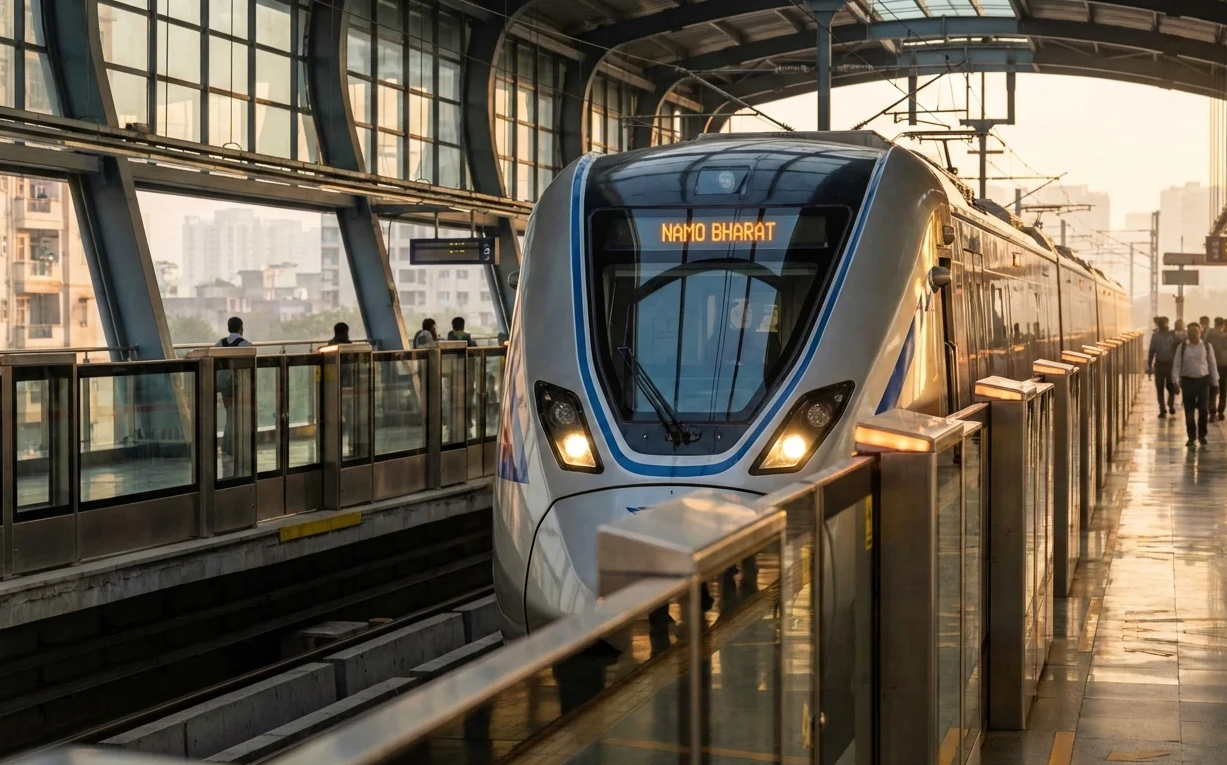
The Delhi–Meerut RRTS is now fully operational. With the final sections inaugurated by Narendra Modi, the entire 82-km high-speed corridor connects Delhi to Meerut in under an hour.
This is not just a transport upgrade. It is a structural shift in how the National Capital Region expands.
And real estate is already reacting.
Connectivity Always Moves Property First
Every major infrastructure leap in NCR has reshaped housing demand. The Metro did it. The Expressways did it. Now, the RRTS is doing it at a regional scale.
Earlier, professionals hesitated to shift to Meerut due to long travel hours. Today, sub-60-minute connectivity makes daily commuting realistic. That single factor changes buying psychology. Time is currency. When commute time drops, perceived distance shrinks. Suddenly, Tier-2 cities feel like urban extensions rather than far-off towns.
Buyers who once stretched budgets for small Delhi apartments now explore larger homes in Meerut and Ghaziabad.
That shift drives real demand not speculation.
Price Signals Are Already Visible
The corridor was partially operational earlier. Even that triggered appreciation.
Land rates in Meerut moved from ₹8,000–12,000 per sq yard to ₹12,000–20,000 per sq yard in several micro-markets. According to PropEquity, property prices rose 54% in Meerut and 131% in Ghaziabad over the past four years. Stations like Modipuram and Shatabdi Nagar witnessed 30–60% growth. Now that the full stretch operates seamlessly, momentum could accelerate further.
However, one critical factor remains: supply discipline. If developers launch excessive inventory without matching end-user demand, price growth may stabilize. Controlled expansion will sustain healthy appreciation.
Meerut’s Evolution into a Bedroom Community
The RRTS positions Meerut as a viable “bedroom community” for Delhi’s workforce.
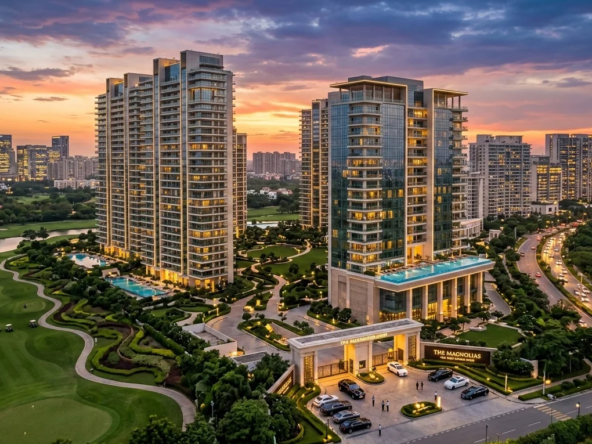
This model works globally. People live in affordable, spacious cities and commute to employment hubs. Modipuram, Pallavpuram, Shatabdi Nagar, Partapur, and Shastri Nagar now attract investor attention. Developers increasingly focus on gated townships and integrated communities. Buyers want more than affordability. They want security, green space, social infrastructure, and organized living.
That preference supports long-term urban development instead of short-term price spikes.
The Rise of Transit-Oriented Development (TOD)
Transit-Oriented Development stands at the core of this transformation.
Meerut Development Authority earmarked over 3,000 hectares for TOD planning under Master Plan 2031. These zones cluster residential, retail, office, healthcare, and education facilities within walking distance of transit hubs. Similarly, Ghaziabad’s Integrated Master Plan expands development coverage significantly, carving TOD clusters along transit corridors.
TOD does two powerful things:
- It prevents random urban sprawl.
- It creates self-sufficient, walkable communities.
That planning approach ensures sustainability. It also attracts institutional investors who prefer structured urban growth over fragmented layouts.
Residential Leads the First Wave
In the immediate term, residential and retail segments will benefit the most.
End-users drive this phase. Families prioritize commute convenience, schooling, and lifestyle upgrades. Commercial real estate may follow gradually. Corporates wait for density, workforce presence, and social infrastructure before committing to office expansions. Yet history shows a predictable pattern. Once residential absorption stabilizes, office demand rises next.
The RRTS expands the labor catchment of Delhi. That expansion eventually attracts commercial ecosystems.
What the Market Survey Reveals
A survey by Knight Frank India titled “Rapid Regional Transit System: Testing the Commuters’ Pulse” reveals strong investment sentiment.
- 67% of working respondents expressed willingness to invest along RRTS corridors.
- Perceived commercial growth increased investment intent more than tenfold.
- Active construction activity made respondents eight times more likely to invest.
Interestingly, 32% of NCR residents indicated willingness to relocate to smaller cities if strong connectivity combines with robust amenities.
This insight matters deeply. Connectivity alone starts the shift. Social infrastructure completes it.
Expert Advice: Why This Is a Long-Term Play

Industry expert Sanjeev Singh MD SkjLandbase emphasizes
that buyers and investors must focus on station influence zones with planned TOD frameworks, not isolated plots. He advises evaluating:
- Proximity to operational RRTS stations
- Master plan zoning clarity
- Upcoming education and healthcare infrastructure
- Developer credibility and phased delivery plans
According to him, connectivity acts as the catalyst, but ecosystem development sustains value appreciation.
That distinction separates smart investors from short-term speculators.
Global Models Support This Shift
High-speed regional corridors transformed cities worldwide.
Germany’s Cologne–Frankfurt ICE route strengthened smaller towns.
Japan’s Shinkansen network enabled cities like Kanazawa to expand tourism and services.
France’s TGV corridors helped Lyon build specialized economic clusters.
The formula remains consistent. High-speed connectivity decentralizes opportunity. Peripheral cities evolve into independent economic nodes rather than satellite towns.
The Delhi–Meerut RRTS follows that blueprint.
What Happens Next?
- Short term: Increased site visits, faster inventory absorption, and renewed investor confidence.
- Medium term: Premiumisation in Ghaziabad. Structured township development in Meerut.
- Long term: Balanced migration, expanded labor markets, and multi-nodal NCR growth.
However, sustained success depends on coordinated planning. Authorities must maintain infrastructure quality. Developers must avoid oversupply. Civic amenities must grow alongside housing.
Final Take
Yes, the fully operational Delhi–Meerut RRTS will drive real estate demand.
But more importantly, it signals a shift in NCR’s urban narrative.
Meerut no longer sits at the edge of the map. It enters the mainstream conversation.
And when distance shrinks to under an hour, opportunity expands far beyond geography.