Gurugram’s Internal Roads Get a Makeover to Fight Dust Pollution
Gurugram’s streets have long struggled with dust, potholes, and damaged surfaces, making daily commuting uncomfortable and unsafe. Now, the city is taking a major step to clean up its act. The latest Clean Air Action Plan, prepared under the Commission for Air Quality Management, prioritizes internal sector roads for repair and redevelopment. This plan doesn’t just aim to fix roads it focuses on improving air quality, enhancing safety, and making Gurugram a more commuter-friendly city.
Why Internal Sector Roads Are the Priority
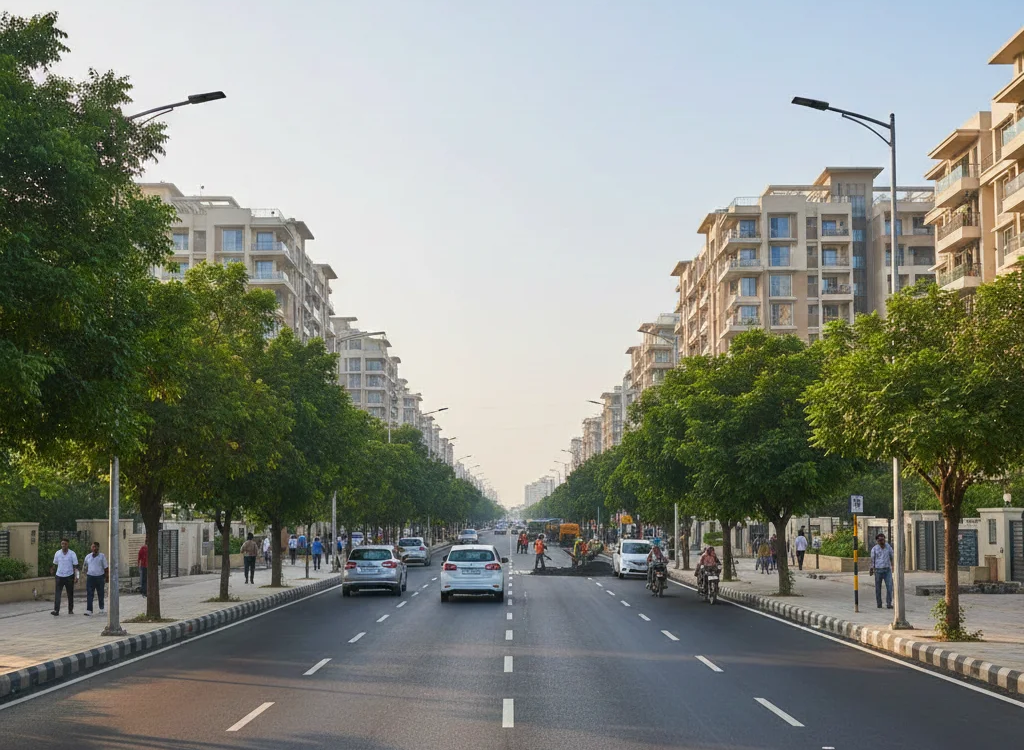
Internal roads form the backbone of Gurugram’s residential connectivity. According to the plan, out of 726 km of roads identified as unsafe or dusty, 554 km are narrow roads under 10 metres. These roads primarily serve residents, small vehicles, and local traffic. Left unattended, they worsen dust pollution and create safety hazards.
Redeveloping these internal roads not only reduces airborne dust but also ensures smoother, safer rides for daily commuters. Investing in internal roads isn’t just about asphalt it’s about improving the quality of life for residents. Better roads reduce health risks and make neighborhoods more livable.
Budget and Implementation Plan
The city plans to spend ₹430 crore on internal sector roads this year. Roads with widths between 10 and 15 metres, such as two-lane arterial roads, will also receive attention. The Municipal Corporation of Gurugram (MCG), Public Works Department (PWD), and Haryana Shehri Vikas Pradhikaran (HSVP) will handle these projects.
Civic agencies will follow a phased schedule, repairing smaller stretches during monsoon months and ramping up activity during dry seasons. For example, January targets 10.4 km of road repairs, March 15.3 km, and by October, November, and December, agencies aim to repair 108 km each month. This careful planning ensures steady progress while minimizing disruptions.
Dust Pollution and Health Concerns
Dust isn’t just an eyesore it poses real health risks. Fine particles from broken or dusty roads can aggravate asthma, allergies, and respiratory problems. By redeveloping 554 km of internal roads, Gurugram aims to significantly reduce airborne dust in residential areas.
Linking road redevelopment to air quality targets is innovative. Many cities focus only on highways, but Gurugram’s plan highlights local roads, where dust concentration directly impacts families living nearby. This dual benefit better roads and cleaner air makes the initiative a win-win for the city.
Roads Under Wider Jurisdiction
The plan doesn’t ignore major roads. Approximately 83 km of roads with widths between 10 and 15 metres will receive upgrades. Larger roads under GMDA, PWD, and HSVP jurisdiction, as well as state highways and six-lane corridors, will also be repaired to ensure a smooth traffic flow.
Even National Highway Authority of India (NHAI) roads have been mapped. Around 18 km of NHAI roads in Gurugram will be maintained under the plan, including 12 km of highways wider than 60 metres. Linking these highways to the road asset management system ensures safety, efficiency, and cost-effectiveness.
Safety Measures and Accident Reduction
Gurugram has experienced accidents due to poor road conditions. The Sanjaya App, managed by the Ministry of Road Transport and Highways, identified 32 accident blackspots, causing 50 fatalities in 2025. Repairing roads and reducing potholes directly contributes to road safety.
Expert Advice

According to Sanjeev Singh, MD of SKJ Landbase,
Internal roads often get overlooked, but they play a crucial role in daily commuting and overall urban health. Residents experience the impact of poor roads firsthand dust pollution, vehicle wear and tear, and safety hazards. Investing in these roads not only improves air quality but also enhances safety, comfort, and property values. My advice to civic agencies is to adopt phased, data-driven repair plans, ensure regular maintenance, and involve residents in reporting issues. This way, road redevelopment becomes a sustainable solution rather than a one-time fix.
Phased Approach and Seasonal Planning
The authorities have set realistic monthly targets to keep the work on track. Monsoon months will see minimal repair activities, while dry seasons will focus on major redevelopment. By balancing work with weather conditions, the city ensures durable repairs and reduces rework caused by heavy rains.
This phased strategy also keeps residents in mind, avoiding long-term traffic jams and inconvenience. Monthly targets vary, from just over a kilometer in July to over 100 km in peak months. Such planning reflects practical urban management.
Long-Term Benefits
The clean air action plan brings multiple benefits:
- Reduced dust pollution improves air quality and public health.
- Smoother roads enhance daily commuting experiences.
- Safer streets lower accident risks in residential areas.
- Better infrastructure increases property value and attracts investment.
Conclusion
Gurugram is taking a strategic, phased, and data-driven approach to improve roads and combat dust pollution. Prioritizing internal sector roads shows that urban planning can address both environmental and commuter needs. By investing over ₹700 crore and coordinating multiple civic bodies, the city ensures long-term benefits for residents.
The plan demonstrates how careful infrastructure development, combined with technology and seasonal planning, can transform a city’s livability. With dust-free streets, safer roads, and better air quality, Gurugram is paving the way to become a more sustainable, healthy, and commuter-friendly city.