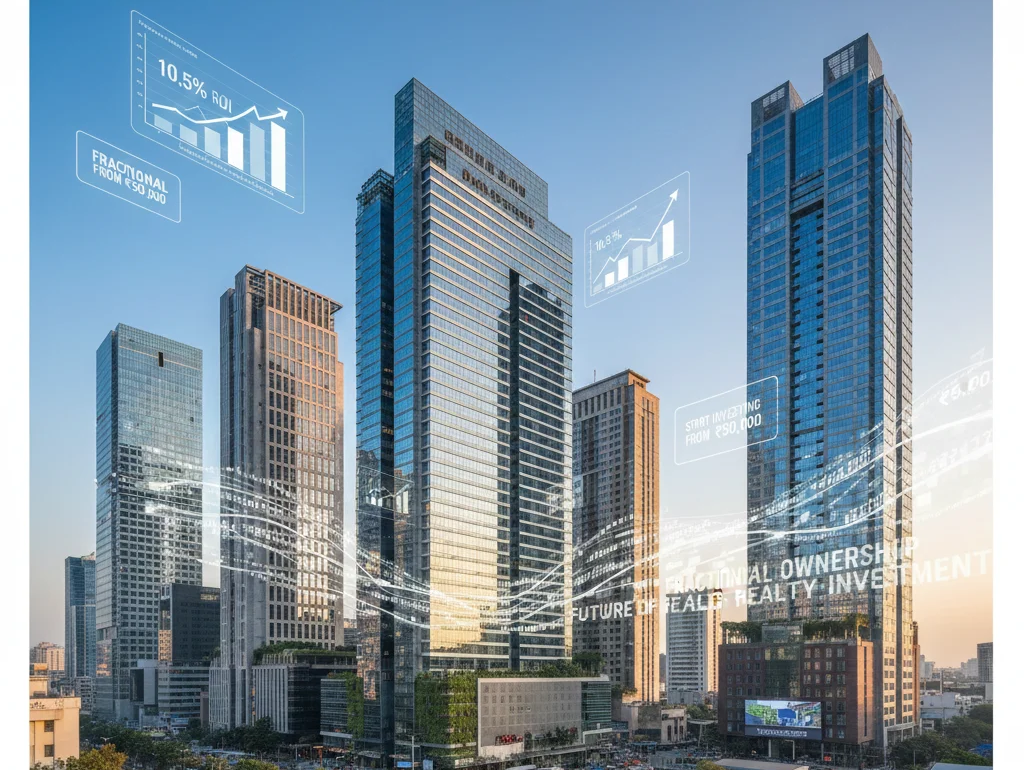
From Full Ownership to Fractions: How Technology Is Reshaping Real Estate Investment in India
India’s real estate market has entered a confident and stable phase. Sales continue at healthy levels. Prices show resilience across major cities. More importantly, investor trust has returned. However, the way people invest in property has changed completely. Ownership no longer demands large capital or long lock-in periods. Technology now allows investors to buy fractions of premium assets and still earn rental income and long-term appreciation.
This shift has transformed real estate from an exclusive asset into a more accessible investment option. Digital platforms have opened the doors for young professionals, first-time investors, and portfolio builders. As a result, property now fits neatly into modern financial planning.
A Changing Mindset Among Indian Investors
For generations, Indian households associated real estate with stability and social security. A home symbolised permanence. However, between 2013 and 2020, sentiment weakened. Oversupply, project delays, and regulatory reforms created hesitation among buyers.
Then the pandemic changed priorities. Financial markets turned volatile. People spent more time at home. Gradually, tangible assets regained appeal. Professionals with stable incomes began to see property as a hedge rather than a liability.
At the same time, buyers became far more informed. They researched micro-markets. compared developers. They evaluated delivery track records. Instead of speculative flipping, they focused on reliability and long-term use.
Technology accelerated this shift by improving transparency and access.
Market Numbers Show Strength and Balance
Recent data supports this renewed confidence. Housing sales across the top seven cities crossed 4.5 lakh units in 2024, staying close to historic highs. Analysts expect home prices to rise steadily by 6–7 per cent annually through 2026.
Premium homes now dominate demand. Properties priced above ₹1 crore account for a growing share of sales. Rising incomes and lifestyle upgrades drive this trend. Meanwhile, affordability pressures have slowed volumes in some quarters due to higher interest rates.
Even so, the market reflects balance rather than excess. Buyers now value asset quality over short-term price jumps.
Technology and the Rise of Fractional Ownership
Technology has reshaped how Indians invest in real estate. Fractional ownership platforms allow multiple investors to pool capital and buy high-value residential or commercial assets. Each investor owns a defined share of the property.
Instead of committing crores, individuals can start with a few lakhs. They earn rental income proportionate to their ownership. They also track performance digitally through transparent dashboards.
This model appeals strongly to younger professionals. They want diversification. seek flexibility. They value liquidity. Most importantly, they want exposure to real estate without locking all their savings into one asset.
As a result, property investing now aligns with modern portfolio strategies.
Better Discipline and Stronger Developers
The supply side of the market has matured as well. Developers no longer chase volume-led growth. They focus on execution, credibility, and financial discipline.
Years of consolidation have reduced weak participation. Well-capitalised developers now dominate new launches. They release fewer projects. prioritise timely delivery. They maintain transparency.
Unsold inventory has declined across major cities. This restraint has supported price stability and rebuilt buyer trust. Together, technology and discipline have strengthened market fundamentals.
Expert Advice: A Strategic View on the New Real Estate Cycle

Sanjeev Singh, Managing Director, SKJ Landbase, believes technology has fundamentally changed how investors approach property in India.
“Fractional ownership has democratised real estate investing. It allows investors to participate in high-quality assets with lower capital commitment while maintaining transparency and professional management. However, investors must still focus on asset quality, developer credibility, and long-term fundamentals rather than short-term returns.”
His advice highlights an important truth. Technology improves access, but disciplined decision-making still defines successful real estate investing.
Premiumisation and Lifestyle-Led Demand
Post-pandemic preferences continue to influence housing demand. Buyers now prioritise space, amenities, and community living. As a result, premium and luxury homes have gained momentum.
Developers have responded with larger layouts, branded residences, and integrated townships. These projects attract both end-users and long-term investors.
However, the mid-segment remains crucial. Homes priced between ₹50 lakh and ₹1 crore continue to drive volumes. This segment offers rental potential, affordability balance, and resale liquidity.
Fractional ownership complements both segments by unlocking institutional-grade assets for retail investors.
Real Estate Versus Other Asset Classes
Indian investors traditionally balance equities, gold, and property. Equities offer growth but bring volatility. Gold offers safety but limited income.
Real estate provides a middle ground. It delivers appreciation, rental yield, and leverage through loans. Over long horizons, this combination offers stability and predictability.
Fractional platforms further improve flexibility and reduce concentration risk. Consequently, real estate has regained relevance in diversified portfolios.
Risks Investors Must Still Manage
Despite progress, challenges remain. Rising prices and interest rates strain affordability. Liquidity remains lower than financial assets. Premium housing performs well, while affordable housing faces pressure.
Execution risk also exists. Investors must assess developers, legal clearances, and platform governance carefully.
Smart investing still demands patience and due diligence.
The Road Ahead
Technology has shifted Indian real estate from exclusivity to inclusion. Fractional ownership has expanded participation. Disciplined developers and informed buyers have strengthened confidence.
As transparency and digital adoption grow, real estate investing in India will continue to evolve. Those who align technology with long-term fundamentals will benefit the most.